Smuggled Korean HBM Fetches About $4,000 a Stack in China as Huawei Hunts for Memory
A report says Samsung and SK Hynix memory reaches China bonded to decoy processors, exposing a gap in U.S. export rules as Chinese AI chipmakers run short.
What to know
- Huawei told some customers its next flagship AI chip, the Ascend 960DT, will rely largely on Samsung and SK Hynix memory they must source themselves, according to The Information.
- A Shenzhen broker told The Information a single HBM3E unit now sells for about $4,000, up from several hundred dollars a year earlier.
- Chinese memory maker CXMT is reported to be producing HBM3E at yields of about 20% to 30%, against roughly 70% at SK Hynix.
HONG KONG
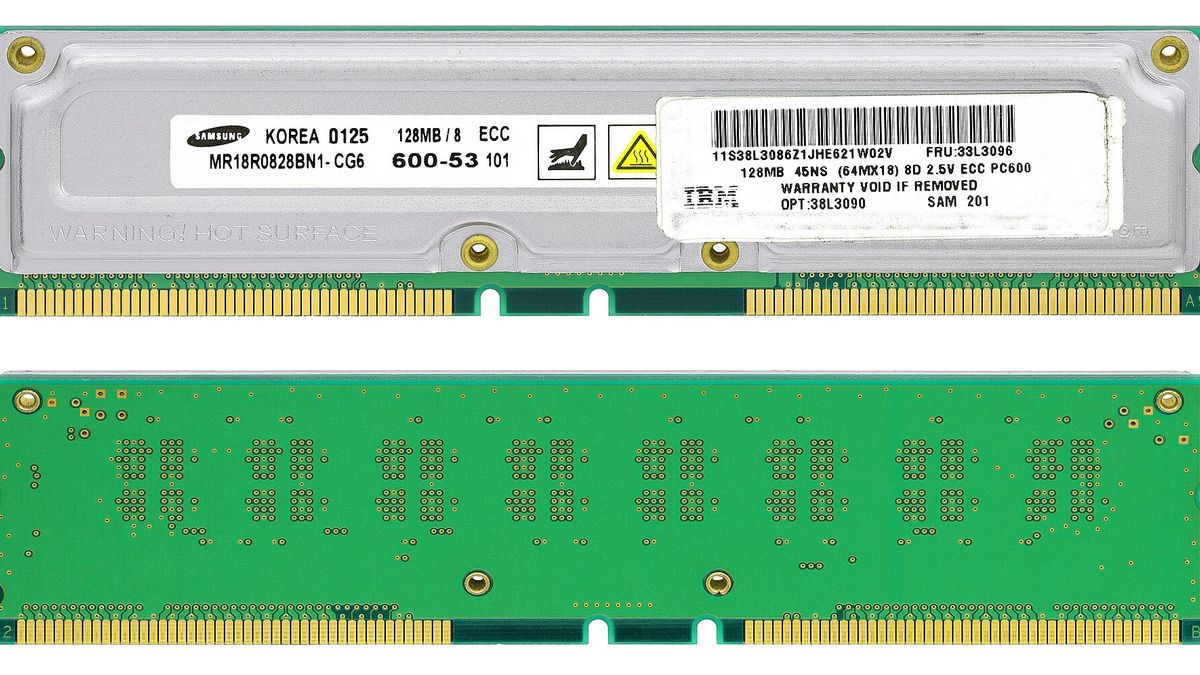
High-bandwidth memory made by Samsung Electronics and SK Hynix is reaching China disguised as part of low-end processors, and a single stack of HBM3E now sells there for about $4,000, according to a report by The Information published this week. The report said Huawei Technologies has told some customers that its next flagship AI chip, the Ascend 960DT, will run largely on Korean memory, and has asked them to find that memory themselves.
For investors in Asia, the report puts a price on the bottleneck facing China's AI chip industry. Chinese designers can produce processors, but they cannot buy enough HBM, the stacked memory that sits beside the processor in every AI accelerator. A Shenzhen chip broker told The Information that the same HBM3E unit sold for several hundred dollars a year earlier. “Today it’s about $4,000,” the broker said.
Samsung and SK Hynix told The Information that they comply with export rules. SK Hynix said it has not supplied Huawei since 2020. Neither company is accused of taking part in the scheme, and the report did not give shipment volumes, according to TechRadar, which noted that the account leans on anonymous dealers.
How the memory gets past U.S. export rules
The route described in the report starts with a chip design company whose processors are too weak for any data center to want. That gives the firm a reason to order HBM in volume. Packaging houses in Taiwan, South Korea and Southeast Asia then bond the Korean memory and the decoy processor onto one substrate, The Next Web reported, citing The Information.
The finished package is exported to Hong Kong as a processor. From there, it is carried into mainland China in luggage, car trunks and the bags of cross-border commuters. Workshops in China heat the packages until the solder softens, remove the memory stacks and throw away the processors. Many stacks crack or warp in the process, according to the reports.
The gap sits in rules the U.S. Commerce Department's Bureau of Industry and Security issued in December 2024. Those rules require a license to ship standalone HBM above a set bandwidth density to China. A technical note, however, judges chips that combine HBM and logic in one package by their processing performance, TechRadar reported. The exclusion applies only “where the dominant function” of the package is processing, the regulator's wording says, a test that is hard to square with a package whose value lies almost entirely in its memory.
The trick is not new. TechRadar pointed to an April 2025 SemiAnalysis report describing older HBM2E memory being packaged with a cheap 16-nanometer logic die before it was sent to China, where it could be desoldered.
China's own HBM is still far behind
Domestic supply is not filling the gap. ChangXin Memory Technologies, or CXMT, plans limited production of HBM3E, Reuters reported on Oct. 28, citing people familiar with the matter. Its yields are about 20% to 30%, compared with about 70% at SK Hynix, and in testing its chip performed closer to SK Hynix's older HBM3 than to its HBM3E, one person told Reuters, according to The Next Web.
The shortage is already showing up in prices. Huawei, Cambricon, MetaX and Iluvatar CoreX raised AI chip prices by 20% to 50% in September as memory costs rose, The Next Web reported, citing Reuters.
The Korean suppliers dominate the market Chinese buyers are trying to reach. SK Hynix held 50% of HBM revenue in the second quarter, Samsung 33% and Micron 18%, according to Counterpoint Research figures cited by The Next Web. CXMT holds about 10% of global DRAM revenue, making it the fourth-largest conventional memory supplier.
What it means for memory makers and regulators
Grey-market demand of this kind does not show up in Samsung's or SK Hynix's order books, since neither company sells HBM to China, and the volumes involved are unknown. It does show how tight supply has become. SK Hynix has said it expects the global memory shortage to last until 2030, and it reported record third-quarter profit on the back of AI demand. Contract prices for conventional memory have also been rising through the autumn.
The report also gives Washington a specific loophole to examine. Enforcement against AI hardware smuggling has been stepping up: in October, U.S. prosecutors charged a California man with smuggling AI servers to China, The Next Web reported.
The next marker for the memory market is SK Hynix's guidance that HBM4 will overtake HBM3E in both shipments and revenue in the fourth quarter. For Chinese buyers, the figure to watch is CXMT's yield, which would have to rise sharply before the $4,000 grey-market price comes down.
Sources
- The Information: How Smugglers Get Expensive Memory Chips to China from South Korea (Nov. 3, 2026)
- The Next Web: Huawei tells some clients to source their own HBM, report says (Nov. 4, 2026)
- TechRadar: Smugglers are reportedly soldering top-tier HBM onto deliberately useless processors to sneak it into China, and the trick isn't new (Nov. 3, 2026)
- The Next Web: China’s CXMT will make AI memory despite yields as low as 20%, Reuters says (Oct. 28, 2026)
Our standards: Capital Times reports under the principles set out in our Editorial Standards and Ethics Policy. Spotted an error? Report it to our editors.