Bangkok Airways Shrinks U-Tapao First Phase, Bets on Samui Expansion and New ATRs
The Samui-focused carrier will cut first-phase spending at the U-Tapao airport project by about 70% and is aiming for only modest revenue growth in 2027.
What to know
- Bangkok Airways' group plans to cut first-phase spending on the U-Tapao airport project by about 70%, to no more than 10 billion baht, with capacity lowered to 3 million passengers a year, The Nation reported.
- The airline will spend about 3 billion baht to double Samui Airport's annual capacity to 6 million passengers and is adding ATR 72-600 turboprops, the first two due in December.
- Revenue rose to 21.09 billion baht in the first nine months of 2026, and the company is targeting roughly 2% revenue growth in 2027.
BANGKOK
Bangkok Airways is trimming the opening stage of its most ambitious bet, the U-Tapao airport city southeast of Bangkok, and steering money toward the island airport that already earns most of its profit.
The group will cut first-phase capital spending on the U-Tapao terminal and apron by about 70%, to no more than 10 billion baht, and lower that phase's capacity from 10 million to 3 million passengers a year, The Nation reported on Nov. 23 after the airline's 2027 strategy briefing. The full concession framework stays at roughly 290 billion baht, with eventual capacity of up to 60 million passengers a year.
The reason is rail. The high-speed line meant to link U-Tapao with Bangkok's Suvarnabhumi and Don Mueang airports has been delayed, so the first phase has been redesigned around road access and existing air links, according to the report. Construction is now expected to start in the first quarter of 2027, take three to four years and reach full commercial operation in 2031.
Samui gets the money first
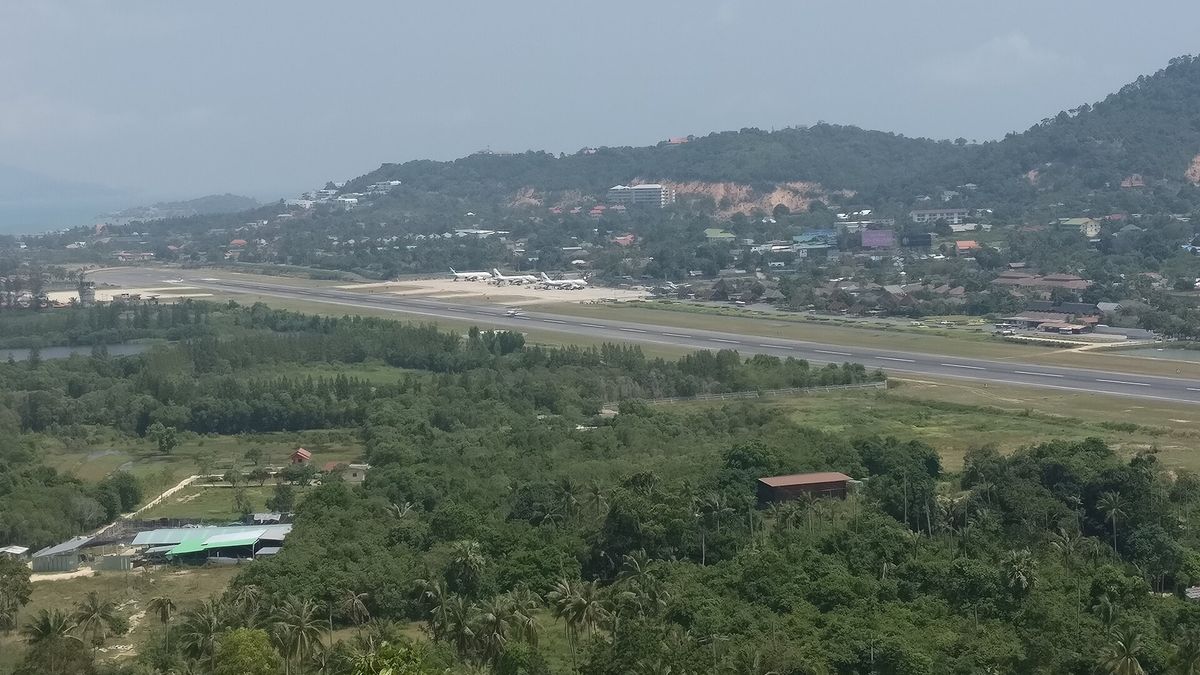
While U-Tapao shrinks, Samui grows. Bangkok Airways, which owns and operates the airports at Samui, Trat and Sukhothai according to Asian Aviation, plans to spend about 3 billion baht to double Samui Airport's annual capacity to 6 million passengers, AviationPros reported. Gates would rise from seven to 11, with work starting in early 2027.
The island is the company's engine. Samui accounted for 72% of passenger traffic in the first nine months of 2026, with an 87% load factor on those routes, Asian Aviation reported, citing the company's results. The Nation put Samui's share of traffic and revenue at 72% to 80%.
Pi Securities, which reiterated a "buy" rating on the stock on Nov. 19 with a target price of 24.40 baht, said a three-to-four-year Samui renovation, which it estimated at 2 billion to 3 billion baht, should allow the airline to raise passenger charges, currently 700 baht for international and 400 baht for domestic travelers, according to Kaohoon International.
The group is also negotiating with the Royal Thai Navy's U-Tapao airport authority to manage that airport's Terminal 2 in the meantime, and plans a 1 billion baht maintenance hangar there able to house two narrow-body jets such as the Airbus A320 at once, The Nation reported. It would serve Bangkok Airways' own fleet first and then other carriers.
"Aviation business will grow strongly when related businesses grow and move forward together," President and CEO Puttipong Prasarttong-Osoth said, according to The Nation.
Turboprops and a cautious 2027
The fleet plan leans on smaller, cheaper aircraft. The company's statement describes acquiring 10 to 12 ATR 72-600 turboprops, with the first two due in early December and two more in the first half of 2027, Asian Aviation reported. The Nation described a nearer-term plan for six of the aircraft, two this year and four in 2027, taking the fleet from 22 toward 24 or 28 planes depending on retirements. Bangkok Airways flies 19 routes, 14 domestic and five international.
Pi Securities noted that the airline is leaning more on turboprops, which cost less to operate, as fuel bills climb. Jet fuel averaged US$145 a barrel over the first nine months, and third-quarter fuel cost per available seat kilometer rose 35% to 1.23 baht, partly offset by hedging, The Nation reported. Pi Securities said jet fuel averaged US$170 a barrel in September and October, against about US$89 in the fourth quarter of 2025, and that hedges cover 30% of expected consumption through the end of 2026.
That pressure is hitting Asian airlines broadly. AirAsia has raised fares and is weighing fleet cuts to cope, while Qantas has trimmed domestic flying.
Bangkok Airways has so far held up. Revenue for the first nine months rose to 21.09 billion baht from 19.99 billion baht a year earlier, and net profit was 3.70 billion baht, according to The Nation. The airline carried 3.2 million passengers on 36,616 flights, and its average load factor rose five percentage points to 81%, Asian Aviation reported. Its margin on earnings before interest, taxes, depreciation and amortization was 29.9%, according to The Nation.
The side businesses help. BFS Cargo earned a net profit of 951 million baht on revenue of 2.27 billion baht, up 12%, while catering unit Bangkok Air Catering lifted net profit 37% to 156 million baht. Airports of Thailand has extended three of the group's operating permits at Suvarnabhumi by three and a half years, or until new private operators are appointed if that comes sooner.
Still, management is guiding low. The company is targeting revenue growth of roughly 2% in 2027 and will adjust capacity as demand shifts, The Nation reported. Advance bookings for December through June, as of Nov. 16, were 66% on Samui routes, 28% on other domestic routes and only 6% on international flights.
Pi Securities said total advance bookings were down 1% from a year earlier as travelers book closer to departure. The broker raised its 2026 profit forecast by 17% to 3.86 billion baht but expects earnings to fall to 3.42 billion baht in 2027.
Demand from long-haul visitors is the swing factor. Europe and the Middle East supplied 55% of Bangkok Airways' passenger revenue, led by Germany, Britain and France, Asian Aviation reported, even as Thailand's overall foreign arrivals have fallen this year.
Sources
- The Nation: Bangkok Airways Scales Back U-Tapao Phase One to Unlock Ecosystem Growth (Nov. 23, 2026)
- Asian Aviation: Bangkok Airways outlines 2027 business strategy (Nov. 25, 2026)
- Ground Support Worldwide (AviationPros): Bangkok Airways Plans Fleet Expansion, Airport Investments for 2027 (Nov. 23, 2026)
- Kaohoon International: Analyst Reiterates 'Buy' on Bangkok Airways as Robust Appeal for Samui Routes Defies Cost Challenges (Nov. 19, 2026)
Our standards: Capital Times reports under the principles set out in our Editorial Standards and Ethics Policy. Spotted an error? Report it to our editors.