China Weighs Mergers of Small Loss-Making Airlines From 2027, SCMP Reports
A plan still being drafted by the aviation regulator could thin out the country's 65 carriers by 2030, the Post reported, as fuel costs push the state giants into losses.
What to know
- The Civil Aviation Administration of China is weighing mergers and restructuring of smaller loss-making airlines from 2027, the South China Morning Post reported on Nov. 25.
- China had 65 commercial airlines at the end of 2025, according to the regulator's annual statistical bulletin, and an industry insider said that number may fall by 2030.
- China Southern swung to a third-quarter loss of 609 million yuan, while China Eastern's profit fell 98.2% and Air China's dropped 92.6%, Reuters reported.
BEIJING
China's aviation regulator is studying mergers and restructuring for smaller domestic airlines that keep losing money, the South China Morning Post reported on Wednesday, in a plan that the regulator has not confirmed and that could leave the country with fewer carriers by the end of the decade.
The Civil Aviation Administration of China is weighing consolidation options from 2027 under a plan that is still being drafted, according to the Post, which cited industry insiders. Reuters, which carried the report, said it could not immediately verify it, and the CAAC did not immediately respond to a request for comment.
A person at one of the large state-owned airlines told the Post that the overall number of domestic carriers “may drop” by 2030 as a result. It was not clear whether the regulator would set a formal cap on how many airlines can operate.
A crowded field that grows but does not earn
China had 65 commercial airlines at the end of 2025, according to the CAAC's annual statistical bulletin, operating 4,574 aircraft between them. They carried 770.1 million passengers last year, up 5.5%, and industry operating revenue rose 3% to 1.14 trillion yuan.
More passengers have not meant more profit. The summer quarter, normally the strongest of the year, was a poor one for the three state-controlled groups. Air China's third-quarter net profit fell 92.6% to 270.6 million yuan, China Eastern Airlines earned 64 million yuan, down 98.2%, and China Southern Airlines lost 609 million yuan after making 3.84 billion yuan a year earlier, Reuters reported. All three were in the red for the first nine months, after being profitable in the same period of 2025.
Fuel is the main reason. Jet fuel prices have more than doubled since the U.S. and Israel began military action against Iran in late February, according to Reuters, and Chinese airlines hedge much less of their fuel than many Asian and European rivals. Fares added to the pressure: competition on domestic routes, including from high-speed rail, kept prices weak, and Huatai Securities estimated that Air China's yields fell 5% in the quarter. Typhoons also disrupted flying over the summer.
LSEG analyst estimates point to a seventh straight annual net loss for Air China and China Eastern, Reuters said. China Southern, which returned to profit in 2025 for the first time since 2019, is also expected to lose money for the full year. Capital Times reported on Air China's quarter when it was released in late October.
Built on a tighter rulebook
The consolidation plan builds on the revised Civil Aviation Law and stricter CAAC licensing rules introduced in the middle of this year, The News International reported, summarizing the Post's article. Those rules raised capital requirements and gave the regulator power to restrict route expansion by airlines with weak operating efficiency, according to the report.
The revised law was adopted by the Standing Committee of the National People's Congress on Dec. 27, 2025, and took effect on July 1, the CAAC said. It runs to 16 chapters and 262 articles. The regulator's own summary focused on airspace sovereignty, support for the industry, drones, airport safety and legal liability, and did not describe how the law treats airline market entry or capacity.
The reports did not name any carriers that could be merged or restructured. They described the plan as aimed at smaller airlines that are losing money, with the goal of reducing industry losses and excess capacity.
What it means for fares, shares and jet orders
For investors, the question is whether fewer airlines would bring firmer pricing. Checks cited by Reuters in early November suggested domestic fares were rising at double-digit rates year on year after the October Golden Week holiday, as airlines held capacity in check. Even so, Nathan Gee, head of Asia-Pacific transport research at BofA Global Research, expected the carriers to stay loss-making in the seasonally weaker fourth quarter and said fuel “remains the big headwind,” according to Reuters.
The Hong Kong-listed shares have already priced in a hard year. As of early November, Air China was down 38% in 2026, China Eastern 46% and China Southern 39%, Reuters reported.
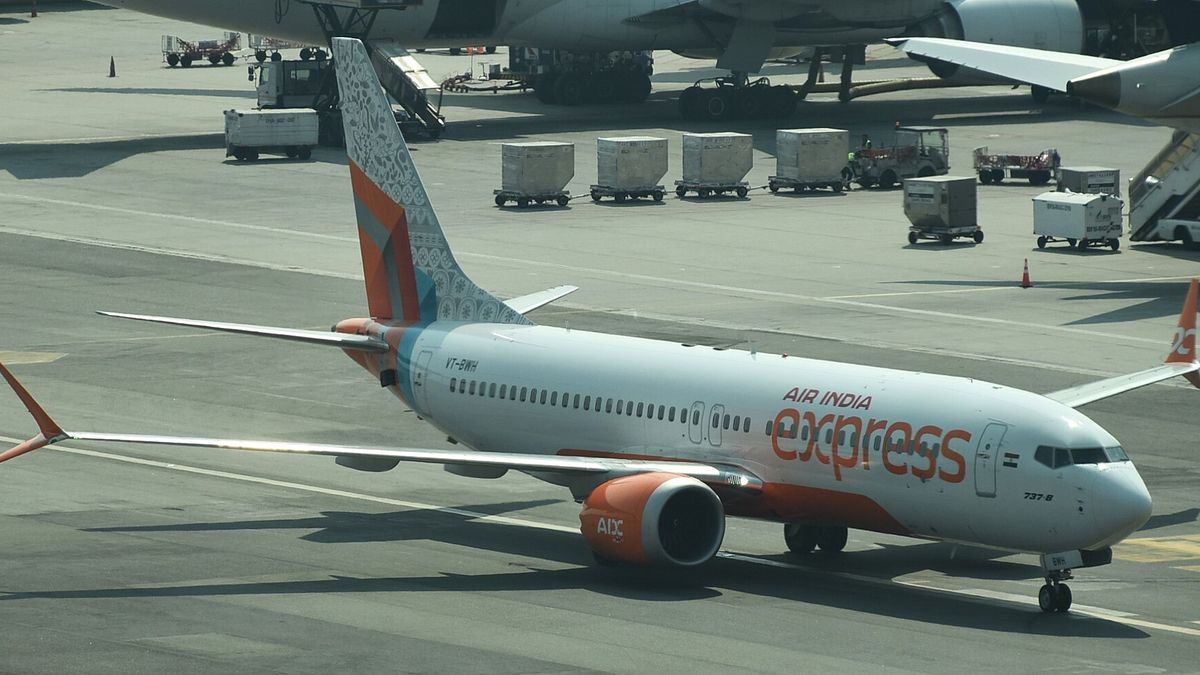
Planemakers will be watching too. Reuters noted that the plan, which aims to speed up a yearslong push to restore airline profitability, could affect aircraft purchases, including new Boeing and Airbus jets. The report came a day after China Southern's Xiamen Airlines unit agreed to buy 50 Boeing 737 MAX 8 jets, a sign that the biggest groups are still planning for growth even as the regulator looks at thinning out the field below them.
The next markers are whether the CAAC publishes a draft for comment and how deep the fourth-quarter losses run when the airlines report full-year results next spring. Fuel prices, more than any merger, will decide how quickly the sector returns to profit.
Sources
- Reuters via Yahoo Finance: China eyes mergers, tougher rules to help struggling airlines, SCMP says (Nov. 25, 2026)
- The News International: China weighs airline mergers, stricter rules to curb losses: SCMP (Nov. 25, 2026)
- Reuters via The Star: China's top three airlines head for full-year losses as fuel costs weigh (Nov. 2, 2026)
- Civil Aviation Administration of China: CAAC Releases Statistical Bulletin of Civil Aviation Industry Development in 2025 (April 22, 2026)
- Civil Aviation Administration of China: Newly Revised Civil Aviation Law to Take Effect on July 1, 2026 (Dec. 30, 2025)
Our standards: Capital Times reports under the principles set out in our Editorial Standards and Ethics Policy. Spotted an error? Report it to our editors.