Hormuz Ship Traffic Falls More Than 40% in Two Weeks as Mine Strikes Hit Tankers
Iran is tightening its grip on a strait whose crude flows mostly go to Asia, yet Brent sits near a three-month low as supply elsewhere rises.
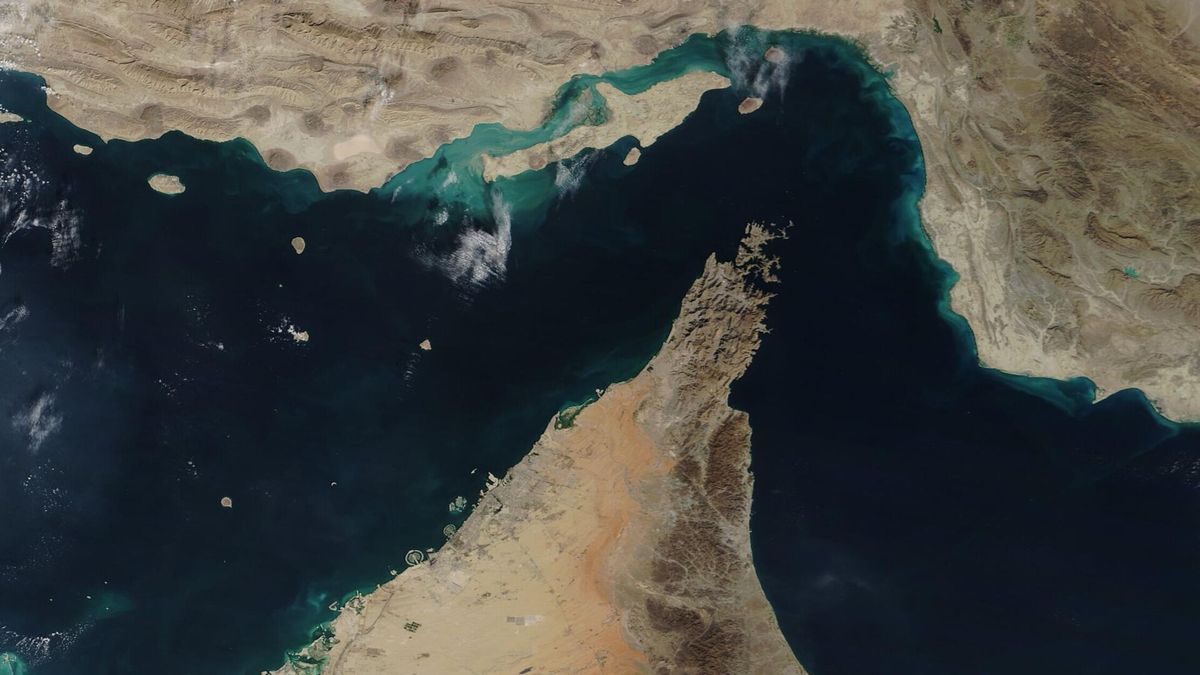
What to know
- Marine Traffic data cited by Al Jazeera show 125 vessels entered or left the Gulf from Nov. 17 to 23, down from 226 in the first week of November.
- Brent crude fell to $88.71 a barrel on Nov. 24 after its lowest close since Aug. 31, as rising inventories outweighed the shipping disruption.
- In 2024, 84% of the crude and condensate moving through Hormuz went to Asian markets, according to the U.S. Energy Information Administration.
DUBAI
Shipping through the Strait of Hormuz has dropped by more than 40% in two weeks as Iran presses its campaign against tankers trying to cross without its approval, tightening a chokepoint whose crude shipments go mostly to Asian buyers.
According to Marine Traffic data cited by Al Jazeera, 226 vessels entered or left the Gulf from Nov. 1 to 7. From Nov. 17 to 23, only 125 did. Sunday, Nov. 22, was the weakest day of the month, with one ship leaving and two arriving.
More than 25 tankers were hit in the past week alone, Al Jazeera reported on Nov. 24, several of them catching fire after striking naval mines reportedly laid by Iran. Yet the oil market has barely flinched. Brent crude slipped 66 cents to $88.71 a barrel early on Nov. 24, Reuters reported, after posting its lowest close since Aug. 31 the day before.
Mines replace drones as the main threat
Iranian military statements described mine strikes on two consecutive days. The Islamic Revolutionary Guard Corps navy said three tankers it described as violators caught fire after hitting mines on Monday, Nov. 23, according to Press TV as cited by Reuters. On Tuesday, Iran's navy said two more tankers struck mines and burned after entering a restricted zone east of the strait with their identification systems switched off, Al Jazeera reported, citing the Tasnim news agency. It was not clear from the reports whether any of the incidents overlapped.
Tehran has made its terms explicit. The navy said the strait would stay closed until hostilities stop, a U.S. naval blockade of Iranian oil is lifted and sanctions are waived, and it told tanker owners to coordinate with its armed forces for safe passage. "The Strait of Hormuz is not a place to test unauthorised routes," Revolutionary Guard navy chief Ali Ozmaei told the ISNA news agency, according to Al Jazeera.
Some ships have kept sailing anyway, often at night and with transponders off, which makes tracking data incomplete. Ship-tracking signals showed 28 vessels crossing in a 24-hour period, 12 inbound and 16 outbound, carrying an estimated 4.18 million barrels, Al Jazeera reported. Before the war, 125 to 140 ships passed through each day. Separately, The Wall Street Journal reported, citing U.S. officials, that Washington is investigating whether Iran was behind cyberattacks on as many as 50 energy tankers, according to Reuters.
The latest drop deepens a slump that was already severe. Earlier this month, Capital Times reported that non-Iranian oil leaving Hormuz was running at 42% of prewar levels in late October. At a UN Security Council meeting on Nov. 13, transits were described as about 65% below pre-conflict levels, according to U.K. Maritime Trade Operations data cited by UN News. October brought the most incidents since the war began on Feb. 28.
Why prices are falling anyway
Inventory data help explain the gap between shipping and prices. Deutsche Bank said observed global liquids inventories rose 52 million barrels in October, implying oversupply of 1.7 million barrels a day, Reuters reported. U.S. West Texas Intermediate fell 60 cents to $79.57 on Nov. 24, after touching its lowest level since Aug. 26. Brent once traded above $120 during the conflict, Al Jazeera noted.
Bank analysts are not ready to call the risk over. Suvro Sarkar, head of energy research at DBS Bank, told Reuters that Brent had lost upward momentum but that a renewed rise could not be ruled out while U.S.-Iran talks remain stalled. Daniel Hynes, senior commodity strategist at ANZ, said the oil system "appears to be moving from acute scarcity towards persistent vulnerability."
What it means for Asian buyers
Asia carries most of the exposure. In 2024, 84% of the crude and condensate moving through Hormuz went to Asian markets, and China, India, Japan and South Korea together took 69%, according to the U.S. Energy Information Administration. The strait also handled about a fifth of global liquefied natural gas trade that year, mostly from Qatar, with 83% of that LNG heading to Asia.
Bypass routes offer only partial relief. The EIA estimated that about 2.6 million barrels a day of spare pipeline capacity in Saudi Arabia and the United Arab Emirates could be used to route oil around the strait, against total Hormuz flows of about 20 million barrels a day in 2024. Importers have instead leaned on storage. Japan last week agreed to open 16 million barrels of extra stockpile space to Saudi Arabia, bringing the storage space available to Saudi crude in the country to about 24 million barrels.
For investors, the next signals are weekly crossing counts, any further mine incidents and progress in U.S.-Iran talks. Iran has vowed to use every means available to confront the U.S. blockade, which largely halted its oil exports after being reinstated following the collapse of a June agreement. Until the strait reopens, Asian refiners remain dependent on a route that Iran now controls, even with benchmark crude near a three-month low.
Sources
- Al Jazeera: Hormuz oil traffic is down 40 percent: Are Iran's tanker attacks working? (Nov. 24, 2026)
- Business Recorder (Reuters): Oil holds near three-month low as rising supply offsets Hormuz threat (Nov. 24, 2026)
- UN News: Security Council LIVE: Fragile Gulf calm tested as threats to Hormuz shipping mount (Nov. 13, 2026)
- U.S. Energy Information Administration: Amid regional conflict, the Strait of Hormuz remains critical oil chokepoint (June 16, 2025)
Our standards: Capital Times reports under the principles set out in our Editorial Standards and Ethics Policy. Spotted an error? Report it to our editors.