Hormuz Oil Flows Stuck at 42% of Prewar Levels as Tanker Attacks Test Iraq's Asia Rebound
Iraq says exports are back near 3.4 million barrels a day, but strikes on engine rooms and soaring freight costs keep Asian buyers paying for the risk.
What to know
- More than 7 million barrels of non-Iranian oil left Hormuz in the week to Oct. 28, 42% of prewar levels, according to Kpler data reported by AGBI.
- Iraq's oil minister said exports averaged more than 3.4 million barrels a day in October, up from 2.65 million in September, with most still shipped through Hormuz.
- ADNOC chief executive Sultan Al Jaber said nearly 1 billion barrels have been drained from global inventories since Hormuz was disrupted, The National and AGBI reported.
ABU DHABI
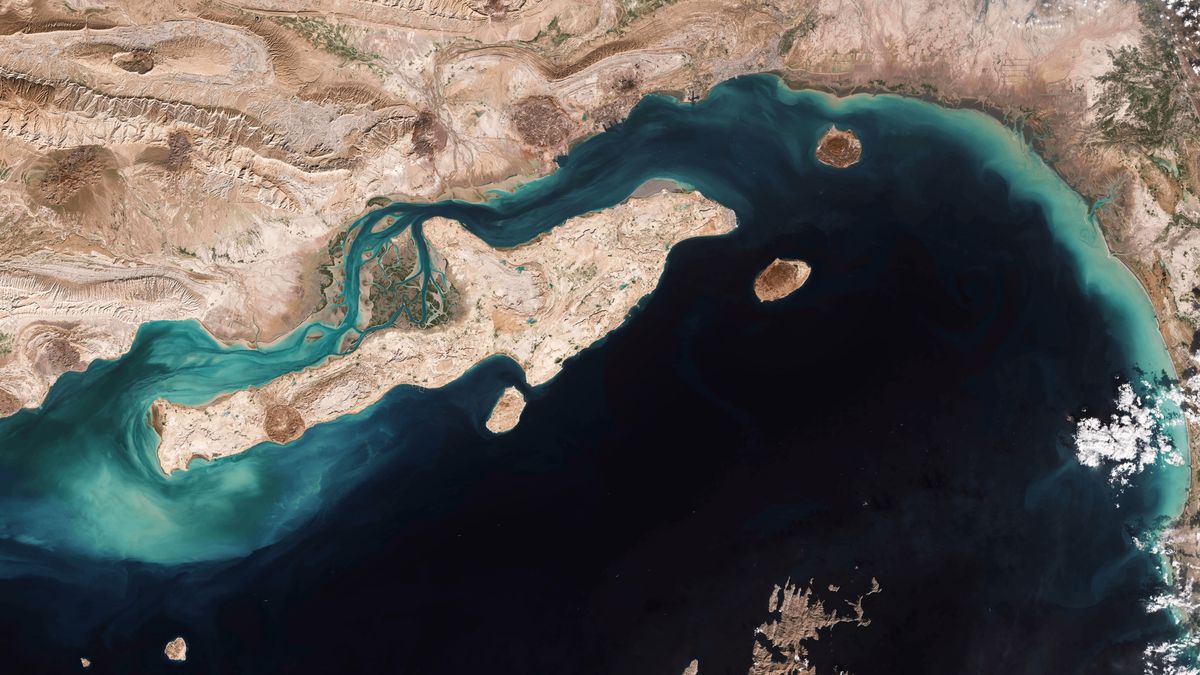
Non-Iranian crude leaving the Strait of Hormuz ran at just 42% of prewar volumes in the last week of October, according to Kpler data reported by Abu Dhabi business outlet AGBI, as a run of attacks on tankers threatened the export recovery that Iraq and other Gulf producers have pieced together for Asian buyers. A little over 7 million barrels of non-Iranian oil exited the waterway in the week to Oct. 28, and tanker crossings averaged 11 a day against about 50 before the war.
The measure covers the strait alone. Broader Kpler tallies that also count loadings at Fujairah and Omani ports, ship-to-ship transfers and Red Sea exports showed non-Iranian Middle East oil exports back at prewar levels in mid-October, because producers have rerouted barrels around Hormuz rather than through it.
For refiners in China, India, Japan and South Korea, the figures matter more than the headline price. Iraq's oil minister, Bassem Mohammed Khudair, said in October that most of the country's crude was moving through Hormuz to customers in Asia, the U.S. and Western markets, AGBI reported. Iraq has little capacity to send crude around the strait, so that route is where the newest attacks bite.
Iraq's export rebound runs through the strait
Iraq's exports averaged more than 3.4 million barrels a day so far in October, Khudair told the state news agency in remarks reported by OilPrice.com on Oct. 19, close to the 3.3 million to 3.5 million barrels a day the country shipped before the U.S.-Iran war began on Feb. 28. September exports averaged 2.65 million barrels a day, including about 250,000 barrels a day piped to Turkey's Ceyhan port.
Most barrels still load at Basra. Iraq now also sends crude north by pipeline to Turkey and by tanker truck through Syria, but those routes carry only a small share. Baghdad has relied on buyers lifting cargoes at its own ports and carrying the transit risk, and the state-owned Iraqi Oil Tankers Company has started moving some crude itself, shipping about 2 million barrels past Hormuz in one week, according to the oil ministry.
That risk has a price. The State Oil Marketing Organization raised discounts on its crude from $25 a barrel in August to persuade buyers to lift more, AGBI reported, citing Shafaq News. For October loadings, SOMO offered Basrah Medium at $34.50 a barrel below its benchmark and Basrah Heavy at $37 below, Bloomberg reported. Ministry spokesman Salim Al-Rikabi said in October that shipping and insurance through Hormuz had risen almost tenfold and that Baghdad now wanted to narrow those discounts.
Iraq is counting on the volumes. It plans 2027 spending of nearly 217 trillion dinars ($167 billion), on a forecast that exports will climb to about 4 million barrels a day, AGBI reported. Oil supplies about 90% of government revenue, according to OilPrice.com.
Strikes shift to engine rooms
The shipping data come as maritime specialists report a change in how vessels are being hit. Seafarers and unions have described Iranian drones striking engine rooms and possibly crew quarters, Lloyd's List senior reporter Joshua Minchin said in a webinar cited by AGBI. Cichen Shen, Asia Pacific maritime intelligence director at Lloyd's List Intelligence, said he had heard similar accounts. Bloomberg counted at least 23 ships attacked in or near the strait in the first two weeks of October, at least five of them with engine-room impacts, after none in September.
The distinction matters for supply. Omar Najia, a derivatives trader at BB Energy, said damage to engines can keep ships out of service for more than a month, far longer than repairs to hulls or cargo tanks. The International Maritime Organization counted at least 10 supertankers attacked in October, and UK Maritime Trade Operations has warned the real number may be higher because many vessels do not report directly. UKMTO reported two projectiles hitting a tanker off eastern Saudi Arabia on Monday, after a Qatari LNG carrier was struck in the Gulf on Friday.
Brent crude fell 2.92% to $110.10 a barrel by 03:30 GMT on Monday, while West Texas Intermediate lost 3.11% to $100.90, AGBI reported. The National put Brent close to $110 and WTI near $100 later in the day. Prices eased after Iranian officials held weekend talks in Doha with Qatari mediators on a plan to reopen Hormuz within two days of any agreement with the U.S. Foreign Minister Abbas Araghchi said no definitive outcome had been reached. Capital Times reported last week that Brent had eased from near a six-month high on earlier diplomacy.
Buffers are thinner than in March
The cushion that softened the first months of the war has worn down. Sultan Al Jaber, chief executive of Abu Dhabi National Oil Co., told the Adipec conference in Abu Dhabi on Monday that nearly 1 billion barrels had been drawn from global inventories since Hormuz was disrupted, and that diesel stocks in some markets were at their lowest seasonal level in 35 years, according to The National and AGBI. “The world has eroded its supply buffers,” he said, calling for larger strategic reserves and refining capacity closer to consumers.
Logistics now account for more than 30% of the cost of a barrel, up from under 5% before the war, Al Jaber said. Members of the International Energy Agency agreed a record 400 million-barrel emergency release in March, and about 330 million barrels had been delivered by mid-October, AGBI reported, citing the agency.
OPEC+ kept December production targets unchanged on Sunday. Iraq's official October export total from SOMO, typically published early in the following month, will show whether the minister's 3.4 million-barrel estimate held through the late-October attacks.
Sources
- AGBI: Attacks on engines increase Hormuz fears (Nov. 2, 2026)
- AGBI: Oil retreats as diplomacy raises hopes for Hormuz reopening (Nov. 2, 2026)
- AGBI: Adnoc CEO calls for countries to increase oil stockpiles (Nov. 2, 2026)
- AGBI: Iraq's crude exports 'back to pre-war levels', says minister (Oct. 20, 2026)
- AGBI: Iraq seeks to boost oil revenue by cutting buyers' discounts (Oct. 12, 2026)
- OilPrice.com: Iraq's October Oil Exports Top 3.4 Million Bpd, Nearing Pre-War Levels (Oct. 19, 2026)
- The National: Dr Sultan Al Jaber urges energy security overhaul as nearly billion barrels drawn from oil markets (Nov. 2, 2026)
- The National: UAE oil exports surpass prewar levels despite Hormuz disruption, energy minister says (Nov. 2, 2026)
- Bloomberg (via gCaptain): Iran strikes more ship engine rooms in ramp-up of Hormuz attacks (Oct. 20, 2026)
- Bloomberg (via Rigzone): Iraq Deepens October Crude Price Discounts (Sept. 30, 2026)
Our standards: Capital Times reports under the principles set out in our Editorial Standards and Ethics Policy. Spotted an error? Report it to our editors.