Korea's Retirement Pensions Hit 501 Trillion Won, but Only 16.5% of Savers Take Annuities
A National Assembly report finds most workers still cash out, returns trail the national pension, and a mandate for every employer is set to phase in from 2028.
What to know
- South Korea's workplace retirement pension reserves reached a preliminary 501 trillion won at the end of 2025, up 16.1% in a year, according to a National Assembly Research Service report.
- Only 16.5% of accounts that paid benefits in 2025 chose an annuity, although annuities made up 61.6% of the money paid out, and about 82% of annuity takers picked terms of 10 years or less.
- The Labor Ministry plans to require employers to hold retirement benefits outside the company from 2028 for firms with 100 or more workers, extending to all workplaces by 2030, pending legislation.
SEOUL
South Korea's workplace retirement pension system has grown past 500 trillion won, but most workers still treat it as a severance check rather than a pension, a report from the National Assembly's research arm found.
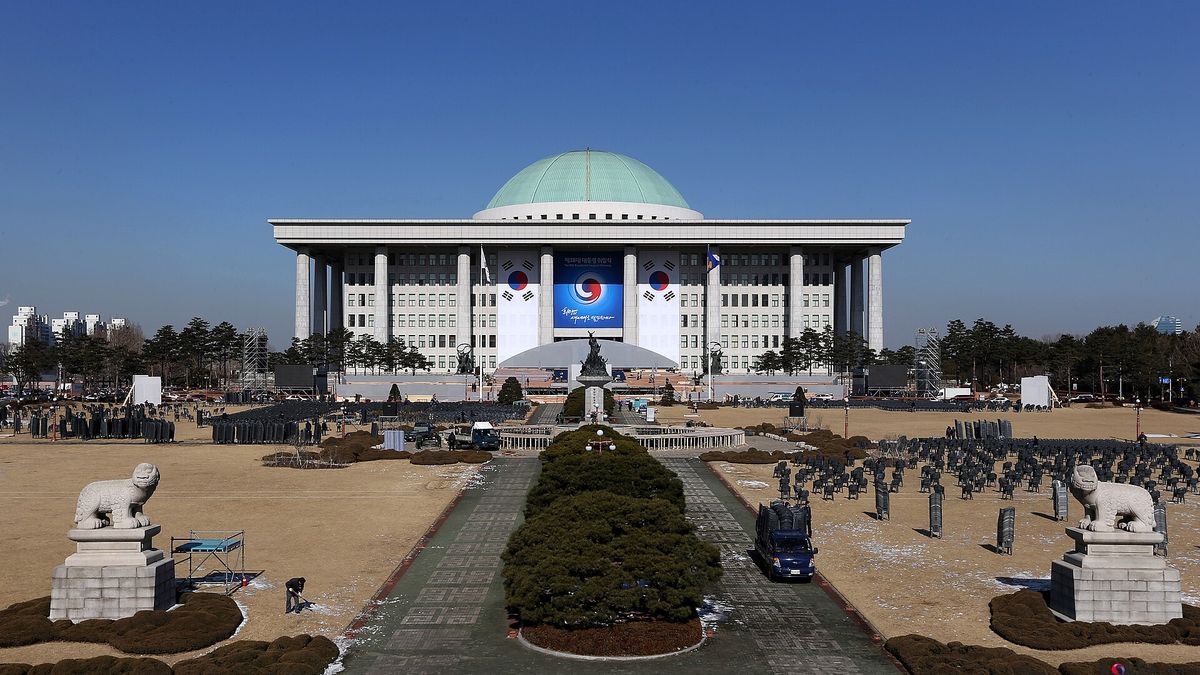
Reserves reached a preliminary 501 trillion won (about US$375 billion) at the end of 2025, up 70 trillion won, or 16.1%, from a year earlier, according to the National Assembly Research Service (NARS) report published on Nov. 17, as reported by Herald Business. The report's title calls the 500 trillion won figure a paradox, because the money still largely fails to work as a pension.
Of the accounts that received retirement benefits in 2025, 83.5% took a lump sum. The annuity share by account count has risen from 3.3% in 2020 to 16.5%. Measured by money rather than accounts, the picture is better: annuities made up 61.6% of the amount paid, up from 28.5% in 2020, which suggests that workers with larger balances are the ones choosing regular payouts.
Even annuity takers tend to draw down fast. About 82% of them set a payout period of 10 years or less, the report found, so a worker who starts drawing at 60 could exhaust the account by 70.
Returns lag, and much of the money sits still
Returns improved sharply last year. The system earned 6.47% in 2025, the highest since records began, NARS said. Over longer periods it has been weak: a five-year average of 2.86% and a 10-year average of 2.31%. About 75% of reserves remain in principal-guaranteed products such as deposits, which protect capital but grow slowly.
Han Jeong-rim, president of the National Pension Research Institute, put the gap in starker terms in an October opinion piece for The Kyunghyang Shinmun. He cited a five-year average return of 3.29% for retirement pensions against 10.51% for the National Pension Service, and estimated that financial institutions collected about 2 trillion won a year in fees as of 2025. Measurement periods differ between the two sources, so the figures are not directly comparable.
The difference compounds. A worker with 50 million won who earns 2.31% a year for 20 years would end up with about 79 million won before fees, while the same balance at 4% would grow to about 110 million won, by Capital Times' calculation. Those rates are illustrative, not a forecast.
Early cash-outs drain balances further. Of roughly 18 trillion won withdrawn early in 2024, 15 trillion won came from individual retirement pension (IRP) accounts closed before the holder turned 55, NARS said. The remaining 3 trillion won was taken out by people still in work.
A mandate for every employer, phased in from 2028
Coverage is the other gap. Only 26.5% of workplaces had a retirement pension plan in 2024, a share that has barely moved in a decade, according to the report. Adoption reached 92.1% at companies with 300 or more employees but just 10.6% at those with fewer than five. Retirement pay accounted for 822.9 billion won, or 41.1%, of unpaid wages last year, NARS said.
The government wants to close that gap. Employment and Labor Minister Kim Young-hoon told a party-government meeting at the National Assembly on Oct. 29 that employers would have to hold retirement benefits with outside financial institutions, starting with workplaces of 100 or more employees in 2028 and reaching all workplaces by 2030, Herald Business reported. About 12 billion won has been set aside to help small businesses, and the plan needs an amendment to the Act on the Guarantee of Workers' Retirement Benefits.
The reform grew out of a Feb. 6 agreement among unions, employers and the government. Kim called it "the first social consensus on core issues left unresolved for more than two decades," The Korea Times reported. That deal also introduces fund-type retirement pensions, in which a trustee pools contributions and invests them professionally, alongside the existing contract-based plans offered by banks, brokers and insurers.
Small business remains the sticking point. At a Nov. 16 task force meeting, union and employer groups discussed working together on the legal revision but urged the ministry to weigh the burden on smaller firms, Herald Business reported.
What savers can do now
Workers changing jobs can keep severance money in an IRP rather than closing the account; the NARS figures show early closures are the single biggest leak. Those near retirement should compare an annuity with a lump sum before choosing, and consider a payout period longer than 10 years if they have no other steady income beyond the national pension. As a rough example, 300 million won paid over 10 years is 2.5 million won a month before returns; stretched to 20 years, it is 1.25 million won a month.
Savers with balances parked in deposits should check whether their plan's default option still suits their age. IRP contributions also qualify for Korea's year-end tax credit, on up to 9 million won a year combined with pension savings accounts, according to Newsis, as we explained in our guide to the 2026 year-end tax settlement.
Next to watch are the amendment bill's passage and the rules for who may run fund-type plans. The National Pension Service fund's month-to-month swings are tracked separately, including in our report on its July results.
This article is general information, not financial advice.
Sources
- Herald Business: South Korea's retirement pension pot hits W501tr, but only 16% take it as annuity (Nov. 17, 2026)
- Herald Business: Labor, management and government discuss mandatory retirement benefit reserves, urge caution for small businesses (Nov. 16, 2026)
- Herald Business: Kim Young-hoon vows to make retirement benefit external reserves mandatory at all workplaces by 2030 (Oct. 29, 2026)
- The Korea Times: Korea to require retirement pensions at all workplaces, add fund-based plans (Feb. 6, 2026)
- The Kyunghyang Shinmun: The introduction of fund-type retirement pensions should be made an opportunity to strengthen old-age income security (Oct. 21, 2026)
- Newsis: 노후 대비하면 나라가 세금을 돌려준다니 [달라진 연말정산⑤] (IRP and pension savings tax credits) (Jan. 12, 2025)
Our standards: Capital Times reports under the principles set out in our Editorial Standards and Ethics Policy. Spotted an error? Report it to our editors.