Korea Keeps Tesla FSD Off 183,407 China-Built Cars as Exemption Request Stalls
U.S.-built Teslas can run Full Self-Driving under the Korea-U.S. free trade agreement, but the Shanghai-made Model 3 and Model Y that drive Tesla's record Korean sales cannot, and the land ministry says the company's paperwork falls short.
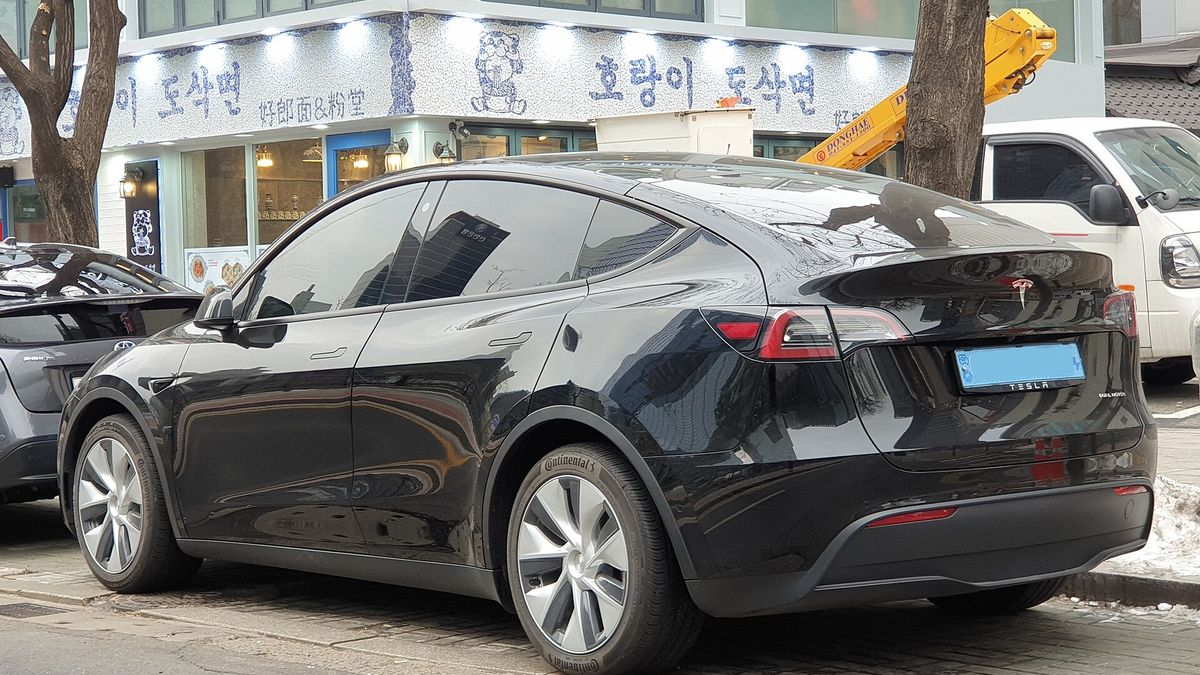
What to know
- Of the 238,968 Teslas registered in Korea at the end of September, 183,407 are China-built Model 3 and Model Y cars that cannot legally use Full Self-Driving.
- U.S.-built Teslas can run the feature because the Korea-U.S. FTA lets cars that meet U.S. safety standards onto Korean roads without separate approval.
- Tesla sold 98,313 cars in Korea from January through October, up 105% from a year earlier, according to Kaida data cited by Korea JoongAng Daily.
SEOUL
South Korea's land ministry has yet to clear Tesla's request to switch on its Full Self-Driving (FSD) software for 183,407 China-built cars, leaving roughly three in four Teslas on Korean roads locked out of a feature their U.S.-built siblings can already use under the Korea-U.S. free trade agreement.
The gap matters beyond one carmaker. Korea has become one of Tesla's strongest markets just as its global sales slow, and nearly all of that growth comes from Shanghai. How Seoul treats software on Chinese-made cars will shape the terms on which Chinese factories, whether owned by Tesla or by BYD, Changan and Chery, compete with Hyundai Motor and Kia at home.
Two sets of rules for the same Tesla
The split comes from trade law. Under the Korea-U.S. FTA, cars that meet U.S. federal safety standards can be sold in Korea without separate government approval, Korea JoongAng Daily reported. That lets U.S.-made models such as the Model S, Model X and Cybertruck run FSD. Cars built in China must instead meet Korea's own vehicle safety standards, which require drivers to keep their hands on the wheel while the car moves and to work the turn signal themselves before changing lanes. FSD changes lanes on its own under driver supervision, so it fails that test, according to the Ministry of Land, Infrastructure and Transport.
Data Tesla Korea submitted to a lawmaker's office showed 238,968 Teslas registered in Korea at the end of September. Of those, 53,477, or 22.4%, could use FSD. The China-built Model 3 and Model Y accounted for 183,407. The hardware does not decide it: some older U.S.-made cars with Tesla's HW3 computer can run the software, while newer China-made cars with HW4 cannot.
Tesla Korea filed for a special exemption with the ministry on Oct. 22. The application rests on Article 114-2 of the ministry's safety rules, which lets the minister allow a new "device" that outperforms existing standards or is needed for safety. That clause has so far covered physical equipment such as lighting and pedal-error prevention systems, never a software update, and a ministry official said the legal question needed review. A ministry official later told CBS Nocut News that the company had supplied an "insufficient" portion of the required documents, Korea JoongAng Daily reported on Wednesday. The ministry has also pointed out that no international standard for FSD exists yet.
Tesla's argument is its record. Tesla Korea CEO Seo Young-deuk told a National Assembly audit on Oct. 8 that FSD had logged more than 100 million kilometers in Korea with no serious accidents reported to the company, only minor ones.
Shanghai output drives record Korean sales
The stakes for Tesla are rising. It sold 9,165 cars in Korea in October, down 25.9% from September but enough to stay the best-selling imported brand for a ninth straight month, according to data from the Korea Automobile Importers and Distributors Association (Kaida) cited by Korea JoongAng Daily. Registrations from January through October reached 98,313, up 105% from a year earlier, putting Tesla close to 100,000 sales in a single year, a level no imported brand has reached in Korea.
That run contrasts with Tesla's global numbers: worldwide deliveries fell 2.1% from a year earlier in the third quarter while Korean sales rose 35.3%, the newspaper reported. A researcher at the Korea Automotive Technology Institute told the paper that Korea's relatively open conditions for Chinese-made EVs, compared with U.S. trade barriers, made it easy for Tesla to ship Shanghai output there. A Namseoul University professor said expectations that China-made cars would eventually get FSD likely influenced purchases too.
Pressure from owners is growing. Dozens of Tesla owners have flooded replies to Land Minister Hong Ji-sun's posts on X, including a Nov. 5 post on housing, demanding the restriction be lifted. Some workarounds have drawn police attention: Seoul police referred 80 owners of China-built Teslas to prosecutors for unlocking FSD with unauthorized devices and seized 21 of them. The Motor Vehicle Management Act sets penalties of up to two years in prison or a fine of up to 20 million won ($15,000) for unauthorized changes to safety-related software.
What it means for Hyundai and Chinese rivals
For Korean carmakers, the ministry's caution buys time. Hyundai Motor, which cut its 2026 guidance with its third-quarter results, and Kia already face Chinese competition at home. BYD sold 1,594 cars in Korea in October, ranking fifth among imported brands, and Changan and Chery are expected to enter the market in 2027, Korea JoongAng Daily reported. Hyundai Motor Chief Financial Officer Lee Seung-jo said on the Oct. 29 earnings call that the company would sharpen its installment financing and EV after-sales service against Tesla and Chinese brands.
Korea's longer route to hands-off driving runs through a different rulebook. The government backs a bill, proposed in July, to adopt UN Regulation No. 171 on driver control assistance systems. Even that standard would allow hands-free driving only on expressways and other motorways, not on the city streets where FSD operates in the U.S.
Europe is moving on its own timetable. The Netherlands approved FSD in April under an EU exemption for new technology, about 10 countries now allow it, and EU member states could vote as early as December on bloc-wide approval. A ministry official said Seoul would watch those talks, while noting they are not directly related to Korea's review.
Sources
- Korea JoongAng Daily: Stuck in the Joseon Dynasty? Tesla owners flood land minister's posts with complaints about FSD ban (Nov. 11, 2026)
- Korea JoongAng Daily: Tesla nears unprecedented 100,000 annual sales mark in Korea as rivals brace (Nov. 9, 2026)
- Korea JoongAng Daily: Tesla Korea seeks exemption to unlock FSD for China-made cars (Oct. 29, 2026)
- Korea JoongAng Daily: Police book 80 people for illegally activating Tesla's Full Self-Driving mode (Oct. 27, 2026)
Our standards: Capital Times reports under the principles set out in our Editorial Standards and Ethics Policy. Spotted an error? Report it to our editors.