Hyundai Shows Mercury Electric SUV Concept in Guangzhou as Its China Sales Keep Sliding
The small Ioniq SUV, due in 2027 with ByteDance software and a CATL battery-swap option, tests a turnaround plan that has yet to show up in sales.
What to know
- Hyundai Motor unveiled the Mercury Concept, a small premium electric SUV for China with a production version due in 2027, at Auto Guangzhou 2026 on Nov. 27.
- The concept uses a Zhuoyu Level 2++ driver-assistance system and ByteDance's Doubao AI model, and Hyundai plans a battery-swap version with CATL.
- Beijing Hyundai sold 9,542 vehicles in September, down 45.5% from a year earlier, against a target of 500,000 a year.
GUANGZHOU
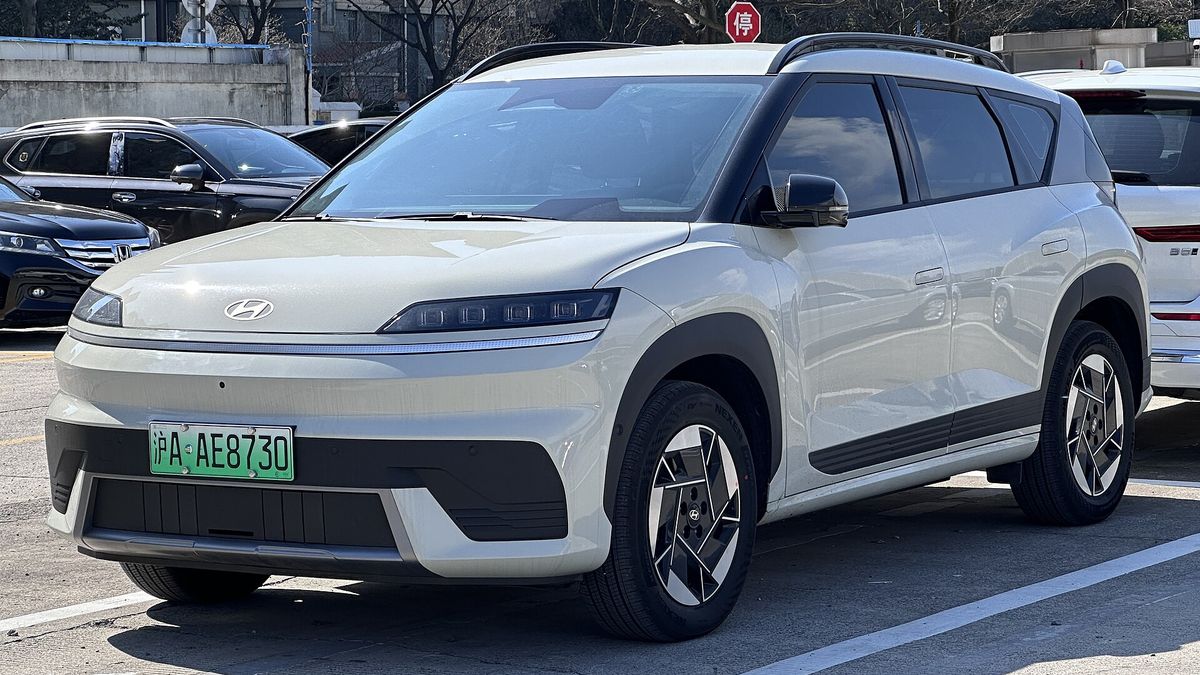
Hyundai Motor used the opening day of Auto Guangzhou 2026 on Friday to show a small electric SUV designed in China for Chinese city drivers, the newest piece of a product push meant to halt a slide that has cut its share of the world's biggest car market to a sliver.
The Mercury Concept, a B-segment premium SUV, made its global debut at the 24th Guangzhou International Automobile Exhibition, which runs through Dec. 6, The Korea Times reported. A production version is scheduled for 2027. It is the third Ioniq concept built specifically for Chinese buyers, and Hyundai's design and engineering teams in China developed it.
Much of the car's appeal rests on Chinese partners. The concept uses a Zhuoyu Level 2++ driver-assistance system and a smart cockpit running ByteDance's Doubao AI model, and Hyundai plans a battery-swapping version with CATL, according to The Korea Times and Autocar India. The company has not disclosed powertrain or battery details, Autocar India said. Autoevolution described the Mercury as the entry-level model of the Ioniq range in China, aimed at daily urban commuting.
A Timetable Built on Local Technology
The Mercury slots into a schedule Hyundai set out at the show. An extended-range version of the Ioniq V sedan arrives in 2027, a production model based on the family-oriented Earth Concept follows in 2028, and two more new energy vehicles are due in 2029, according to Autocar India and autoevolution. The Korea Times said several China-specific sedans and SUVs will come over the next three years.
The Ioniq V is the first product of that effort to reach dealers. The midsize electric sedan opened for pre-orders at the Chengdu auto show on Aug. 21 at prices from 119,900 yuan to 139,900 yuan, CnEVPost reported, before going on sale in September. It runs on lithium iron phosphate batteries from CATL, offers up to 650 kilometers of range under China's CLTC test cycle and uses an 800-volt fast-charging system, the outlet said.
The broader plan dates to Auto China in Beijing in April, when Hyundai outlined 20 electrified models for China over five years, The Korea Herald reported. Hyundai and BAIC, its partner in the 50-50 Beijing Hyundai joint venture, had injected 8 billion yuan into Beijing Hyundai the previous year, and the venture is aiming for annual sales of 500,000 vehicles. Chief Executive Jose Munoz called China "our greatest opportunity for growth," according to the paper.
The Sales Hole Keeps Getting Deeper
So far the numbers point the other way. Beijing Hyundai sold 9,542 vehicles in September, down 45.5% from a year earlier, according to China Passenger Car Association data published by Gasgoo. Its sales for the first nine months totaled 118,164. The Ioniq V added 558 units in its first month, while two older combustion models, the Tucson L and the Custo, each fell more than 75%.
At this year's pace, Beijing Hyundai would sell roughly 158,000 vehicles in 2026, by Capital Times' calculation from the Gasgoo figures, less than a third of the 500,000 goal.
A separate count of sales to customers looks weaker still. Hyundai and Kia together sold about 9,000 cars at retail in China in September, down 39%, for a combined share of 0.6%, a new low, Gasgoo reported, citing Hanwha Securities calculations from passenger car association data that Yonhap published. That was the eighth straight month of year-on-year declines. In 2016 the two brands sold nearly 1.8 million vehicles combined, with a share above 10%.
The Gasgoo report attributed the slump mainly to a product gap: the brands still lean on combustion-engine models while new energy vehicles made up more than 60% of China's retail passenger car sales in September. That is the gap the Mercury and its siblings are meant to close.
China is not the only soft spot. Hyundai's global sales fell 6.3% to 329,773 vehicles in October, The Herald Business reported, after the company cut its 2026 margin and sales targets with its third-quarter results.
What to Watch
The first signal will be the monthly sales of the Ioniq V in October and November, which will show whether a locally developed, CATL-powered sedan can win buyers in a market dominated by new energy vehicles. A single month of 558 units is too short a record to judge.
For the Mercury, the open questions are price, range and an exact launch date, none of which Hyundai has disclosed. Investors will also look for details of the CATL battery-swap version, which Hyundai has only previewed.
Leadership continuity should help. Hyundai Motor Group kept Munoz in place in its year-end reshuffle, so the executive who framed China as the company's biggest growth opportunity will be the one held to the 500,000-vehicle target.
Sources
- The Korea Times: Hyundai Motor unveils Mercury Concept to accelerate China expansion (Nov. 27, 2026)
- Autocar India: Hyundai Mercury concept previews brand's new entry-level e-SUV for China (Nov. 27, 2026)
- autoevolution: Mercury Is Back, Though Not From the Ford Motor Company & Not For America but For China, by Hyundai (Nov. 27, 2026)
- The Korea Herald: Hyundai bets on 20 localized models, $1 billion to revive sales in world's largest automotive market (April 24, 2026)
- CnEVPost: Hyundai Ioniq V starts pre-sales in China from $17,700 (Aug. 21, 2026)
- Gasgoo: September, 2026 auto sales of Hyundai (Oct. 27, 2026)
- Gasgoo: Korean Automakers' China Retail Sales Fall Below 10,000 Units in September, Share Drops to 0.6% (Oct. 27, 2026)
- The Herald Business: Hyundai Motor posts 329,773 global sales in October, down 6.3% on year (Nov. 2, 2026)
Our standards: Capital Times reports under the principles set out in our Editorial Standards and Ethics Policy. Spotted an error? Report it to our editors.