Korea Seeks Bigger Stock Rescue Fund as Kospi Sits Nearly Half Below Its Peak
State lender KDB is sounding out banks and brokerages on topping up a 10.76 trillion won backstop that has not bought shares since 2008.
What to know
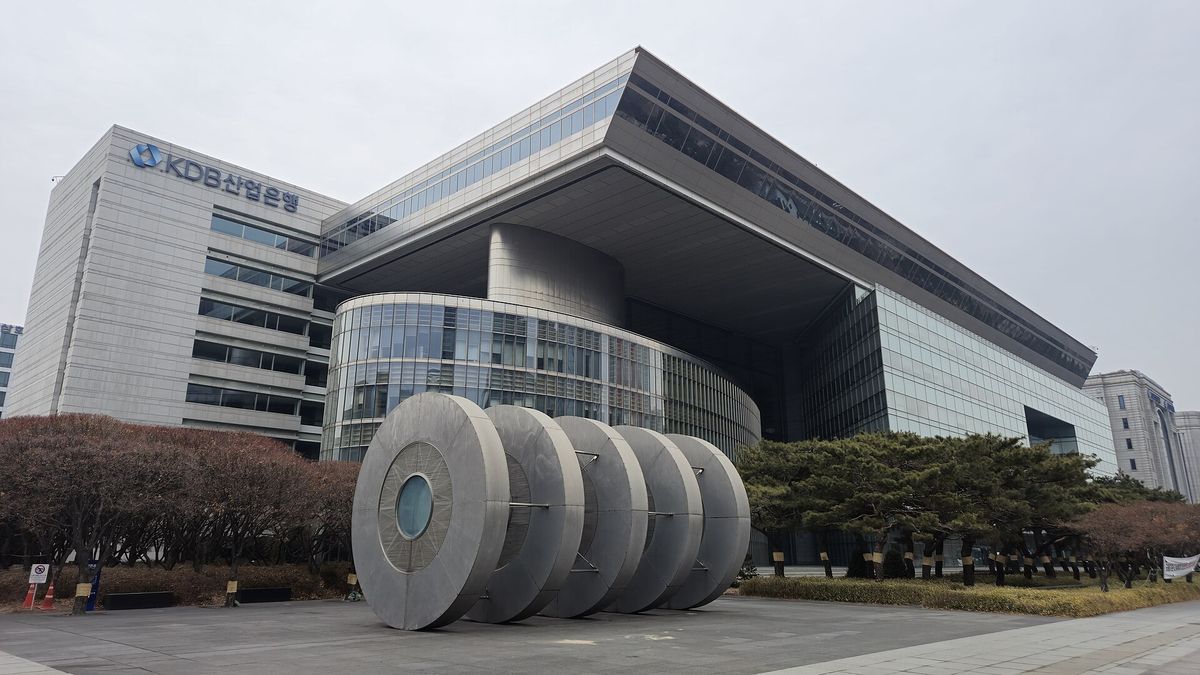
- Korea Development Bank has asked financial holding companies and brokerages whether they can honor and add to their pledges to the 10.76 trillion won stock market stabilization fund.
- The fund equals 0.28% of the Kospi's 3,847.66 trillion won market value and is smaller than the 16.2 trillion won of shares traded on the main board on Nov. 26.
- The Kospi closed at 4,711.21 on Nov. 26, about 48% below its June 22 record of 9,114.55, after falls of 5.21% on Nov. 20 and 6.16% on Nov. 25.
SEOUL
South Korea is trying to put more money behind its stock market stabilization fund, a backstop that has not bought a single share since the 2008 global financial crisis, after the Kospi suffered two one-day falls of more than 5% in less than a week.
State-run Korea Development Bank has asked major financial firms, including financial holding companies, whether they can still meet their pledges to the 10.76 trillion won fund and whether they would commit more, JKN reported on Nov. 25. The Korea Herald reported on Thursday that the bank has also contacted brokerages and that authorities are pressing banks and securities firms for additional contributions.
No cash sits in the fund today. It works as a capital call: member institutions transfer the money they have pledged only when the Financial Services Commission decides to activate it, according to both outlets.
A week of emergency steps
The push follows an emergency meeting on Sunday, Nov. 22, convened by Deputy Prime Minister and Finance Minister Lee Hyoung-il with Bank of Korea Governor Shin Hyun-song, Financial Services Commission Chairman Lee Eog-weon and Financial Supervisory Service Governor Lee Chan-jin. They agreed to prepare the fund for immediate activation if markets warrant it, The Korea Times and Aju Press reported. The next day, the finance minister said the fund's size would be reviewed while officials monitor whether to activate it, leaving room for expansion, JKN reported.
The officials also eased daily limits on share buyback orders by listed companies for three months from Nov. 24 and started a three-month crackdown on illegal short selling. Earlier in November, regulators had already suspended the 140% margin-loan collateral rule until Jan. 31 to limit forced selling.
The selling has been heavy. The Kospi fell 5.21% to 4,869.96 on Friday, Nov. 20, its first close below 4,900 in about 10 months, and lost 7.95% over the week as doubts about returns on artificial intelligence spending hit chip stocks, The Korea Times reported. The Nasdaq Composite fell 10% that week, Aju Press reported. On Wednesday the Kospi dropped another 6.16% to 4,697.51, its lowest close since Jan. 13, according to JKN.
Short sellers have been active. Short sales on the Kospi and Kosdaq totaled 21.6 trillion won over 14 sessions from Nov. 2 to Nov. 19, and foreign investors accounted for 75.1% of that, The Korea Times reported, citing Korea Exchange data.
Thursday brought a pause. The Kospi rose 0.29% to 4,711.21 on the day the Bank of Korea raised its base rate to 3.25%, the Korea Herald reported. Individuals sold a net 1 trillion won of shares and foreigners sold 116 billion won, while institutions bought 752 billion won. The index remains about 48% below its June 22 record of 9,114.55.
A small fund for a bigger market
The fund's main weakness is scale. Its 10.76 trillion won equals 0.28% of the Kospi's market capitalization of 3,847.66 trillion won, according to the Korea Herald. It is also smaller than the 16.2 trillion won worth of shares that changed hands on the main board on Thursday alone.
The current fund was raised in March 2020, during the COVID-19 sell-off, when the Kospi was worth 1,083 trillion won. Lim Jae-kyun, an analyst at KB Securities, told the Korea Herald that the fund "should also be enlarged accordingly to help stabilize the stock market." Earlier this month, Manishi Raychaudhuri, chief executive of Emmer Capital Partners in Hong Kong, told The Korea Times that "any fund smaller than 25-30 trillion won would simply be diluted" by foreign outflows.
Finding the money will not be simple. Brokerages are reportedly reluctant to contribute because their earnings have weakened since the third quarter, and banks carried the larger share of the original fund, so the final size depends mostly on what banks commit, the Korea Herald reported. Financial firms see the survey as KDB checking the situation in advance, since cash can be tight ahead of year-end settlements, JKN reported. Critics quoted by JKN warned that a hasty top-up could leave contributors with losses, depending on what the fund buys and when.
What to watch
Before the fund can move quickly, its investment committee must revise its operating guidelines, including the Kospi decline levels that would trigger buying and how much it would deploy at each level, the Korea Herald reported.
Its record is thin. The Korea Herald said such funds have been set up five times since 1990 and used three times; The Korea Times also counted five launches. Both agree that the last purchases came during the global financial crisis; the Herald put them at 515 billion won between November 2008 and March 2009. The 2020 fund has never bought shares, and preparations to activate it in 2022 also ended without purchases.
Policymakers remain wary. President Lee Jae Myung warned on Oct. 19 against direct government intervention in the market, The Korea Times reported. Kim Jin-wook, chief economist at Citi Korea, argued at a Nov. 13 capital market policy meeting chaired by the president that merely signaling the fund could be activated might curb short selling, the Times reported.
Much of the pressure comes from abroad. JKN noted doubts that domestic money alone can reverse the slide while U.S. sentiment on AI investment, global interest rates and semiconductor export controls drive the market. The next test is whether banks commit fresh pledges before the year-end books close.
Sources
- The Korea Herald: Korea moves to beef up W10tr stock market rescue fund (Nov. 26, 2026)
- JKN: KOSPI plunge triggers move to expand stock market stabilization fund; KDB surveys financial firms (Nov. 25, 2026)
- The Korea Times: KOSPI rout fuels calls for bolder stabilization measures (Nov. 22, 2026)
- Aju Press: Seoul readies fund against AI crash in stock market (Nov. 22, 2026)
- The Korea Herald: Seoul shares slightly rebound amid AI uncertainties (Nov. 26, 2026)
- The Korea Times: Taiwan, China tap market rescue funds. Why won't Korea? (Nov. 11, 2026)
Our standards: Capital Times reports under the principles set out in our Editorial Standards and Ethics Policy. Spotted an error? Report it to our editors.