Korea Waives 140% Margin-Loan Collateral Rule for 3 Months After Kospi Falls 6%
Brokerages can delay forced sales of stocks bought on credit from Monday. With 28.64 trillion won still borrowed, leveraged retail investors get time, not protection.
What to know
- South Korea will suspend the 140% collateral maintenance requirement on brokerage margin loans for three months starting Monday, Nov. 9.
- The Kospi closed down 6.02% at 5,059.69 on Friday after an early plunge of more than 8% triggered a 20-minute trading halt, Yonhap reported.
- Outstanding margin loans stood at 28.64 trillion won on Nov. 4, down 25.9% from the June 24 peak of 38.63 trillion won, according to KOFIA.
HONG KONG
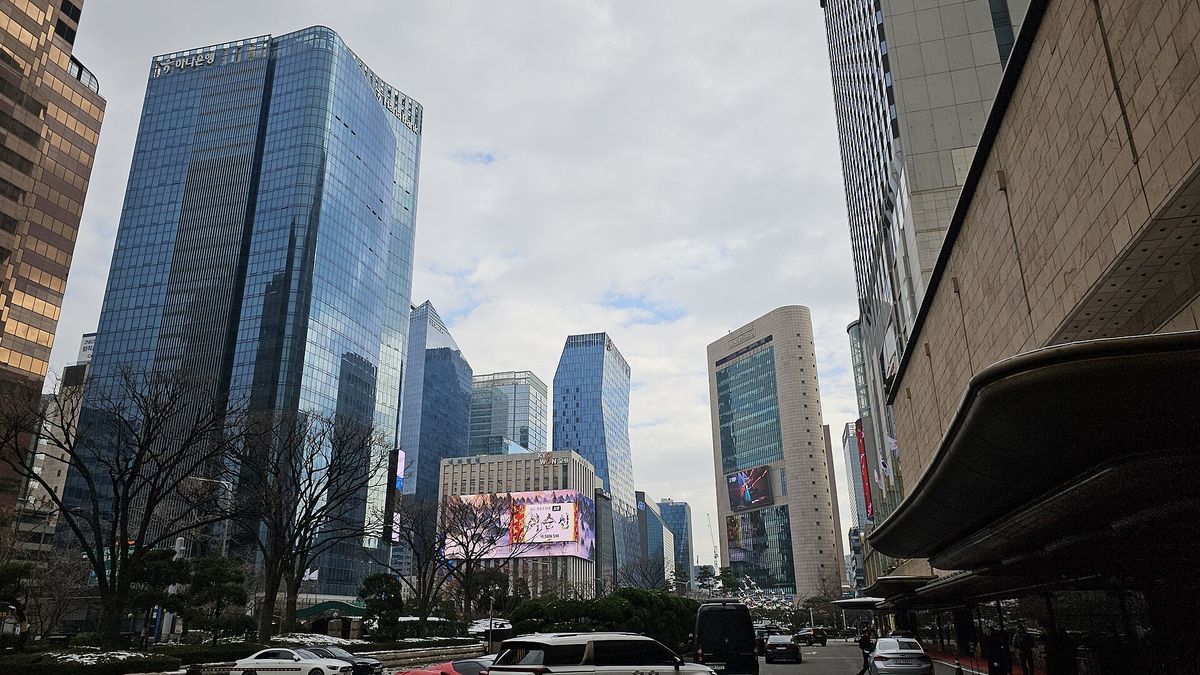
South Korea will suspend the rule that forces brokerages to sell out margin borrowers whose collateral drops below 140% of their loan, giving leveraged retail investors three months of breathing room after the Kospi fell 6.02% on Friday and briefly traded below 5,000 for the first time in about nine months.
The waiver takes effect Monday, Nov. 9. For individual investors across Asia, the more useful lesson sits in the numbers behind it: Korean households went into this week's chip-stock sell-off with 28.64 trillion won ($21.1 billion) in margin debt still outstanding, and a thinner cash cushion than at the market's peak in June.
What Seoul changed, and what it did not
The measure came out of an emergency meeting on Friday chaired by Deputy Prime Minister and Finance Minister Lee Hyoung-il, with Financial Services Commission Chairman Lee Eog-weon, Financial Supervisory Service Gov. Lee Chan-jin and Bank of Korea Deputy Gov. Kwon Min-soo, Aju Press reported.
Under the current rule, a brokerage lending money for share purchases must hold collateral worth at least 140% of the loan. When prices fall and the ratio slips below that line, the borrower must post more cash or shares. If they cannot, the broker sells the holdings.
The exemption lets brokerages lower that threshold or put off forced sales. It is not a ban on liquidation and does not raise borrowing limits, Aju Press noted. How much relief a given investor gets depends on how each brokerage uses the new discretion. The government's step also covers only margin loans. Forced sales tied to unpaid stock purchases, where an investor fails to settle a trade by the deadline, are outside its scope.
Seoul has tried this before. In 2022 it suspended the same requirement from July 4 through the end of September. Mirae Asset Securities cut its ratio to 130% from 140%, while Kyobo Securities and Korea Investment & Securities gave borrowers an extra day before selling, Aju Press reported. The Kospi still hit its low for the year in September and finished 2022 down 24.9%.
How Korea's retail investors are positioned
Friday's session was violent. The Kospi dropped more than 8% just after the opening bell, setting off a 20-minute marketwide halt, and touched an intraday low of 4,911.28 before closing down 324.11 points at 5,059.69, according to Yonhap. SK hynix fell 10.44% to 1.13 million won and Samsung Electronics lost 6.35% to 188,700 won. Foreign investors sold a net 2.8 trillion won, while retail and institutional investors were combined net buyers of 2.3 trillion won. The fall extended a sell-off that began Thursday, when fears of tougher U.S. rules on AI hit Asian chip stocks.
Borrowing has already come down. Outstanding margin loans stood at 28.64 trillion won on Nov. 4, 25.9% below the June 24 peak of 38.63 trillion won, according to Korea Financial Investment Association (KOFIA) data cited by Aju Press. Investor deposits, the cash parked at brokerages and ready to buy shares, fell faster over the same period, by 34.7% to 89.23 trillion won. That pushed margin debt up to 32.1% of deposits from 28.3%.
Forced selling has risen sharply this year. Margin-loan liquidations at the 10 largest securities firms totaled 919.34 billion won in the first half of 2026, with the monthly figure climbing from 56.51 billion won in January to 393.51 billion won in June, according to data submitted to lawmaker Kim Sang-hoon. Liquidations of unpaid purchases reached 5.15 trillion won in the first 10 months of the year, roughly four times the 1.28 trillion won in the same period of 2025, KOFIA data show. The latest reading, 8.42 billion won on Thursday, predates Friday's plunge.
What individual investors can take from it
A delayed margin call is still a margin call. If prices keep falling during the waiver, a borrower who is not sold out on Monday can face a larger loss in December. Investors who hold shares on credit, in Korea or with a margin account in Hong Kong, Tokyo or Singapore, can check three things this weekend.
First, the trigger. Know the exact maintenance ratio your broker uses, and whether it changes. In Korea, each firm will now set its own response to the waiver, so the notice from your brokerage matters more than the headline rule.
Second, the distance to the trigger. Work out how far your holdings can fall before the ratio is breached. A portfolio concentrated in two chip stocks, as many Korean retail accounts are, can cover that distance in a single session, as Friday showed.
Third, settlement. Buying more than your cash covers and paying later is a different risk from a margin loan, and Seoul's relief does not apply to it.
Retail investors who poured record sums into U.S. index funds this year face currency and market risk but no forced sales. The difference is the borrowing.
The waiver runs into early February. The next KOFIA margin-loan and deposit figures, covering Thursday and Friday, will show how much forced selling the two-day rout produced before the relief began.
Sources
- Korea JoongAng Daily (Yonhap): Kospi plunges 6% as AI data center fears trigger second-day Seoul stock rout (Nov. 6, 2026)
- Aju Press: Seoul tweaks margin loan rule to contain stock selloff (Nov. 6, 2026)
- Aju Press: Seoul buys time to halt KOSPI's downward spiral (Nov. 6, 2026)
Our standards: Capital Times reports under the principles set out in our Editorial Standards and Ethics Policy. Spotted an error? Report it to our editors.