U.S. Turns Up Tariff Pressure on Brazil as Mexico Escapes Overcapacity Ruling for Now
Washington wants a 10% duty on Brazilian aircraft and new sugar levies, while Mexico sits outside a package that hits Asian exporters with rates of 15% to 35%.
What to know
- USTR proposed ending the tariff exemption for finished aircraft from Brazil and charging a 10% duty, plus new per-kilogram duties on out-of-quota sugar from all origins.
- Brazil's government called the move unacceptable in a note on Nov. 25 and said it does not rule out reciprocity measures or action at the WTO.
- USTR made no determination on Mexico or Norway in its overcapacity probe, while 14 economies, 12 of them in Asia, face proposed tariffs of up to 15% to 35%.
WASHINGTON
Washington's Nov. 25 tariff announcements split the Americas in two. Brazil drew a proposal to tax its jetliners and sugar, while Mexico was left out of the overcapacity package that put rates of up to 15% to 35% on most of Asia's big exporters.
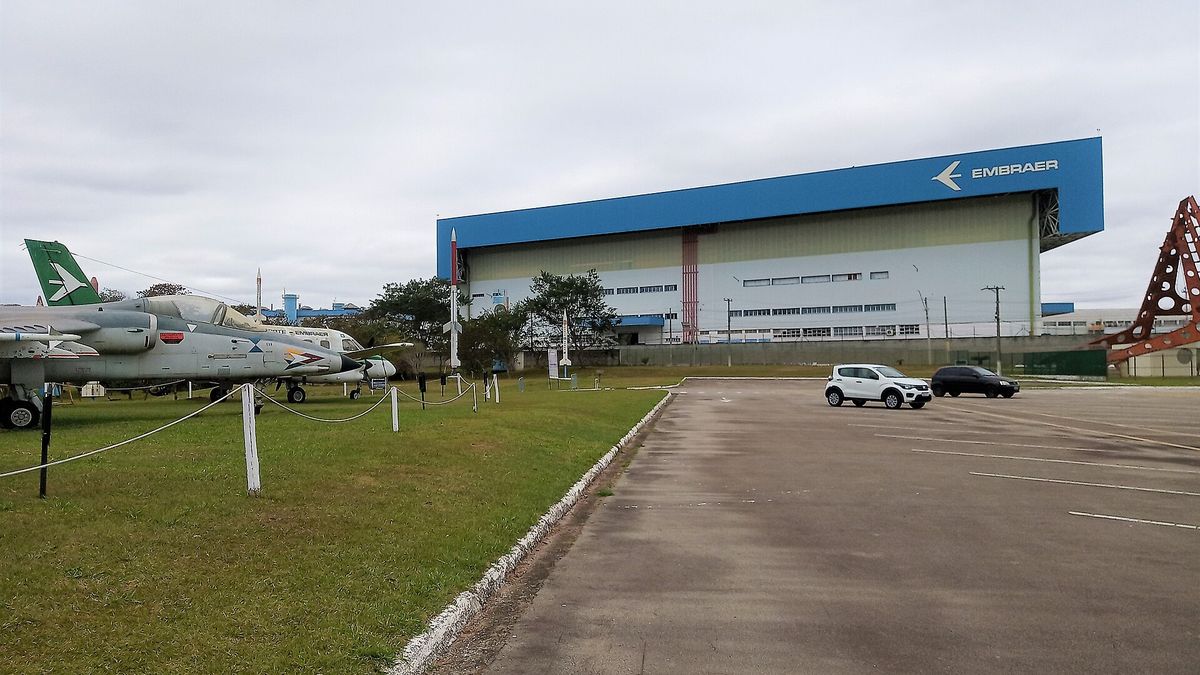
The Office of the U.S. Trade Representative proposed ending the tariff exemption for finished aircraft from Brazil and charging them a 10% duty. It also wants new duties on out-of-quota raw and refined sugar. Finished aircraft are Brazil's fourth-largest export to the United States, USTR said. Brazilian news site Agência Cenarium said the aircraft levy could hit planemaker Embraer directly.
“After over a year of talking, Brazil has made no meaningful progress,” U.S. Trade Representative Jamieson Greer said in the statement. USTR said the changes would give it more leverage and that it remains open to negotiation.
Brazil calls the move unacceptable
The proposal modifies a Section 301 case that began in July 2025 and covers Brazil's digital trade and electronic payment rules, preferential tariffs, anti-corruption enforcement, intellectual property, ethanol market access and illegal deforestation. USTR found those practices actionable on June 1, 2026, and put a 25% tariff on certain Brazilian goods on July 20. Customs broker GHY International said that duty is reported to cover roughly a third of Brazil's exports to the United States.
Sugar would change form under the plan. Law firm Husch Blackwell said the current 25% levy on some Brazilian sugar would be replaced with specific duties of $0.44 per kilogram on raw cane sugar and $0.60 per kilogram on raw beet sugar and all refined sugar. Because sugar is a fungible commodity, USTR proposed applying the out-of-quota duties to every origin, not only Brazil, so that Brazilian supply cannot simply be swapped for sugar from elsewhere, GHY said. In-quota shipments are not affected.
The Brazilian government answered on the evening of Nov. 25 with a note, released through the presidency's communications office and posted by the trade ministry, expressing indignation and calling USTR's unilateral decision unacceptable. It said Brazil had negotiated in good faith for more than a year and would not give in to threats. It said the real aim was to pressure Brazil over its Pix instant payment system, digital trade rules and preferential trade agreements.
The note said Presidents Luiz Inácio Lula da Silva and Donald Trump agreed by phone on Aug. 21 to set up a trade working group. It added that Greer, in an Aug. 31 meeting with Foreign Minister Mauro Vieira and Trade Minister Márcio Elias Rosa, had promised terms of reference for a possible agreement but had not sent them despite repeated requests. Brazil said it does not rule out reciprocity measures or action at the World Trade Organization, while still seeking a negotiated deal.
Mexico left out of the overcapacity ruling
The same day, USTR issued determinations in 14 of the 16 investigations it opened into what it calls structural excess capacity in manufacturing. Twelve of the 14 economies hit are in Asia. Proposed rates include up to 35% for Vietnam, up to 25% for India, up to 20% for Singapore and China, up to 18% for Thailand, Malaysia and Indonesia, and up to 15% for Japan, South Korea and Taiwan. Capital Times covered the North Asia rates and the Southeast Asia rates separately.
USTR said it “has not made determinations with respect to Mexico or Norway at this time.” Holland & Knight said, citing press reports, that USTR is still reviewing both cases and has given no timeline. For now, Mexico has no proposed rate in the package.
That matters for Asian manufacturers that serve the U.S. market from Mexican plants. Mexico charges tariffs of up to 50% on Chinese cars, and several Chinese automakers have paused plans for Mexican plants while the review of the North American trade pact is pending, El Economista reported in October. An open Section 301 case adds another unknown to those plans.
The overcapacity probes are widely seen as a way to replace tariffs imposed under the International Emergency Economic Powers Act, which the Supreme Court struck down in February 2026, according to Baker McKenzie. For 13 of the 14 economies, goods already subject to Section 232 tariffs, such as steel, vehicles and semiconductors, would be excluded. China's notice has no such exclusion, the firm said.
What to watch
The Brazil timetable runs first. Requests to appear are due Dec. 7, written comments Dec. 30, and USTR plans a hearing starting Jan. 14, 2027. For the overcapacity tariffs, comments are due Jan. 5 and hearings start Jan. 25 at the U.S. International Trade Commission. None of the duties is in force, and Baker McKenzie said final action is not expected until after the hearings.
China's rate could double to 40% if the United States finds it is not engaging adequately, and the U.S.-China trade truce is set to expire on Jan. 10, 2027, The Associated Press reported. Any USTR word on Mexico, and any reciprocity step from Brasília, are the next signals for companies that route Asian parts through Latin America.
Sources
- Office of the U.S. Trade Representative: USTR Invites Public Comment on Proposed Modifications of the Section 301 Action Regarding Brazil's Unreasonable Acts, Policies, and Practices (Nov. 25, 2026)
- Office of the U.S. Trade Representative: USTR Makes Determinations and Proposes Actions in 14 Section 301 Investigations Relating to Structural Excess Capacity and Production in Manufacturing Sectors (Nov. 25, 2026)
- Government of Brazil (Presidency Social Communication Secretariat, via Ministry of Development, Industry, Trade and Services): Nota sobre as tarifas dos Estados Unidos para aeronaves e açúcar brasileiro (Nov. 25, 2026)
- Husch Blackwell (International Trade Insights): USTR Proposes to Modify Section 301 Tariffs on Brazil (Nov. 25, 2026)
- GHY International: U.S. Proposes 10% Tariff on Brazilian Aircraft and Higher Out-of-Quota Sugar Tariff Under Section 301 (Comments Due Dec. 30) (Nov. 26, 2026)
- Agência Cenarium: Entenda a nova ameaça de tarifa dos EUA que atinge aviões e o açúcar do Brasil (Nov. 26, 2026)
- Holland & Knight: USTR Proposes Tariffs Following 14 Section 301 Manufacturing Excess Capacity Investigations (Nov. 25, 2026)
- Baker McKenzie (Global Import Blog): US: USTR Proposes Section 301 Tariffs on 14 Economies Over "Structural Excess Capacity" (Nov. 25, 2026)
- Associated Press (via MPR News): China and other U.S. trading partners hit back at Trump's new tariff plans (Nov. 26, 2026)
- El Economista: Automotrices chinas meten "freno de mano" a inversiones en México ante incertidumbre por el T-MEC (Oct. 1, 2026)
Our standards: Capital Times reports under the principles set out in our Editorial Standards and Ethics Policy. Spotted an error? Report it to our editors.