Saudi Arabia Triples Oil Storage in Japan as Tokyo Plans 8 Million-Barrel Crude Purchase
Riyadh gets 16 million barrels of extra tank space near its biggest Asian buyers, and Japan may refill its reserve with Saudi crude.
What to know
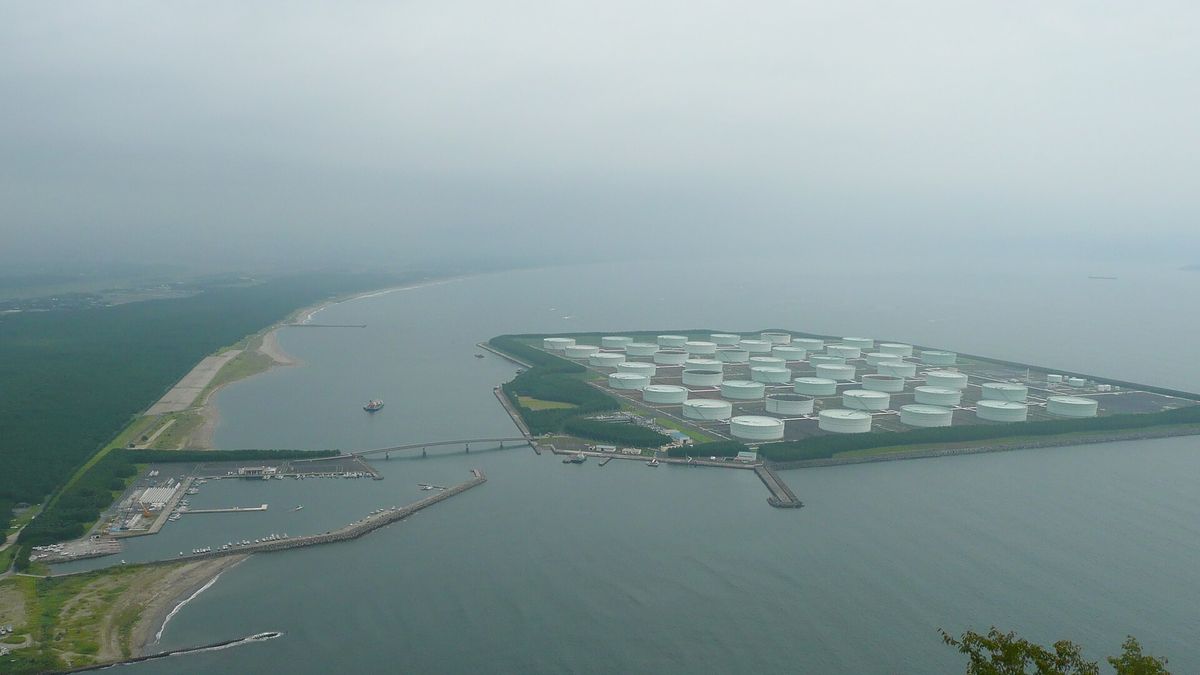
- Japan will make 16 million barrels of national stockpile capacity available to Saudi Arabia for a limited period, on top of about 8 million barrels already in use.
- Tokyo intends to buy up to 8 million barrels of Saudi crude for its national reserve, subject to favorable market conditions and domestic procedures.
- Saudi Arabia and the UAE supplied 42% and 41% of Japan's crude imports in 2025, investingLive reported.
TOKYO
Saudi Arabia will be able to hold about three times as much crude in Japan as it does today, after Tokyo agreed to open 16 million barrels of space in its national stockpiling bases to the kingdom and said it may buy up to 8 million barrels of Saudi oil to rebuild its own emergency reserve.
The terms were set out in a joint statement released on Nov. 20 by Japan's Ministry of Economy, Trade and Industry and carried by the Saudi Press Agency. Saudi Arabia already uses about 8 million barrels of storage in Japan, so the extra capacity takes the total to roughly 24 million barrels, Arab News Japan reported. The new space is offered for a limited period, according to the statement.
The purchase is conditional. Japan intends to buy the Saudi crude for its national reserve only if market conditions are favorable and once domestic procedures are completed, Sabq and Bernama reported, citing the statement. Saudi Arabia has also started refilling the tanks it uses under the existing joint stockpiling arrangement in Japan.
For Asian refiners and traders, the deal puts more Saudi barrels inside the region, outside the Strait of Hormuz and closer to the kingdom's Asian customers.
Why Tokyo wants the barrels close
The agreement grew out of a virtual meeting on Nov. 9 between Saudi Energy Minister Prince Abdulaziz bin Salman and Ryosei Akazawa, Japan's minister of economy, trade and industry. Their discussions built on a joint working group on energy system resilience that the two governments set up in May, according to Sabq.
Japan's exposure is hard to overstate. Saudi Arabia supplied 42% of Japan's crude imports in 2025 and the United Arab Emirates 41%, while the Middle East as a whole accounted for 93% of its oil imports, investingLive reported. In a note cited by the same outlet, MUFG said it expects other importers to strike similar storage deals and Middle Eastern exporters to gain storage access in more countries.
The joint stockpiling project dates to 2010. It lets Saudi Arabia keep crude in Japan for commercial sale to customers in the region, while Japan gets priority access to that oil in an emergency, Arab News Japan reported.
That priority mattered this year. When the U.S.-Iran war effectively closed Hormuz to tankers, Japan drew heavily on its reserves. On March 11 it announced a release of 45 days' worth of oil, almost a fifth of its stocks and the largest on record, and International Energy Agency members then agreed to a record coordinated release of 400 million barrels, Nippon.com reported. At the end of 2025, Japan held 254 days of consumption, or 470 million barrels, of which joint reserves with producing countries made up 7 days.
A wider Gulf push into Asian storage
Japan is not the only Asian host. In October, Singapore said it would store Saudi crude in the Jurong Rock Caverns from the second half of 2027, Bloomberg reported via Energy Connects. The caverns hold about 9 million barrels, according to state agency JTC Corp., and Aramco was set to sign a memorandum of understanding with JTC and Singapore's Energy Market Authority.
Aramco Chief Executive Amin Nasser said in October that the kingdom was in talks with foreign governments about giving the company access to their strategic storage, Bernama reported. Abu Dhabi National Oil Co. has signed strategic stockpile agreements with South Korea and India, Bloomberg reported via Rigzone.
The two ministers also agreed to cooperate under POWERR Asia, a Japanese initiative to strengthen energy security in the region. It follows an oil storage work program adopted at an Asia Zero Emission Community ministerial meeting on Oct. 8 that covers storage infrastructure, cooperation with producers and emergency response, according to Sabq.
For Riyadh, tanks in Japan and Singapore give the kingdom a buffer it can sell from quickly if Gulf shipping is disrupted again. Middle East crude flows have recovered to near prewar levels, but they still lean on Saudi Arabia's East-West pipeline to the Red Sea and on ship-to-ship transfers, Bloomberg reported on Nov. 12. Capital Times has reported that Asian refiners have swung back to Gulf crude as those flows returned.
What to watch
The timing of any Japanese purchase is the main open question. Brent fell more than 20% in November to about $90 a barrel, and Goldman Sachs expects a "sizable surplus" in 2027, Bloomberg reported via Rigzone. Lower prices would favor buying, though the statement ties the purchase to market conditions without naming a price or date.
A softer market also makes stored barrels more useful to the seller. The International Energy Agency already sees the market back in surplus as Gulf exports recover, and Saudi crude sitting in Japan can be sold to nearby refiners on short notice.
Investors should also watch whether Seoul, New Delhi or Southeast Asian governments offer similar terms under POWERR Asia, and whether the Singapore deal moves from a memorandum to a signed contract before storage begins in 2027.
Sources
- Saudi Press Agency: Minister of Energy and Minister of Industry and Mineral Resources Holds Meeting with Japan's Minister of Economy, Trade and Industry (Nov. 20, 2026)
- Sabq: Saudi Energy Minister and Japanese Counterpart Affirm Energy Market Stability as Japan Plans to Provide 16 Million Barrels of Additional Storage Capacity to the Kingdom (Nov. 20, 2026)
- Arab News Japan: Japan to expand Saudi crude oil storage as energy cooperation deepens (Nov. 21, 2026)
- Bernama: Japan Agrees To Buy Up To 8 Mln Barrels Of Saudi Crude To Rebuild Oil Reserves (Nov. 20, 2026)
- Rigzone (Bloomberg): Saudis Make Deal with Japan to Replenish Oil Stocks (Nov. 21, 2026)
- investingLive: Saudi Arabia triples its oil storage in Japan as Tokyo buys 8m barrels to refill reserves (Nov. 24, 2026)
- Nippon.com: Japan Set for Record Oil Reserve Release (March 13, 2026)
- Energy Connects (Bloomberg): Singapore to Store Saudi Oil in Underground Caverns From 2027 (Oct. 26, 2026)
- Energy Connects (Bloomberg): Oil Falls Toward Two-Month Low as Middle East Production Rises (Nov. 12, 2026)
Our standards: Capital Times reports under the principles set out in our Editorial Standards and Ethics Policy. Spotted an error? Report it to our editors.