Tata Sons Should Stop Looking for a Way Around the RBI and Approve Its Listing
The RBI has twice told Tata Sons to list. Its board and the Tata Trusts should comply, not reshape the company to escape the rule.
The argument
- The Reserve Bank of India rejected Tata Sons' application to deregister as a core investment company on Sept. 11, 2026, and repeated on Nov. 16 that the company must list, Business Standard reported.
- RBI rules issued in October 2021 say upper-layer non-bank lenders "shall be mandatorily listed within 3 years of identification"; Tata Sons was placed in that layer in 2022.
- Tata Sons moved a board meeting set for Nov. 26 to Nov. 30 after Tata Trusts chairman Noel Tata objected to the notice period; he opposes a listing and favors a restructuring that would keep the company private.
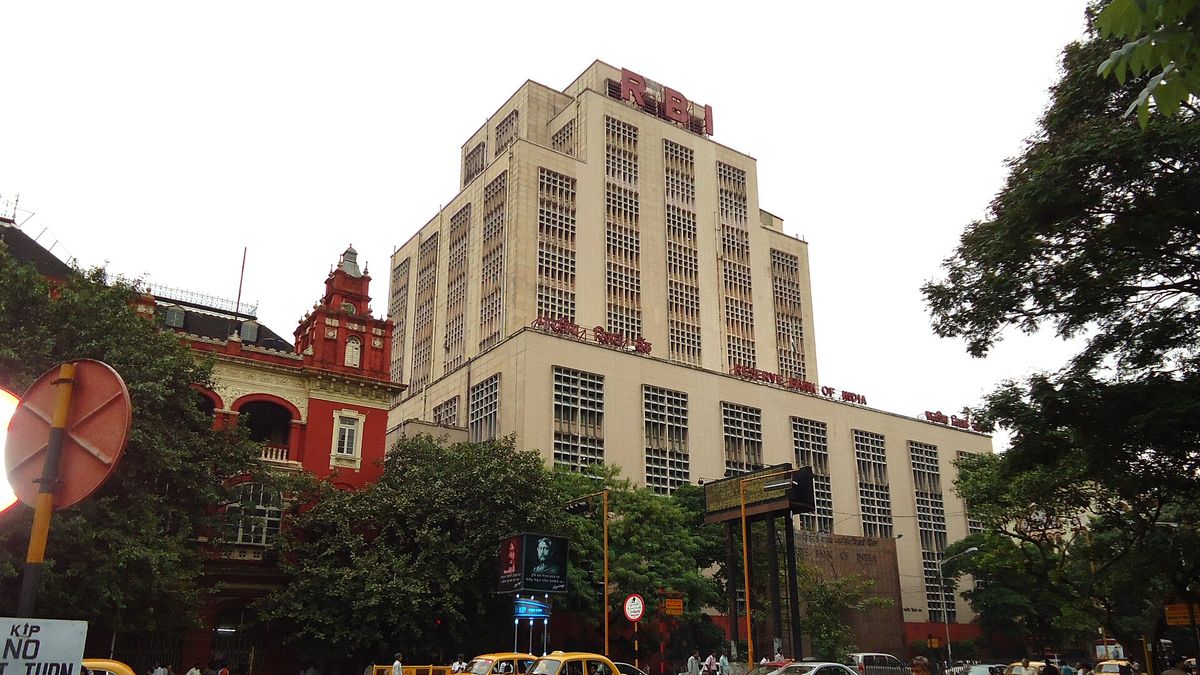
India's most famous holding company has spent four years trying to avoid a rule written for companies in its position. The rule is simple. When the Reserve Bank of India classed Tata Sons as an upper-layer non-bank financial company in 2022, it gave the company three years to list its shares. The central bank's October 2021 framework says such companies "shall be mandatorily listed within 3 years of identification." That deadline has passed.
The RBI has now said so twice. On Sept. 11 it rejected Tata Sons' application to deregister as a core investment company and asked it to comply immediately, and on Nov. 16 it repeated that the company must list, Business Standard reported. When the Tata Sons board meets on Monday, Nov. 30, it should approve a listing plan, and the Tata Trusts, which control the company, should let it pass.
A rule is not a negotiating position
Tata Sons' argument for staying private has always rested on a technicality. In 2024 it paid off all its debt and asked to leave the core investment company category, on the reasoning that a debt-free holding company poses little risk to the financial system. The RBI considered that case and turned it down. That should have settled the matter.
Instead, Tata Trusts chairman Noel Tata, a nominee director on the Tata Sons board, has proposed a new route around the rule. Under his plan, Tata Sons would absorb two operating units, Tata Electronics Systems Solutions and Tata Consulting Engineers, so that it no longer qualifies as a core investment company or an upper-layer lender, Business Standard reported. The aim is not a better business structure. It is to change the company's shape until the regulation no longer applies.
Regulators across Asia face the same temptation from large, well-connected groups: write a rule for everyone, then grant quiet exceptions to the biggest names. The RBI deserves credit for refusing. If Tata Sons can engineer its way out, every family conglomerate with an investment arm will try the same trick, and the scale-based framework will mean little at the top of the scale, where it matters most.
The penalties for defiance are not trivial. A legal expert cited by Business Standard said the RBI Act allows the central bank to cancel a lender's registration, restrict dealings in its assets and, in extreme cases, supersede its board. Abizer Diwanji of NeoStrat Advisors told the paper he did not expect harsh action "at this stage." No board should run the experiment to find out.
The strongest case for staying private
The best argument for Noel Tata's position is about purpose, not paperwork. The Tata Trusts hold about 66% of Tata Sons, according to Business Standard, and use the income from that stake for charitable work. A listed company answers to public shareholders, who may push for payouts, asset sales or strategy that suits a quarterly calendar rather than a century-old philanthropic mission. That concern is real.
But a listing does not hand over control. Changing the company's articles to allow a listing needs a special resolution with at least 75% support, Business Standard noted, so the trusts' stake gives them a decisive say over how it is done. They can shape the size of the float and keep a dominant holding afterward. What they would give up is opacity. Outside investors would get audited disclosures, independent price discovery and a seat at annual meetings, which is precisely what the RBI framework intends for systemically important finance companies.
A listing would also settle a long-running valuation argument. YS Malegam's annual valuation put Tata Sons at about INR 15 lakh crore for this financial year, while bankers estimate an IPO could price the company at INR 9 lakh crore to 12.5 lakh crore once holding-company discounts are applied, Business Today reported. Shapoorji Pallonji Group, which owns 18.37%, would gain a market for a stake that backs about US$5.1 billion of its debt, according to Business Today, citing the Economic Times.
Settle it in the boardroom
The quarrel has turned personal, with letters about board recordings and recusals, a meeting postponed over a notice period and, most recently, a demand from Noel Tata that the agenda be reordered so his restructuring plan comes first. That is a poor look for a group whose companies, from Tata Power to Tata Steel, are listed and owned in part by public minority shareholders. As we argued after Nvidia's chief executive briefly stepped down, investors in Asia's biggest groups pay for weak governance at the top.
Business Today reported that, once the board signs off, Tata Sons would have to file a draft prospectus within 90 days, with a listing between March and June 2027 under consideration. That is a workable timetable. The board should adopt it on Nov. 30, the trusts should support it, and the RBI should hold firm until the shares trade.
Sources
- Business Standard: Now, Noel wants revision of Tata Sons board agenda, pushes restructuring (Nov. 26, 2026)
- Business Standard: Tata Sons defers board meeting to Nov 30 as Noel asks for 7-day notice (Nov. 23, 2026)
- Business Standard: RBI Act may show the way on Tata Sons listing amid regulatory uncertainty (Nov. 22, 2026)
- Business Today: Showdown ahead of November 26 meet: Chandrasekaran backs Tata Sons IPO, Noel Tata flags conflict (Nov. 23, 2026)
- Reserve Bank of India: Scale Based Regulation (SBR): A Revised Regulatory Framework for NBFCs (Oct. 22, 2021)
- Wikipedia: Tata Sons (Nov. 25, 2026)
Our standards: Capital Times reports under the principles set out in our Editorial Standards and Ethics Policy. Spotted an error? Report it to our editors.