India's Tunnel Machine Subsidy Is a Smart Hedge Against China. Don't Add a Tariff Wall
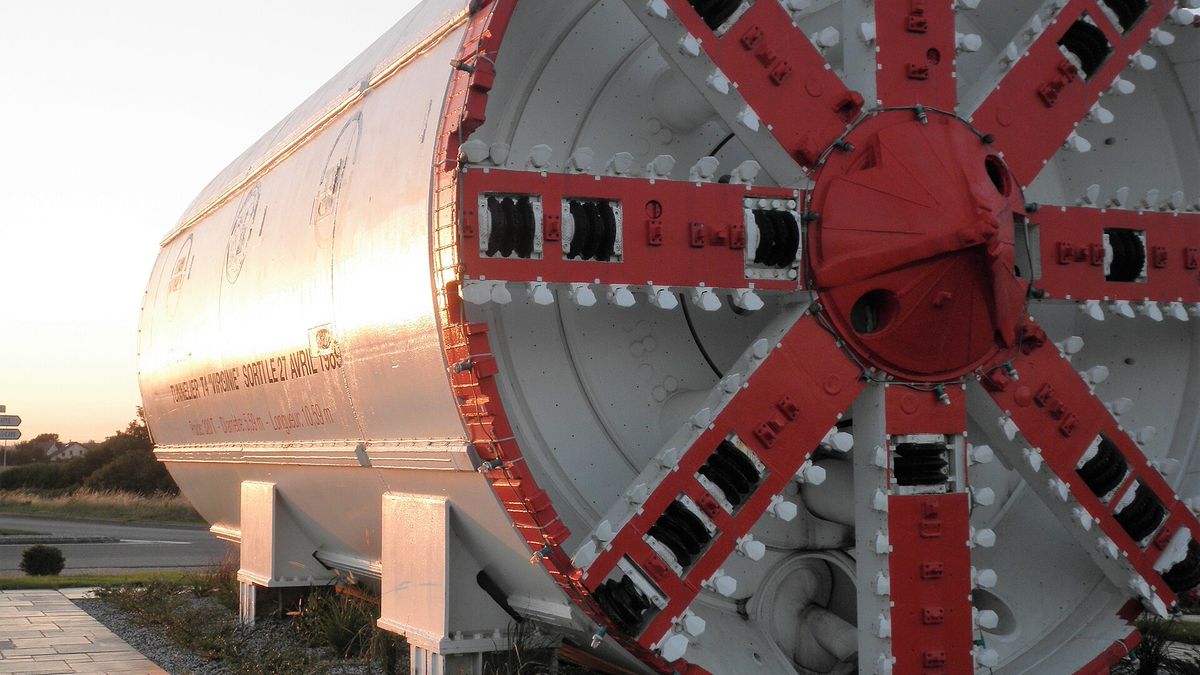
Paying for extra sales of tunnel borers and cranes is a sound reply to Beijing's export licences. Duties and sourcing rules would slow India's railways.
The argument
- India's Cabinet approved an 11,000 crore rupee scheme on Nov. 25 that pays makers of construction equipment 8% to 13% of incremental sales over five years.
- China began requiring export licences on Nov. 18 for tunnel boring machines, walking excavators, plateau-type wet shotcrete machines and some dredging components.
- India's imports of Chinese tunnelling machinery fell to $800,000 in 2025-26 from $18 million in 2022-23, according to Reuters.
India's Cabinet on Wednesday approved an 11,000 crore rupee (INR 110 billion) plan to build more construction and infrastructure equipment at home. Makers of tunnel boring machines, hydraulic excavators, ship-to-shore cranes and off-highway trucks, along with their component suppliers, will receive 8% to 13% of their incremental sales over five years, Business Standard reported. A separate grant of up to 375 crore rupees will fund a testing facility.
The timing is no accident. A week earlier, on Nov. 18, China began requiring export licences for tunnel boring machines, walking excavators, plateau-type wet shotcrete machines and some dredging parts, Business Today reported. Commerce and Industry Minister Piyush Goyal's answer, given at a Delhi college event on Tuesday, was blunt: “If they don't give us TBMs, we will develop it in India,” Business Standard reported.
We think the scheme is the right response. But it should stay a subsidy for output and not grow into a wall of import duties and sourcing mandates, which some domestic manufacturers are already asking for. India's metros, rail tunnels and ports need machines on time more than they need them to be Indian.
A hedge that pays only for results
The risk is real. Two Herrenknecht tunnel borers built at the German company's Guangzhou plant for the Mumbai-Ahmedabad bullet train sat at a Chinese port for more than a year before arriving in India in March 2026, according to Business Standard. Industry estimates cited by Business Today put India's need at more than 150 tunnel boring machines over the next four years, with demand growing about 20% a year. A supplier that can hold up a flagship rail project once can do it again.
The design of the scheme is also sound. Money flows only on sales above a base year, so the state pays for machines delivered rather than for factories promised. The payout period runs from 2028-29 to 2032-33, after a two-year window to build plants, and Business Today describes the rates as graded from 13% down to 8%. Firms that cannot sell competitive equipment get nothing. That is a better use of public money than many capacity-linked grants.
The home market is large enough to support it. India's construction equipment market was worth about 97,500 crore rupees in the fiscal year that ended in March 2025, the world's third largest after China and the United States, according to Business Standard. Our news report sets out the scheme's terms in detail.
The wrong lesson would be protection
The numbers show where India's exposure actually lies. Imports of Chinese tunnelling machinery fell to about $800,000 in 2025-26 from $18 million in 2022-23, Reuters reported in August. On those figures, India does not mainly buy Chinese tunnel borers. In our reading, the exposure is that European suppliers build some of their machines in China, so their deliveries can still be held up there, as the bullet train borers showed. The fix is more factories in India and in friendly countries, which is why Herrenknecht's plan for a plant in Chennai, announced in October 2025, matters as much as anything in the new scheme.
Higher import duties would punish exactly those suppliers. Business Today reported that some domestic makers want stricter local sourcing and higher import duties, while multinational manufacturers warn such measures could disrupt established supply chains. Every month a metro tunnel waits for a costlier or slower machine adds cost and delay to projects funded by Indian taxpayers.
The strongest case for protection is that without local content rules, incentives may reward the assembly of imported kits, leaving India just as dependent on foreign main bearings, cutterheads and hydraulics. The Indian Construction Equipment Manufacturers' Association has sought financial help to make main bearings, cutterheads, disc cutters and hydraulic systems, according to Business Today. That is a fair concern, but the scheme already covers component makers. If a gap remains, the answer is to target those parts directly and phase in content goals as suppliers prove they can deliver, not to raise duties by decree on the whole machine.
Measure it in public
China's licence regime fits a wider pattern of Beijing using export permits as leverage, from rare earths to the AI technologies it proposed to control in October. India is right to hedge. It should hedge in the open.
The Ministry of Heavy Industries should publish yearly figures on incentives paid, incremental sales, local value added and delivery times for tunnel boring machines on public projects. If those numbers improve, the subsidy works. If they do not, an import duty would not have saved it.
Sources
- Business Standard: Cabinet approves ₹11,000 cr scheme for construction equipment manufacturing (Nov. 25, 2026)
- Business Today: Cabinet's Rs 11,000 crore manufacturing push: Can India reduce its reliance on Chinese machinery? (Nov. 25, 2026)
- Outlook Business (Reuters): India targets China dependence with $1.2 billion bet on heavy equipment (Aug. 21, 2026)
Our standards: Capital Times reports under the principles set out in our Editorial Standards and Ethics Policy. Spotted an error? Report it to our editors.