Singapore's Carbon Storage Treaty With Australia Needs a Carbon Price to Match
The deal gives Jurong Island's emitters somewhere to send their carbon dioxide. Only a clear, rising tax will make them pay to use it.
The argument
- Singapore and Australia signed a treaty in Canberra on Nov. 24 that lets carbon dioxide captured in Singapore be shipped to Australia for offshore geological storage.
- Singapore's S Hub project, led by Shell and ExxonMobil, aims to start by 2030 and store at least 2.5 million tonnes of carbon dioxide a year.
- Singapore's carbon tax is S$45 a tonne in 2026 and 2027, and the government has not yet said what the rate will be from 2028.
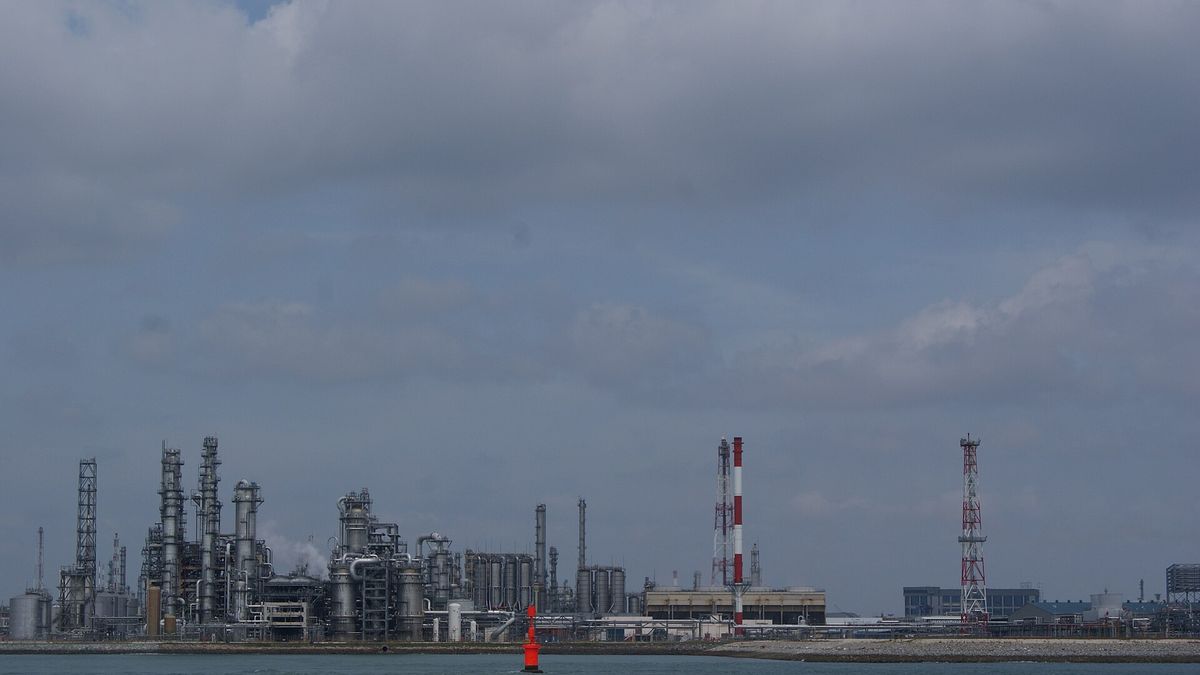
Singapore has spent years telling its refiners and chemical makers that carbon capture would be part of their future. On Tuesday it secured the legal plumbing to make that possible. In Canberra, with Prime Ministers Lawrence Wong and Anthony Albanese looking on, the two countries signed a treaty that lets carbon dioxide captured in Singapore be shipped to Australia for permanent storage in offshore geological formations, Malay Mail reported, citing Bernama.
Albanese called it “the first of its kind,” according to The Straits Times. The treaty also settles who counts the stored tonnes: responsibility for accounting moves with the gas, within a measuring and reporting framework aligned with the Paris Agreement and U.N. climate reporting guidelines, the newspaper reported.
This is a sound deal, and both governments deserve credit for it. But a treaty only opens a route. Singapore's emitters will use that route only if keeping carbon dioxide in the air costs more than shipping it to Australia. That calculation rests on Singapore's carbon tax, and the government has not yet said what the tax will be after 2027. It should do so soon.
Why storage abroad makes sense for Singapore
Singapore's carbon capture plans have long relied on working with regional partners to find sites where the gas can be stored, the Economic Development Board has said. The users it has in mind are hard-to-abate industries, whose emissions are difficult to cut with existing technology, the Ministry of Energy, Trade and Industry said, according to Malay Mail.
The commercial pieces are already in motion. In March 2024 Singapore picked S Hub, a consortium of Shell and ExxonMobil, as lead developer for a cross-border project meant to start by 2030 and store at least 2.5 million tonnes of carbon dioxide a year, according to the EDB. That is a meaningful slice of a national total that a government transparency report projected at 62.21 million tonnes for 2025, as The Straits Times reported in March.
Australia brings storage geology and the legal framework that cross-border storage under the sea requires. Under the London Protocol on dumping at sea, a bilateral instrument must be in place before any such shipments occur. Canberra put the protocol's 2009 export amendment into provisional application on Nov. 7, 2024, according to Australia's climate and energy department. The same department says the treaty text will go to parliamentary scrutiny before it enters into force. Canberra should finish that process quickly and not let it slide into the 2027 calendar.
Singapore is also right not to depend on one partner. It signed a memorandum with Indonesia in June 2025 that set up a working group to explore a legally binding agreement on carbon storage, the EDB said. Turning that into a treaty would give S Hub a second route and give Singapore some bargaining power on price.
The missing piece is a price signal
Capturing, compressing and shipping carbon dioxide across the ocean will not be cheap. A refinery will commit to it only if it can see the carbon tax it would otherwise pay over the life of the investment.
Today that view is cloudy. Singapore's tax rose to S$45 a tonne on Jan. 1, 2026, and stays there through 2027, with the government saying it intends to reach S$50 to S$80 by 2030, according to the National Climate Change Secretariat. The tax covers about 50 facilities that produce roughly 70% of national emissions. In an Aug. 5 written reply to Parliament, Deputy Prime Minister Gan Kim Yong said the post-2027 trajectory was under review. He gave no date for the decision and warned that if global climate action slowed sharply, Singapore would need to review the ambition and timing of its targets.
The effective price is murkier still. The government gives undisclosed allowances to trade-exposed emitters. Budget 2026 estimated carbon tax revenue for 2025 at about S$657 million, well short of the roughly S$1 billion that the S$25 rate then in force would imply if emissions had stayed at similar levels, The Straits Times reported. Experts quoted by the paper attributed most of the gap to allowances, though a government spokeswoman cautioned against assuming taxable emissions were unchanged. Officials plan to publish aggregated allowance data only in 2027.
No board will approve a capture unit on that basis. Singapore should announce the 2028 to 2030 tax path in its 2027 budget, commit to the upper half of the S$50 to S$80 range, and publish the allowance data now rather than next year. Allowances should also shrink on a published schedule for any facility that can connect to S Hub.
The strongest objection
Critics argue that carbon capture is expensive and slow to scale, and that it can extend the life of fossil fuel assets that should close. That risk is real. A storage route to Australia must not become a reason to delay cleaner power, including the low-carbon electricity imports Singapore is already approving, such as Sembcorp's 1.3 GW import plan.
But Singapore's refining and chemical plants are a pillar of its industrial economy, and some of their process emissions have no near-term substitute. For those plants, the choice is between capture, paying the tax indefinitely, or leaving. A credible carbon price makes capture the rational choice and keeps the pressure on everywhere else.
The treaty was the hard diplomatic part. The pricing decision is entirely in Singapore's hands, and it is the one that will decide whether any carbon dioxide actually sails south.
Sources
- Ministry of Energy, Trade and Industry, Singapore: Singapore-Australia Agreement on Transboundary Movement of Carbon Dioxide Streams for the Purposes of Offshore Geological Sequestration to enable cross-border Carbon Capture and Storage (Nov. 24, 2026)
- The Straits Times (via Singapore Law Watch): Singapore, Australia expand essential supplies pact, sign landmark carbon storage agreement (Nov. 25, 2026)
- Malay Mail (Bernama): Singapore and Australia seal landmark carbon storage pact, strengthen supply chain ties (Nov. 25, 2026)
- The Star (Xinhua): Singapore, Australia sign agreement to enable cross-border carbon capture, storage (Nov. 25, 2026)
- Department of Climate Change, Energy, the Environment and Water, Australia: Australia-Singapore transboundary carbon capture and sequestration bilateral instrument (Aug. 20, 2026)
- Singapore Economic Development Board: Singapore partners ExxonMobil-Shell consortium to study cross-border carbon capture and storage (March 8, 2024)
- Singapore Economic Development Board: Singapore and Indonesia deepen green energy partnership with three new deals (June 14, 2025)
- National Climate Change Secretariat, Singapore: Carbon Tax (Nov. 26, 2026)
- National Climate Change Secretariat, Singapore: Parliamentary Reply by DPM Gan on Singapore's Carbon Tax Trajectory from 2028 (Aug. 5, 2026)
- The Straits Times (via Nanyang Business School, NTU): Singapore's 2025 carbon tax revenue holds steady; experts say continued use of tax discounts likely (March 29, 2026)
Our standards: Capital Times reports under the principles set out in our Editorial Standards and Ethics Policy. Spotted an error? Report it to our editors.