ASEAN's Oil Stockpile Is Still a Pilot. This Week's Gulf Attacks Say Commit to 60 Days
Reported mine strikes in Hormuz and a strike claim on Ras Tanura show the oil shock is not over. Southeast Asia should turn letters of intent into a funded, dated reserve.
The argument
- Brent rose 3.5% on Nov. 25 after Iranian state media said two tankers struck mines in Hormuz and the Houthis claimed an attack on Saudi Arabia's Ras Tanura refinery, Reuters reported.
- An ERIA paper this month put the cost of an extra 60 days of ASEAN oil reserves at US$2.19 billion a year under a cooperative model, against US$2.80 billion if countries act alone.
- The Philippines has signed only letters of intent to explore emergency access to oil stored in Indonesia and Thailand, and the renewed ASEAN Petroleum Security Agreement is not yet in force.
Southeast Asia got another reminder this week that its oil supply runs through someone else's war. On Nov. 25, Iranian state media said two tankers struck mines and exploded in the Strait of Hormuz, and Yemen's Houthis said they had attacked Ras Tanura, Saudi Arabia's largest refinery and part of a major crude export complex, Reuters reported. Neither claim had been independently confirmed. Brent still jumped 3.5% that day and traded near $95 a barrel in Asia on Thursday.
ANZ analyst Daniel Hynes said the wider Middle East conflict “threatens to halt the recovery in oil flows,” according to Reuters. For Asian importers, which count the Middle East as their top oil supplier, that is the whole story. Capital Times reported this week that crossings through the strait fell more than 40% in two weeks as mine strikes mounted.
ASEAN has a plan for this. It is moving far too slowly. Governments should stop treating a shared oil reserve as a pilot project and commit to a funded, dated 60-day reserve.
Letters of intent are not barrels
The bloc agreed at its May summit to study a regional stockpile, The Star reported. Six months later, the most concrete result is two letters of intent. At the ASEAN Business and Investment Summit in Manila this month, the Philippines' state-run PNOC Exploration Corp. signed separate letters with Indonesia's Interport Mandiri Utama and the Shell Company of Thailand to explore emergency access to oil stored in those countries, Arab News reported. Exploring is the operative word.
The Philippines has been under a national energy emergency since March and imports 98% of its oil from the Gulf, according to Arab News. Its trade secretary, Cristina Roque, said Singapore, Indonesia, Malaysia and the Philippines had agreed to maintain inventories under the plan. Asked whether Manila could draw on oil stored in Indonesia, she replied: “Not yet,” Gulf News reported. A joint scheme could start as early as 2027, according to a Nikkei report cited by the same outlet.
The legal backbone is missing too. The renewed ASEAN Petroleum Security Agreement is not yet in force, according to a November issue paper from the Economic Research Institute for ASEAN and East Asia (ERIA), and critics say the pact has no physical regional stockpile and leaves sharing voluntary, The Star reported.
The numbers favor acting together
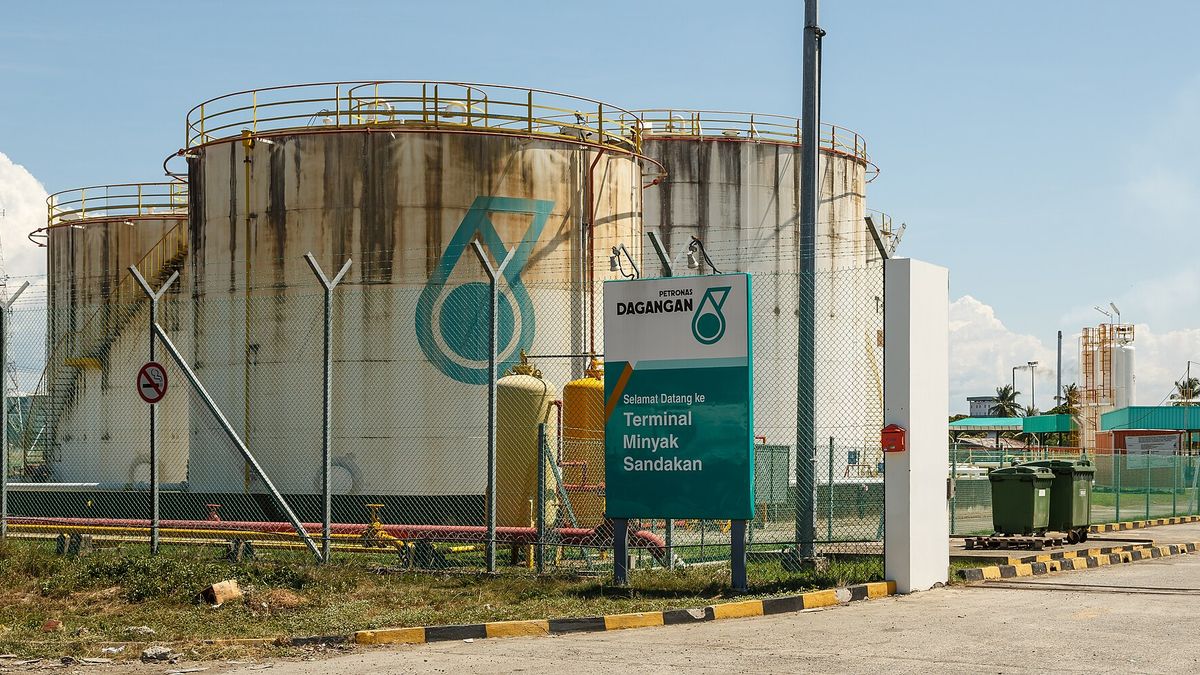
ERIA has done the arithmetic. It uses 90 days of demand as a benchmark, about 450 million barrels for a region that burns roughly 5 million barrels a day, and assumes existing stocks cover about 30 days, a figure it says still has to be verified. Adding 60 days, or about 300 million barrels, would cost US$2.80 billion a year if countries mostly build national reserves. Shifting the mix toward joint storage cuts that to US$2.19 billion, about 22% less. ERIA puts the annual benefit at US$8.6 billion if a disruption of the kind it models occurs.
That is a modest bill split across 11 economies, and the cheapest options suit poorer members best. Joint storage costs US$4.50 per barrel a year in ERIA's estimates, against US$10.60 for a national tank farm. Oil ticketing, in which a buyer pays a fee for the right to draw on oil held elsewhere, is already used in Europe and between Japan and New Zealand, The Star reported.
Producers want in. Japan has just agreed to open 16 million barrels of extra stockpile space to Saudi Arabia, under an arrangement that gives Tokyo priority access in an emergency. The United Arab Emirates has expressed interest in ASEAN's scheme, Gulf News reported. Storing producers' crude near Asian buyers is the kind of joint arrangement ERIA urges governments to prioritize, and it means the region need not buy every barrel itself.
The fiscal objection
The strongest case for waiting is money. The World Bank warned last month that Asia was running out of fiscal room to fight the energy shock, noting that “subsidies have been by far the most common policy response,” OilPrice.com reported. Finance ministers who have spent heavily holding down pump prices will balk at buying oil to store.
But subsidies are what a region pays for having no buffer. Every month without stocks forces governments to absorb the next price spike through the budget instead of through a reserve release. ERIA itself urges financing beyond public budgets, and ticketing and producer-held stocks need far less upfront cash than national tanks.
ASEAN does not need all 11 members on day one; Roque said those already willing can begin. They should sign binding stockholding targets, a release protocol and a ratification date for the renewed petroleum pact before the year ends. The next tanker reported burning in Hormuz will not wait for a 2027 pilot.
Sources
- Reuters (via KRRO): Oil rises on supply concerns as Iran claims mine strikes on ships (Nov. 26, 2026)
- OilPrice.com: Oil Rallies as Hormuz Mine Strikes Rattle Global Markets (Nov. 25, 2026)
- Economic Research Institute for ASEAN and East Asia: Operationalising ASEAN Joint Oil Stockpiling: From Policy Recommendations to Pilot Implementation (Nov. 1, 2026)
- Arab News: Philippines launches pilot projects to explore emergency oil access in Indonesia, Thailand (Nov. 14, 2026)
- The Star (The Straits Times/ANN): Analysis: How a small oil-sharing project in Asean offers hope beyond energy security (Nov. 15, 2026)
- Gulf News: 4 ASEAN countries agree to regional oil stockpiling: Philippine Trade Secretary Roque (Nov. 17, 2026)
- OilPrice.com: ASEAN Moves to Build Emergency Oil Reserves Amid Iran Supply Crisis (Nov. 12, 2026)
Our standards: Capital Times reports under the principles set out in our Editorial Standards and Ethics Policy. Spotted an error? Report it to our editors.