QatarEnergy Signs 20-Year Deal for Up to 3 Million Tons a Year of Woodside's US LNG
The world's top LNG exporter has now lined up 7 million tons a year of U.S. gas as force majeure on its own cargoes runs to year-end.
What to know
- QatarEnergy agreed to buy up to 3 million metric tons a year of LNG from Woodside's Louisiana LNG project for 20 years, Woodside said on Oct. 29.
- Together with an Oct. 22 Cheniere deal for 4 million tons a year, QatarEnergy has now agreed long-term purchases of 7 million tons a year of U.S. LNG.
- QatarEnergy's force majeure on cargoes to buyers in Pakistan, Bangladesh and Italy now runs to the end of December, The National reported.
DOHA
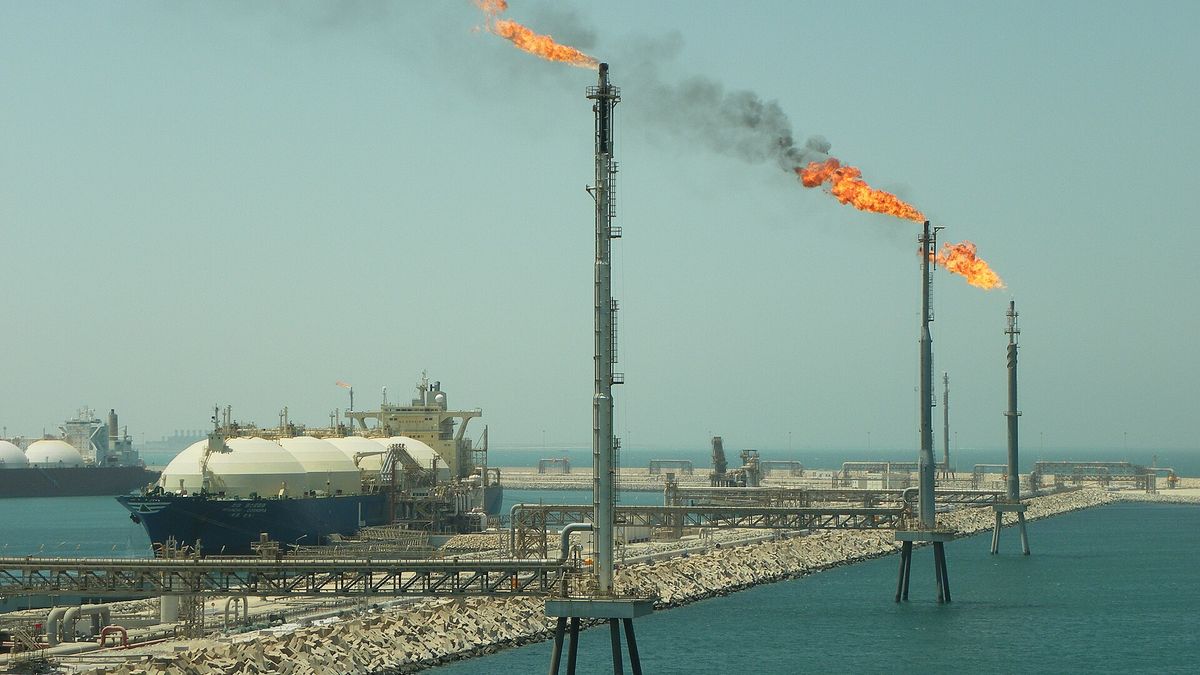
QatarEnergy will buy up to 3 million metric tons a year of liquefied natural gas from Woodside Energy's Louisiana LNG project for 20 years, the Australian company said on Thursday, as the Qatari state producer builds a portfolio of U.S. supply while its own exports remain stuck behind the Strait of Hormuz.
The contract, disclosed in a filing to the Australian Securities Exchange, follows an Oct. 22 agreement under which QatarEnergy will take 4 million tons a year from Cheniere Energy. The two deals give the world's largest LNG exporter 7 million tons a year of U.S. volumes, and its chief executive says more are coming.
For Asia, the deal is a reminder of where the supply risk sits. Buyers in Pakistan and Bangladesh with Qatari supply contracts have been told the force majeure in place since March will run to the end of December. Woodside, listed in Sydney and New York, gains another long-term buyer for a plant still under construction.
What Woodside and QatarEnergy agreed
Woodside will deliver the gas free-on-board from Louisiana LNG starting when the project's second train comes online, rising to the full 3 million tons once the third train starts, the company said. The volumes come from Woodside's share of the project's output. The plant near Lake Charles will have three trains with combined capacity of 16.5 million tons a year and is targeting first LNG in 2029.
Qatar's state news agency QNA said it expects first deliveries to QatarEnergy in 2030, The National reported.
Woodside Chief Executive Liz Westcott called the contract "a strong vote of confidence in Louisiana LNG." She said it builds on an earlier supply agreement with Uniper.
Saad Al Kaabi, Qatar's minister of state for energy affairs and QatarEnergy's president and chief executive, said, according to The National: "These additional volumes make QatarEnergy the largest buyer of LNG from the US."
Neither side disclosed prices. When Reuters first reported the talks on Oct. 23, it said Louisiana LNG was seeking a liquefaction fee above $2.50 per million British thermal units, more than the U.S. average, in return for more flexible terms such as shorter contracts. Reuters also reported that Venture Global and Louisiana LNG held the most uncommitted U.S. export capacity.
QatarEnergy's Hormuz problem reaches South Asia
Iranian missile strikes on the Ras Laffan complex in March knocked out about 17% of Qatar's LNG export capacity, including two of its 14 liquefaction trains. Al Kaabi has said the two damaged trains will take about three years to repair, according to The National; in March he told Reuters the disruption could last three to five years. He said undamaged facilities could return to full output within a week of a peace deal, if ships were available.
QatarEnergy has renewed its force majeure monthly since March. Italy's Edison said this week the suspension of its deliveries now runs to the end of December, and buyers in Pakistan and Bangladesh were told their notices would also last until year-end, The National reported, citing Reuters. Bangladesh's state energy company Petrobangla said it was buying replacement spot cargoes at "a significant cost."
Qatar exported 18 LNG cargoes in the first six months of the war, compared with 509 in the same period a year earlier, according to ICIS data cited by bdnews24.com in September. Anne-Sophie Corbeau of Columbia University's Center on Global Energy Policy told Euronews that Pakistan, Bangladesh and India were particularly vulnerable, while Japan was better protected because it buys relatively little Qatari LNG. She said the market might not return to its previous balance until 2028, the Dhaka outlet reported.
In Bangladesh alone, QatarEnergy told Petrobangla it would halve its 2026 deliveries, and Petrobangla estimated that about 20 of the roughly 40 cargoes due this year could be affected, The Financial Express reported in July.
The strait normally carries about a fifth of global LNG trade. Europe's TTF gas benchmark rose above 95 euros a megawatt-hour this week, close to its highest level since December 2022, The National reported, while crude also carries a heavy war-risk premium. QatarEnergy has been buying U.S. LNG on the spot market to supply some customers, according to Reuters.
Cheniere and U.S. exporters gain from Qatar's buying
Cheniere's contracts with QatarEnergy cover 2 million tons a year each from Sabine Pass in Louisiana and Corpus Christi in Texas, priced off the U.S. Henry Hub benchmark plus a fixed fee, with deliveries running from the early 2030s through 2054, the Houston company said. One million tons a year of the Sabine Pass supply depends on a final investment decision on the first phase of a Sabine Pass expansion.
On Thursday, Cheniere lifted its 2026 adjusted EBITDA guidance to $8.75 billion to $9.25 billion, from $7.90 billion to $8.40 billion, after third-quarter revenue of about $6.2 billion. It also raised its quarterly dividend by more than 12% to 62.5 cents a share.
QatarEnergy already owns 70% of Golden Pass LNG, which began exports in March and will have up to 18 million tons a year of capacity when complete, according to Reuters and The National. Other Gulf producers are placing similar bets: Abu Dhabi's Mubadala Energy is building a $13 billion project in Louisiana, and XRG has increased its stake in Texas's Rio Grande LNG, The National reported.
Al Kaabi told Reuters on Thursday that QatarEnergy expected to sign more long-term purchase deals with U.S. and other suppliers by the end of the year, aiming for volumes well above the 7 million tons agreed so far, The National reported. He said buying LNG needed no capital spending and cost far less than building pipelines or new trains. He also ruled out pipelines that bypass Hormuz.
Reuters has reported that QatarEnergy is in advanced talks with Venture Global for at least 3 million tons a year, a deal that would lift Doha's contracted U.S. volumes to at least 10 million tons a year.
Sources
- Woodside Energy Group (ASX announcement): Woodside signs 20-year LNG supply agreement with QatarEnergy (Oct. 29, 2026)
- The National: QatarEnergy turns to US LNG with Woodside deal as Hormuz force majeure drags on (Oct. 29, 2026)
- The National: Iran attacks could knock out 17% of Qatar's LNG exports for up to five years (March 19, 2026)
- Cheniere Energy: Cheniere Signs Long-Term Sale and Purchase Agreements to Supply QatarEnergy with LNG through 2054 (Oct. 22, 2026)
- Cheniere Energy: Cheniere Reports Third Quarter 2026 Results, Raises Full Year 2026 Financial Guidance, and Increases Quarterly Dividend by Over 12% (Oct. 29, 2026)
- Reuters via BOE Report: Top LNG exporter QatarEnergy in talks to buy US LNG from Woodside's Louisiana plant (Oct. 23, 2026)
- bdnews24.com: Qatar extends LNG cargo cancellations to Bangladesh, Pakistan and Italy (Sept. 1, 2026)
- The Financial Express (Bangladesh): Bangladesh faces fresh LNG supply setback (July 16, 2026)
Our standards: Capital Times reports under the principles set out in our Editorial Standards and Ethics Policy. Spotted an error? Report it to our editors.