Japan Ends Tax-Free Checkout for Visitors, Scraps 500,000 Yen Cap in Refund Overhaul
Tourists now pay consumption tax at the till and get it back only after customs confirms their purchases are leaving Japan within 90 days.
What to know
- From Nov. 1, foreign visitors pay consumption tax at Japan's roughly 64,000 tax-free stores and are refunded only after customs confirms the goods leave Japan within 90 days.
- The reform abolished the 500,000 yen ceiling on consumables and the sealed-bag rule, while the 5,000 yen minimum per store per day stays, official guidance shows.
- Japan Airport Terminal and Glory said self-service machines at Haneda, Narita and Naha would pay refunds in cash in about a minute from Nov. 1.
TOKYO
Foreign visitors shopping in Japan now pay consumption tax at the checkout and get it back only after customs confirms their purchases are leaving the country, under a refund system that took effect Sunday, Nov. 1, at the nation's roughly 64,000 tax-free stores.
The switch, set out in Japan's fiscal 2025 tax reform, ends the on-the-spot exemption on everything from cosmetics to watches and changes the routine for shoppers from Hong Kong, mainland China, South Korea, Taiwan and Southeast Asia. Visitors now carry the tax until they leave, on top of whatever the yen's moves against their home currencies add or subtract. How the money comes back depends on the store and the refund company it uses.
The National Tax Agency states on its website that the system switched to the refund method from Nov. 1. Tourists who enter Japan as temporary visitors and stay less than six months remain eligible, according to Takashimaya. The Japan Tourism Agency counted 64,127 tax-free stores as of March 31.
How Japan's New Tax Refund Works for Visitors
At the store, shoppers show a passport and pay the tax-inclusive price. The minimum purchase stays at 5,000 yen before tax per store per day, according to the Japan Tourism Agency. The reform abolished the split between general goods and consumables, the 500,000 yen ceiling on consumables such as cosmetics and food, and the sealed bags that kept those items unopened in Japan, the National Tax Agency said. Gold and platinum bullion and coins are excluded, and buyers may purchase only what they can carry out of the country themselves.
The clock starts the day after purchase. Travelers must present their passports at a tax-free terminal at the airport or seaport within 90 days, and the tax agency's own example puts the deadline for goods bought on Nov. 1 at Jan. 30 of the following year. The terminal shows either a green result, which ends the check, or a red one, which sends the traveler to a customs inspection area, the tourism agency said.
The check must come before bags are checked in. The tourism agency warns that luggage handed to an airline cannot be pulled back for inspection, and that neither airlines nor customs will compensate travelers who miss a flight. Customs clears goods receipt by receipt: if one item on a receipt is missing, nothing on it qualifies.
Passengers connecting from a domestic flight complete the process at their final departure airport. At Narita, Haneda, Kansai, Chubu, Fukuoka, New Chitose and Naha, travelers can finish the step on their phones through the government's Visit Japan Web service.
Takashimaya and Haneda Operators Set Out How Refunds Are Paid
Official guidance leaves the payout to each store or the refund company it hires. Takashimaya, the department store group, says on its English site that buyers must register at its tax-free counter on the day of purchase and that the counter will not hand back the tax. The refund follows customs confirmation of export, minus a system handling fee, the notice says. The tax agency lists bank transfer, credit card, app transfer and cash at the departure port as possible refund methods.
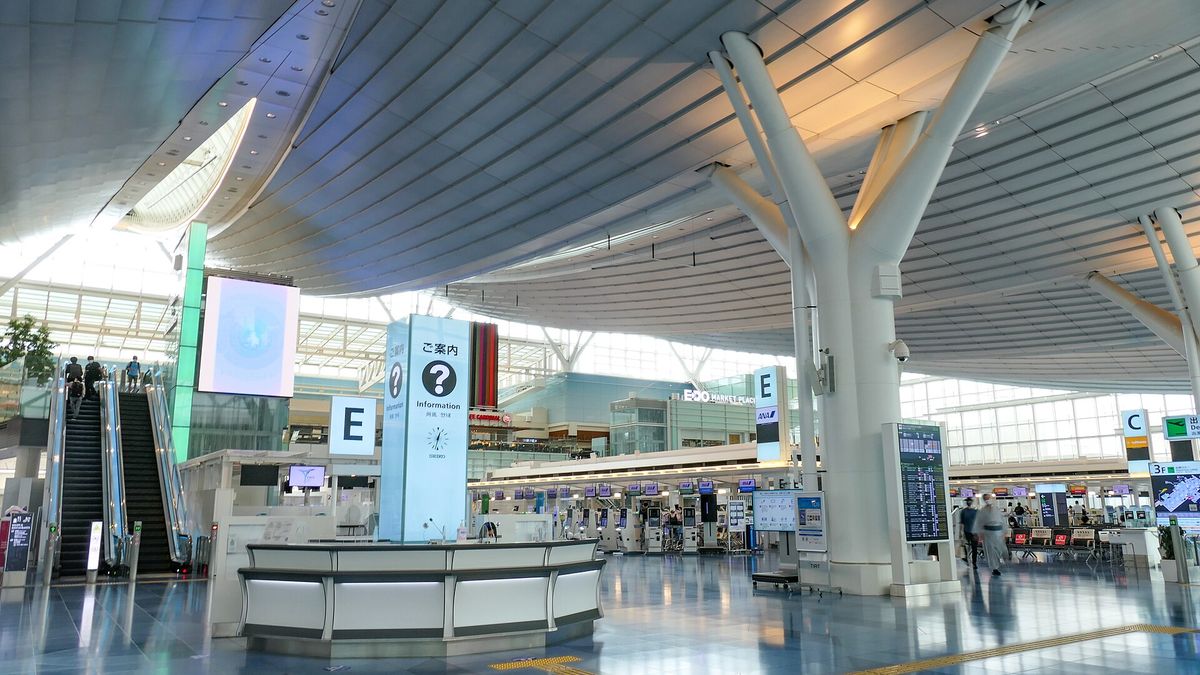
Cash is on offer at some airports. Japan Airport Terminal Co. and Glory Ltd. said in an Oct. 21 statement that self-service machines at Haneda, Narita and Naha would start paying refunds in yen on Nov. 1, with the process, including a passport scan, taking about a minute. At Haneda, eligibility is checked before security and the cash is collected after immigration. The machines operate in languages including Chinese, Korean and Thai, and the companies aim to extend the service to other airports by the end of March 2028.
Retailers expect a mixed effect. Masaki Akita, chairman of the All Japan Tax-Free Stores Association, told reporters on Oct. 22 that he did not expect a sudden change in buying habits and saw demand for jewelry, watches and luxury bags holding largely steady, Travel Watch reported. He called the end of the consumables cap and the packaging rule a plus for high-end cosmetics and liquor. “The time saved on packaging will be a significant benefit for customers,” he said.
Why Japan Changed Its Tax-Free Shopping Rules
Officials say the old system was abused by buyers who resold tax-free goods inside Japan. In fiscal 2022, 374 people bought 100 million yen or more of goods tax-free and then left the country, according to a customs survey reported by Asia News Network in 2024. Customs inspected 57 of them. Fifty-six could not show the goods had been exported, and 55 left without paying, leaving 1.85 billion yen in tax uncollected.
Japan Airport Terminal and Glory cited the same resale problem in their statement, noting that international tourist numbers passed 40 million in 2025. A leaflet from the tax agency and Japan Customs warns that handing tax-free goods to someone else before departure can bring up to a year in prison or a fine of up to 500,000 yen. The government closed one route on April 1, 2025, ending the exemption for goods shipped home separately, though stores can still ship purchases directly overseas.
Checks had tightened before the switch. Hong Kong's The Standard reported in October 2025 that customs staff at Haneda were asking some departing passengers to open checked luggage to show tax-free purchases, citing a Taiwanese traveler's social media post.
Takashimaya's refund page is available in traditional and simplified Chinese and Korean as well as English, and the tourism agency issues traveler leaflets in the same languages. The first deadline under the new rules falls on Jan. 30, 2027, the last day customs can clear goods bought on the system's opening day.
Sources
- National Tax Agency: 輸出物品販売場における輸出免税について (Export tax exemption at tax-free shops)
- National Tax Agency: Tax-Free Shopping System will be shifted to the Refund Method from November 2026
- National Tax Agency and Japan Customs: No Reselling Tax-Free Goods (leaflet)
- Japan Tourism Agency: 旅行者向け特設ページ (Special page for travelers on the refund method)
- Japan Tourism Agency: 手続の変更点(比較表) (Changes in procedures, comparison table)
- Japan Tourism Agency: 都道府県別消費税免税店数(2026年3月31日現在) (Tax-free stores by prefecture as of March 31, 2026) (Sept. 25, 2026)
- Japan National Tourism Organization: Everything You Need to Know: Japan's New Tax-Free Shopping System (July 20, 2026)
- Japan Airport Terminal Co. and GLORY Ltd.: Self Tax Refund Service for International Tourists to Japan to Launch on November 1, 2026 (Oct. 21, 2026)
- Takashimaya: Guidance of tax refund procedure
- Travel Watch (Impress): Japan to Launch New Refund-Style Tax-Free System on November 1 to Combat Illegal Resale (Oct. 22, 2026)
- Time Out Tokyo: Here's everything you need to know about Japan's new tax-free system starting in November (Oct. 15, 2026)
- Asia News Network: Japan's tourists consumption tax exemption to take new form (Nov. 28, 2024)
- The Standard: Japan begins inspecting duty-free items at airport check-in (Oct. 3, 2025)
Our standards: Capital Times reports under the principles set out in our Editorial Standards and Ethics Policy. Spotted an error? Report it to our editors.