Iron Ore Slides More Than 2% in Dalian as China's Steel Output Hits 2026 Low
Singapore futures slipped below $89 a ton in morning trade after weak Chinese data, as Australia warned about Beijing's single buyer and Goldman cut its 2027 forecast.
What to know
- Dalian's January iron ore contract fell about 2.3% to roughly 655 yuan a ton in Monday morning trade, Reuters and Dow Jones reported, while Singapore's December contract dropped 1.93% to $88.70, according to Reuters.
- China produced 63.07 million tons of pig iron in October, down 4.1% from a year earlier, and property investment fell 21.6% in the first 10 months, the National Bureau of Statistics said.
- Goldman Sachs cut its 2027 iron ore forecast to $92 a ton from $96, and Australia's resources minister said lower prices driven by China's state buyer were a concern, Reuters reported.
HONG KONG
Iron ore futures fell on Monday after official data showed Chinese steel output dropped to its lowest level this year in October and the property slump deepened. The most-traded January contract on the Dalian Commodity Exchange was down 2.31% at 654.5 yuan a metric ton (about $98) as of 10:40 a.m. Hong Kong time, Reuters reported. Dow Jones Newswires put the decline at 2.2%, at 655 yuan, in early trade.
The seaborne benchmark moved below a level miners watch closely. Singapore's December contract was 1.93% lower at $88.70 a ton in morning trade, according to Reuters. That put the price inside the $85 to $90 range Goldman Sachs used in a weekend note to estimate the hit to Australian miners' earnings, a matter of concern for producers and for the government in Canberra that taxes them.
China's pig iron output falls 4.1%
Pig iron is the hot metal tapped from blast furnaces, and hot metal output is a gauge of iron ore demand, as Reuters put it. China produced 63.07 million tons in October, 4.1% less than a year earlier, the National Bureau of Statistics said on Monday. Crude steel output fell 1.6% to 70.83 million tons and finished steel products dropped 5.1% to 111.61 million tons.
Over the first 10 months, pig iron production was down 3.1% at 691.52 million tons and crude steel was 2.8% lower at 795.61 million tons, the bureau's tables showed. Crude steel output in October was 3.8% below September's level and the lowest monthly figure so far this year, Reuters reported, citing the same data.
The wider numbers gave buyers little to lean on. Industrial output grew 4.8% from a year earlier, short of the 5.3% forecast in a Reuters poll and slower than September's 5.5%. Property development investment fell 21.6% in the January to October period, worse than the 20.6% drop through September. New construction starts by floor area were down 24.4% and new home sales by floor area fell 13.7%, the statistics bureau said.
Weekly industry data pointed the same way. Average daily hot metal output at 247 mills tracked by consultancy Mysteel fell by 3,700 tons last week to 2.3 million tons, according to Reuters, while ore stocks at major Chinese ports rose 1.09% to 156.2 million tons on Friday, data from consultancy Steelhome showed. Analysts at Huatai Futures said in a note that further declines in hot metal production were expected, Dow Jones reported, and Ningzheng Futures said mills were doing more maintenance during the seasonal lull.
Reuters cited persistently thin mill margins, along with weak home demand and falling exports, among the reasons for October's lower steel output. On Monday morning coking coal and coke futures in Dalian rose 0.74% and 0.46%, while rebar in Shanghai fell 0.46% and hot-rolled coil lost 0.57%, the agency reported. Capital Times has separately covered China's iron ore output and port stocks.
Australia raises concerns over China's single buyer
The price slide landed as Canberra spoke more openly about China Mineral Resources Group, the state-backed company set up in 2022 to buy ore on behalf of Chinese steelmakers. Resources Minister Madeleine King said on Monday that any manipulation of iron ore trade would be against international rules and a threat to government revenue, Reuters reported. "We should have free trade, tariff-free trade and less market manipulation," she said at a press conference.
King said a day earlier that it would be unwise for the government to step into contract talks, since the miners were at different stages of negotiation, according to Reuters. China buys about 75% of the world's seaborne iron ore and Australia supplies about 55%, the news agency said. Fortescue has warned that its operations could be affected if talks with the buyer are not settled by year-end.
Goldman Sachs added to the pressure over the weekend. In a note on Saturday, the bank cut its 2027 iron ore forecast to $92 a ton from $96, citing rising output from Guinea's Simandou mine and slower growth in Chinese steel demand, Reuters reported. Goldman expects the group's influence over prices to grow and estimated it could cut earnings before interest, taxes, depreciation and amortization at listed Australian miners by as much as $9 billion over the next decade, assuming prices of $85 to $90 a ton.
The pricing deals are now arriving one at a time. Rio Tinto's agreement with the buyer runs through May 2028, while BHP's will need to be reset as soon as next year, Bloomberg reported last week. "Pricing power is less permanent than it looks," Kpler lead iron ore analyst Sushmita Vazirani said, according to Bloomberg, arguing that leverage would move back toward miners if supply tightened or demand recovered.
Simandou keeps adding tons
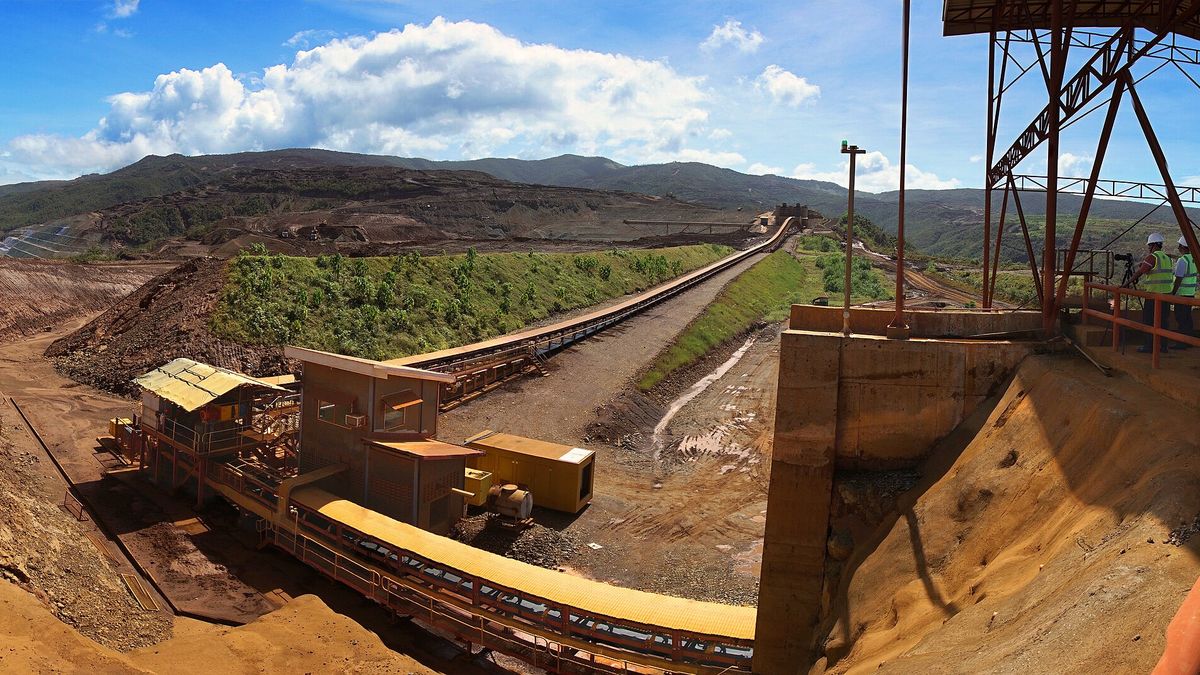
Supply from West Africa is the other weight on the market. Simandou's rail and port network is running at an annualized capacity of about 72 million tons, with a target of 120 million tons by the end of 2027 that depends on new locomotives, wagons and the second phase of Morébaya port by March 2027, MINING.COM reported on Nov. 11. Guinea exported 8.9 million tons of ore in the third quarter, up from 6 million tons in the previous three months, the publication said, citing government data. Capital Times has separately covered Simandou's ramp-up.
Not every forecaster expects that pace. S&P Global Energy CERA has suggested that full capacity could take more than five years, with exports reaching about 70 million tons by 2028, according to MINING.COM.
Mining shares in Sydney had already slipped before the Chinese data. The S&P/ASX 200 index was down 0.2% early on Monday, with miners off 0.7%, BHP down 1.2% and Rio Tinto 0.6% lower, Reuters reported.
Fortescue's year-end deadline for a deal with China's buyer is now about six weeks away.
Sources
- Reuters via TradingView: Iron ore slides as weak China activity data, property slump stoke demand worries (Nov. 16, 2026)
- Dow Jones Newswires via TradingView: Iron Ore Prices Fall Amid Weak Demand, Rising Inventories (Market Talk) (Nov. 16, 2026)
- Reuters via TradingView: Australia wary of iron ore trade manipulation as China seeks more bargaining power (Nov. 16, 2026)
- Reuters via TradingView: Australian shares slip to near one-week low as weaker copper, iron ore weigh on miners (Nov. 16, 2026)
- National Bureau of Statistics of China: 2026年10月份规模以上工业增加值增长4.8% (Industrial value added above designated size grew 4.8% in October 2026) (Nov. 16, 2026)
- National Bureau of Statistics of China: 2026年1-10月份全国房地产市场基本情况 (National real estate market, January to October 2026) (Nov. 16, 2026)
- Bloomberg via MINING.COM: China's iron ore buying clout makes each deal a market event (Nov. 10, 2026)
- MINING.COM: Simandou's 120Mtpa export target faces logistics test (Nov. 11, 2026)
Our standards: Capital Times reports under the principles set out in our Editorial Standards and Ethics Policy. Spotted an error? Report it to our editors.