Yuan Deposits in Hong Kong Pay 1.5% at Best, Under Half of Top Hong Kong Dollar Rates
Savers parking renminbi in Hong Kong are betting on the currency, not the coupon, as banks push year-end Hong Kong dollar promotions to 3.5%.

What to know
- The highest 12-month renminbi time deposit rates in Hong Kong were about 1.50%, at Fubon Bank, Nanyang Commercial Bank and Fusion Bank, in StashAway's survey as of Nov. 23.
- Fubon Bank's 12-month Hong Kong dollar rate was 3.50% on new funds of at least HK$1 million, according to the same survey and an HK01 report on Nov. 25.
- Renminbi deposits in Hong Kong rose 2.6% in September to RMB1,129.9 billion while Hong Kong dollar deposits fell 1.1%, HKMA data showed.
HONG KONG
Hong Kong savers who keep money in renminbi are earning less than half of what the best Hong Kong dollar deposits now pay, as local banks roll out year-end promotions and yuan rates stay mostly between 1% and 1.5%.
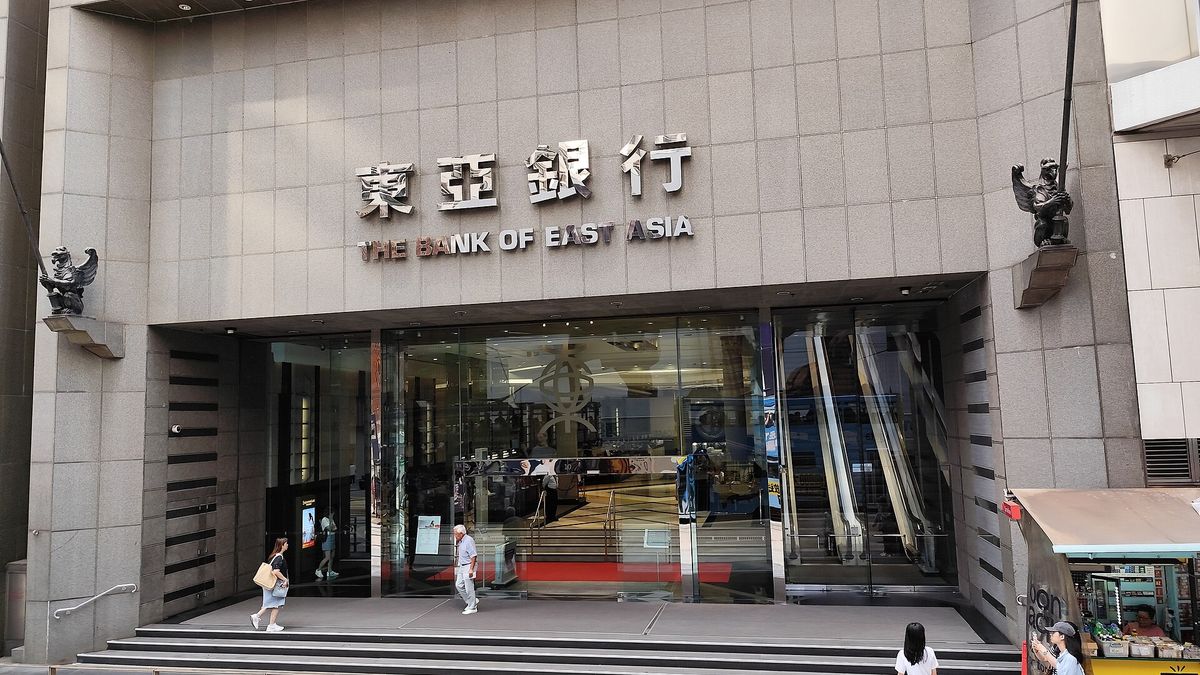
The highest 12-month renminbi time deposit rates on offer were about 1.50%, according to StashAway's survey of bank rates as of Nov. 23. Fubon Bank paid that on at least RMB500,000, Nanyang Commercial Bank on RMB100,000 or more, and virtual lender Fusion Bank with no minimum. Bank of China (Hong Kong) listed 1.30% for a year.
On the Hong Kong dollar side, Fubon Bank's 12-month rate for new funds of HK$1 million or more reached 3.50%, the same survey showed. Several banks raised Hong Kong dollar time deposit rates this month, HK01 reported on Wednesday, with ICBC (Asia) running a branch new-funds offer from Nov. 25 to Nov. 30 at 3.25% to 3.35% for terms of 98, 188 and 388 days, depending on the customer tier, with a HK$50,000 minimum.
A two-point gap
HSBC's own rate page shows the spread at a mainstream bank. As of Nov. 25, its online new-funds offer paid 1.10% on renminbi for three, six or 12 months for Premier customers and 0.80% for HSBC One and other customers, against 2.40% on three-month Hong Kong dollar deposits and 3.30% on U.S. dollars for Premier clients. Hang Seng Bank listed 1.10% for renminbi in StashAway's table, and ZA Bank paid 0.51% for 360 days.
Rates on the mainland help explain why. Chinese banks have repeatedly cut yuan deposit rates to ease pressure on their margins and encourage spending, leaving rates at major state lenders at 0.95%, Reuters reported on Nov. 9. Hong Kong dollar rates, by contrast, track U.S. dollar rates because the currency is held between HK$7.75 and HK$7.85 to the U.S. dollar under the Hong Kong Monetary Authority's linked exchange rate system. Capital Times reported last week on how interbank rates climbed as markets priced in another Federal Reserve increase.
For savers, the arithmetic is simple. RMB100,000 placed for a year at 1.50% earns RMB1,500 in interest. To match a 3.50% Hong Kong dollar deposit over the same year, the yuan would need to gain roughly 2% against the Hong Kong dollar, and any fall in the yuan would widen the shortfall.
Betting on the currency
That currency bet has paid off lately. The yuan has risen about 10% against the U.S. dollar since early 2025, helped by record trade surpluses, according to Reuters, and touched a four-year high of 6.6449 per dollar in early November. The onshore yuan traded at 6.6711 per dollar on the morning of Nov. 13. Exporters typically convert more of their dollar earnings into yuan toward year-end, Reuters reported that day, and ING economist Lynn Song said, “Exporters continue to sell into upticks of the USD/CNY.” Capital Times covered the yuan's rise against a basket of currencies in mid-November.
Beijing has signaled it wants that rally to be gradual. The People's Bank of China said in early November it would raise the share of foreign currency deposits banks must hold in reserve, and several Chinese banks lifted U.S. dollar deposit rates above 4%, moves bankers told Reuters could temper the yuan's gains. A slower rally would shrink the currency gain that renminbi savers in Hong Kong are relying on.
Hong Kong depositors have still been adding yuan. Renminbi deposits in the city rose 2.6% in September to RMB1,129.9 billion, while Hong Kong dollar deposits fell 1.1%, HKMA figures released on Oct. 30 showed.
Reading the offers
Most of the headline rates come with conditions. Fubon's 3.50% needs HK$1 million in fresh money, and StashAway's own pages quote slightly different figures for the same offer, so savers should confirm terms with the bank before transferring funds. HSBC and China Construction Bank (Asia) both define new funds as the increase in a customer's total deposits over the previous seven days, which means shifting money between accounts at the same bank does not count.
Some offers are aimed at savings accounts rather than fixed terms. Hang Seng Bank is offering selected customers a bonus savings rate of 3.2% from Dec. 1 to Jan. 31 and 3.5% in February on Hong Kong dollar balance growth of at least HK$50,000 over the Oct. 31 level, capped at HK$8 million, according to its promotion terms. Bonus interest is paid by May 31, 2027.
Savers who want a higher coupon in a foreign currency have options at mainstream banks. China Construction Bank (Asia) quoted 4.05% for three-month U.S. dollar deposits of at least US$100,000 in an offer running to Dec. 31, with rates stated as of Oct. 14. Before moving large sums into any single bank, check how Hong Kong's Deposit Protection Scheme applies to each account.
This article is general information, not financial advice.
Sources
- StashAway Hong Kong: Best RMB Time Deposit Interest Rates and Offers in Hong Kong (Nov. 23, 2026)
- StashAway Hong Kong: Best HKD Time Deposit Rates in Hong Kong (Nov. 23, 2026)
- HK01 via Longbridge: HKD Fixed Deposits 2026 (HK01 report republished) (Nov. 25, 2026)
- HSBC Hong Kong: Deposit Offers (Nov. 25, 2026)
- Hang Seng Bank: Selected Customer Deposit Growth Offer: Up to 3.5% p.a. HKD Bonus Savings Rate (Nov. 25, 2026)
- China Construction Bank (Asia): New Fund Time Deposit Offers (Oct. 14, 2026)
- Reuters (via Investing.com): Exclusive: Chinese banks boost dollar deposit rates, sources say, as Beijing seeks to smooth yuan rally (Nov. 9, 2026)
- Reuters (via The Star): China's yuan inches higher as companies convert cash holdings (Nov. 13, 2026)
- Hong Kong Monetary Authority: Monetary statistics for September 2026 (Oct. 30, 2026)
- Hong Kong Monetary Authority: Linked Exchange Rate System (Nov. 25, 2026)
Our standards: Capital Times reports under the principles set out in our Editorial Standards and Ethics Policy. Spotted an error? Report it to our editors.