Yuan Basket Index Hits 4.5-Year High of 104.43 as Exporters Convert Dollars Before Year-End
The PBOC kept its daily fixings weaker than models expected all week, but seasonal corporate dollar sales still lifted the yuan against a basket of trading partners' currencies.
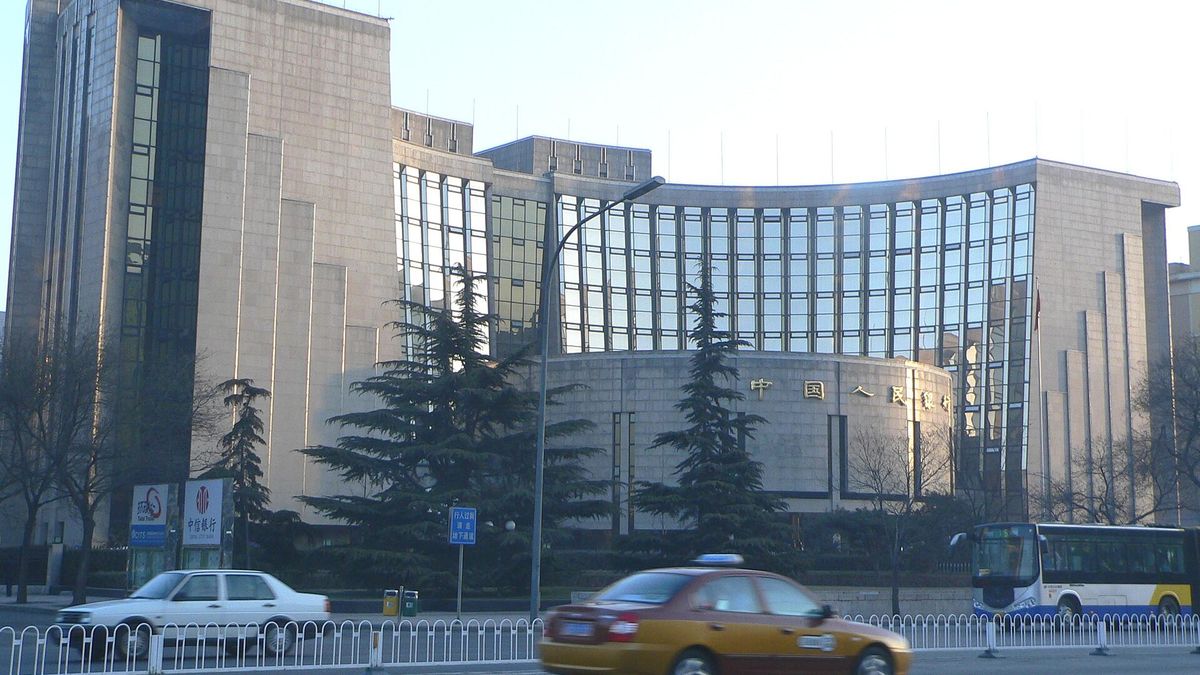
What to know
- The CFETS RMB Index, which tracks the yuan against a basket of trading partners' currencies, rose to 104.43 in the week to Nov. 13 from 103.65 a week earlier and 97.99 at the end of 2025.
- The PBOC set its Friday midpoint at 6.7152 per dollar, 396 pips weaker than a Reuters estimate, and firmed it to 6.7141 on Monday.
- China's retail sales grew 0.4% in October and industrial output 4.8%, both below forecasts in a Reuters poll, according to official data released Monday.
HONG KONG
China's yuan ended last week at its strongest against a basket of trading partners' currencies in about four and a half years, as exporters sold dollars ahead of year-end and outweighed both a firm U.S. currency and a central bank that kept leaning against the rally.
The CFETS RMB Index, which measures the yuan against a basket of trading partners' currencies, rose to 104.43 in the week to Friday, Nov. 13, from 103.65 a week earlier, according to the China Foreign Exchange Trade System. The gauge stood at 97.99 at the end of 2025, putting its gain this year at about 6.6%. Reuters, using official data, described Friday's reading as a 4.5-year high.
The basket figure matters more to Beijing than the dollar rate alone. A yuan that rises against the euro, the yen and regional currencies at the same time squeezes Chinese exporters on several fronts, and that is the pressure policymakers have spent the past two weeks trying to slow.
Exporters Sell Into Dollar Strength
Against the dollar, the move was smaller. The onshore yuan traded at 6.6711 per dollar on Friday morning, up 0.05%, and the offshore yuan was at 6.6719, Reuters reported. It held its ground while the dollar sat near a 19-month high against major peers as traders priced in a possible Federal Reserve rate increase in December.
Currency traders told Reuters that domestic corporate clients were placing "sell-on-rally" orders, selling dollars whenever the U.S. currency firmed, and that many had started to convert more foreign currency toward year-end. Chinese exporters usually convert more of their earnings into yuan in the last weeks of the year and before the Lunar New Year to cover accounting needs, bonuses and holiday spending, a pattern that tends to support the yuan in December and January.
Lynn Song, chief economist for Greater China at ING, said in comments reported by Reuters that "exporters continue to sell into upticks of the USD/CNY." Song pointed to foreign currency built up abroad in recent years, expectations of a record trade surplus in 2026 and strong inflows expected in 2027, and said conditions favored further gains.
There is a large pool of dollars that could still come home. Foreign-currency deposits at Chinese banks reached a record US$1.2 trillion at the end of September, up 17.7% from a year earlier, Reuters reported on Nov. 9, citing central bank data.
PBOC Keeps Fixings Well Below Model Estimates
The People's Bank of China used its daily midpoint to signal caution throughout the week. It set the dollar-yuan fixing at 6.7174 on Thursday, 377 pips weaker than a Reuters estimate, and at 6.7152 on Friday, 396 pips weaker than the estimate of 6.6756, according to Reuters. Spot trading is allowed 2% on either side of the midpoint.
The fixings still drifted firmer. CFETS data show the midpoint moved from 6.7191 on Wednesday, Nov. 11, to 6.7152 on Friday and 6.7141 on Monday, Nov. 16, its strongest setting since Oct. 30. The gap between the fixing and the spot rate means the official rate is trailing the market rather than leading it.
A note from ICBC (Asia) research, cited by Reuters on Thursday, said the firmer dollar index had "eased expectations of one-way yuan appreciation."
Other steps are also in play. The central bank's increase in the reserve requirement ratio on banks' foreign-currency deposits, to 6% from 4%, took effect on Sunday, Nov. 15, after it was announced on Nov. 3. That change requires lenders to hold more dollars in reserve and tightens dollar liquidity onshore. Capital Times covered the details of the higher FX reserve ratio and the yuan's slide to a two-week low after the announcement.
Banks have also lifted the rates they pay on dollar deposits. Reuters reported on Nov. 9 that more than six banks, including state lenders, had raised dollar deposit rates, with one state bank offering as much as 4.5% in late October, compared with 0.95% on yuan deposits at major state banks. Bankers said higher dollar rates give exporters a reason to keep their earnings in dollars instead of converting them. Reuters said it could not determine whether policymakers directed the increases, and the central bank did not respond to its request for comment.
October Data Show a Slowing Economy
The yuan's strength contrasts with the domestic economy. Official data released on Monday showed retail sales grew 0.4% in October from a year earlier, down from 1.1% in September, and industrial output rose 4.8%, slower than September's 5.5%, Reuters reported. Economists polled by Reuters had expected 0.8% and 5.3%. Fixed-asset investment fell 8.1% in the first 10 months, wider than the 7.2% drop through September, according to the National Bureau of Statistics.
Retail sales excluding autos rose 2.5% in October, while sales of gold, silver and jewelry fell 28.7%, the statistics bureau said. Spending at larger retailers, those above a set sales threshold, fell 4.9%.
Weak domestic demand would normally argue for a softer currency. For now, the flows point the other way: banks hold record foreign-currency deposits, traders say the year-end conversion season has started, and ING's Song pointed to expectations of a record trade surplus this year.
For companies and investors in Asia that price goods or hedge revenue in yuan, market watchers quoted by Reuters have read the pattern of firmer but weaker-than-expected fixings as a sign that the central bank is managing the pace of appreciation rather than trying to stop it. With the 6% reserve ratio now in force, the daily fixing at 9:15 a.m. in Shanghai is the signal traders will be watching.
Sources
- China Foreign Exchange Trade System (CFETS): CNY Central Parity Rate (history, USD/CNY) (Nov. 16, 2026)
- China Foreign Exchange Trade System (CFETS): RMB Index (Nov. 13, 2026)
- China Foreign Exchange Trade System (CFETS): RMB Index (CFETS RMB Index data feed) (Nov. 13, 2026)
- Business Recorder (Reuters): China's yuan inches higher as companies convert cash holdings (Nov. 13, 2026)
- Business Recorder (Reuters): China's yuan inches higher as PBOC sets firmer guidance (Nov. 12, 2026)
- SRN News (Reuters): Exclusive: Chinese banks boost dollar deposit rates, sources say, as Beijing seeks to smooth yuan rally (Nov. 9, 2026)
- Business Recorder (Reuters): Yuan set for biggest daily drop in 6 months after PBOC raises FX RRR (Nov. 3, 2026)
- National Bureau of Statistics of China: 2026年1-10月份社会消费品零售总额增长1.0% (Retail sales, January-October 2026) (Nov. 16, 2026)
- National Bureau of Statistics of China: 2026年1-10月份全国固定资产投资基本情况 (Fixed-asset investment, January-October 2026) (Nov. 16, 2026)
- WBOW (Reuters): China's factory output, retail sales growth slow in October (Nov. 16, 2026)
Our standards: Capital Times reports under the principles set out in our Editorial Standards and Ethics Policy. Spotted an error? Report it to our editors.