Asian LNG Prices Hit $32 as China, Korea Lock In Winter Cargoes Despite Hormuz Risk
The JKM benchmark has risen about 27% in a month and nearly tripled in a year, leaving North Asian utilities paying up as Hormuz talks drag on.
What to know
- The average price for December LNG delivery into northeast Asia rose to $32.50 per mmBtu in the week to Oct. 30, from $30.50 a week earlier, the Al Attiyah Foundation said.
- Platts JKM crossed $30 per mmBtu on Oct. 19 for the first time since December 2022, and a Chinese state oil company and a South Korean importer have since bought winter cargoes.
- Trading Economics data put JKM at $32.84 on Oct. 30, up 27.4% in a month and nearly 199% from a year earlier.
SINGAPORE
Spot prices for liquefied natural gas delivered to North Asia rose for a fourth straight week to about $32.50 per million British thermal units in the week to Oct. 30, as state-backed buyers in China and South Korea kept booking winter cargoes despite the highest prices in nearly four years. The figure, the average for December delivery into northeast Asia, was up from $30.50 a week earlier, according to the Al Attiyah Foundation's weekly energy review.
For Asian utilities, city-gas distributors and the manufacturers that buy from them, the jump turns winter fuel into a much larger bill than budgets set in the summer assumed. Data from Trading Economics put the Japan Korea Marker (JKM) at $32.84 on Oct. 30, up 27.4% in a month and up nearly 199% from a year earlier.
JKM breaks $30 as China and Korea buy
The move gathered pace in mid-October. Platts JKM, the S&P Global benchmark for LNG delivered to Northeast Asia, rose above $30 on Oct. 19 for the first time since December 2022, Platts reported. It assessed December delivery at $30.761 on Oct. 22, compared with $30.432 three days earlier. The benchmark's last higher reading was $32.171 on Dec. 21, 2022. The Oct. 30 price reported by Trading Economics sits above that mark.
Buyers changed course quickly. In September, many held back on expectations of a mild winter and more cargoes moving through the Strait of Hormuz, according to Platts. By late October, a Chinese national oil company had secured cargoes to meet heating demand and storage targets, and a South Korean importer had bought at least five to six cargoes for December and January delivery, market sources told Platts. Traders also expected Taiwan to seek cargoes soon, given its exposure to Middle East supply.
Eric Yep, senior principal analyst at S&P Global Energy CERA, told Platts that winter restocking by state-backed importers in China, South Korea and Taiwan was one of the main forces lifting JKM to $30. He said that buying should continue at a reasonable level even if the winter turns out warmer than normal.
Smaller Chinese buyers are a different story. Second-tier importers stayed out of the market while prices were high, Platts said. Energy Intelligence ran a headline on Oct. 20 that high prices and a sluggish economy were curbing China's LNG appetite. An Asian market source quoted by Platts warned that current prices encourage "demand destruction," particularly in China and South Asia, through lower imports and fuel switching. Coal offers less of a cushion than usual: China's coal output and prices have moved in opposite directions this autumn, with output falling and prices at three-year highs.
Europe competes for the same cargoes
Asia is not bidding alone. The Dutch TTF benchmark settled at $33.97 per mmBtu in the week to Oct. 30, a 10.7% weekly gain, the Al Attiyah Foundation said, as colder forecasts in both Asia and Europe sharpened competition for cargoes. EU gas storage was 74.58% full on Oct. 21, according to Gas Infrastructure Europe data cited by Platts, and an Asian market source told Platts that European inventories remain below year-ago levels and historical norms.
The European Union's ban on Russian LNG imports starts Jan. 1, 2027, adding another source of pull on Atlantic supply. The shape of the Asian curve shows how far sentiment has moved: the November-December JKM spread was backwardated by 12.4 cents on Oct. 1 but had flipped to a contango of $3.751 by Oct. 21, Platts data showed, meaning buyers now pay more for December than for November.
Two things capped gains last week, according to the Al Attiyah review: relatively subdued demand in northeast Asia overall and a recovery in Qatari LNG loadings.
Hormuz talks and freight are the next tests
Price swings have been wide all year. JKM volatility averaged 94% during the Middle East supply disruptions from March to September, compared with 64% for Brent, S&P Global said in an Oct. 19 analysis. Implied volatility for JKM winter contracts ranged from 59% to 70% as of Sept. 30.
Diplomacy over the strait is the main swing factor in the near term. Iran has proposed reopening the Strait of Hormuz within two days if Washington meets its conditions, with Qatari mediators helping shorten an earlier seven-day plan, Investing.com reported on Monday. Shipping risk remains high: Iran's navy said a tanker caught fire after striking mines east of the strait, according to the same report.
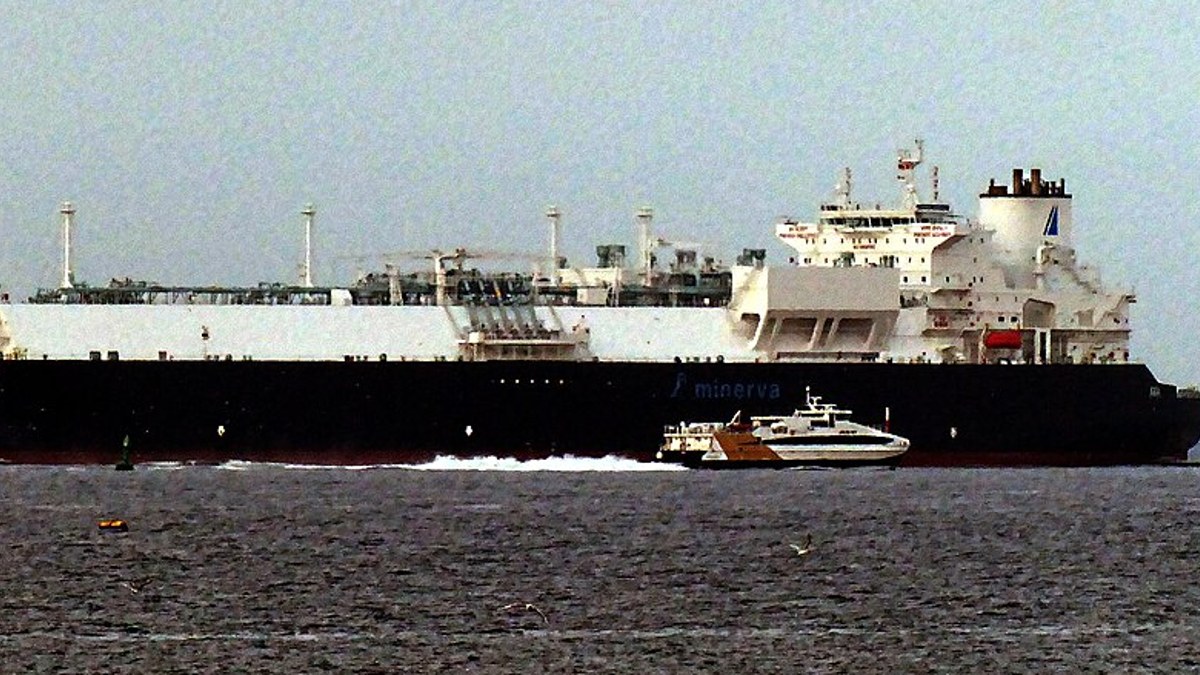
Shipping costs are climbing too. On the Australia to Japan route, LNG carrier rates rose $6,500 week on week to $44,800 a day, and the U.S. Gulf to Japan route gained $3,300 to $63,800 a day, the Baltic Exchange said in a weekly report published Monday. For Japanese buyers, spot prices this high make the restart of 15 reactors matter more this winter.
The next markers to watch are the outcome of the Doha talks, Taiwan's expected tender and whether Qatari loadings keep recovering. As of Oct. 21, December JKM was priced $3.751 above November, according to Platts.
Sources
- Platts, S&P Global (via Hellenic Shipping News): Asia enters winter LNG demand season just as JKM hits four-year high amid uncertainties (Oct. 27, 2026)
- Al Attiyah Foundation (via Marhaba): Al Attiyah Foundation Weekly Energy Market Review, 31 October 2026 (Oct. 31, 2026)
- Trading Economics: LNG Japan Korea Marker (JKM) (Nov. 2, 2026)
- S&P Global Energy: Infographic: JKM stays anchored to LNG fundamentals amid 2026 supply shocks (Oct. 19, 2026)
- Energy Intelligence: Gas and LNG Markets, Oct. 30, 2026 (Oct. 30, 2026)
- Baltic Exchange (via Hellenic Shipping News): LNG Shipping Market Gaining Ground (Nov. 2, 2026)
- Investing.com (via Hellenic Shipping News): Iran offers 48-hour Hormuz reopening plan as Trump signals progress in talks (Nov. 2, 2026)
Our standards: Capital Times reports under the principles set out in our Editorial Standards and Ethics Policy. Spotted an error? Report it to our editors.