Hang Seng Falls 5.4% in October as China's CSI 300 Suffers Worst Month Since 2016
Mainland tech shares led the slide, the Shenzhen Component lost almost 16%, and Beijing's regulators were set to meet banks on Monday to discuss support tools.
What to know
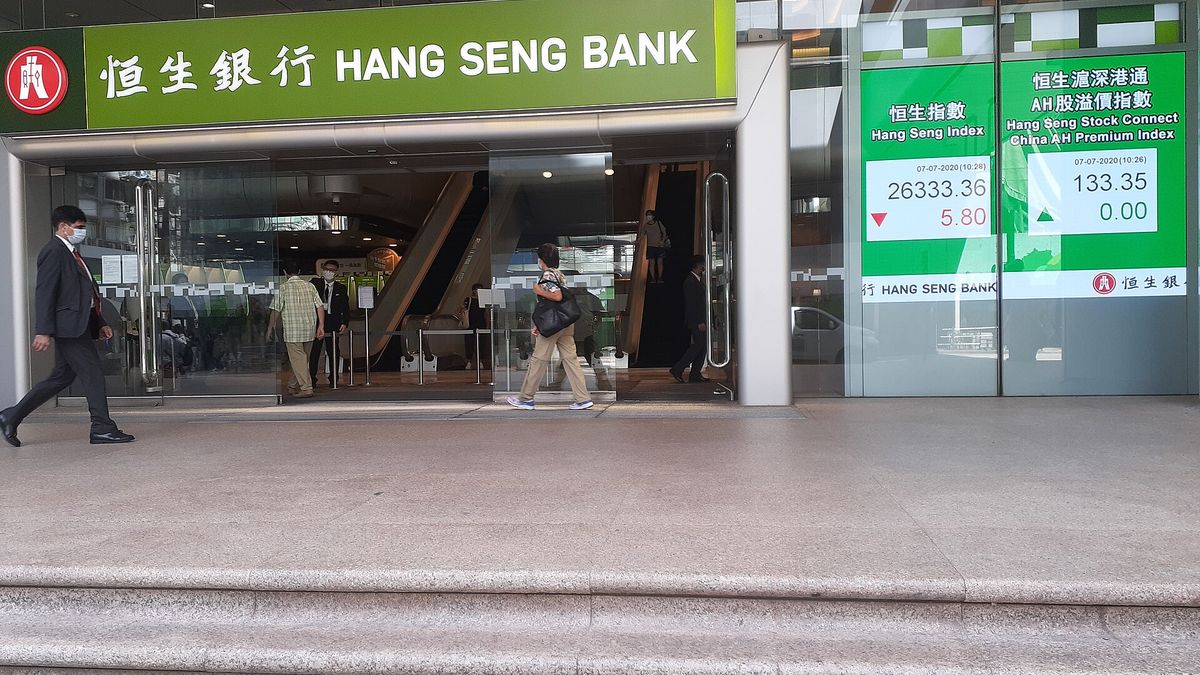
- The Hang Seng Index closed October at 23,294.42, down 5.4% from 24,613.27 at the end of September, based on Yahoo Finance prices (Capital Times calculation).
- China's CSI 300 fell 8.5% in October, its biggest monthly decline since early 2016, according to Reuters.
- The Shanghai Composite lost 6.33% for the month and closed below 3,600 for the first time this year, while the Shenzhen Component dropped 15.94%.
HONG KONG
Hong Kong's Hang Seng Index lost 5.4% in October and mainland China's CSI 300 fell 8.5%, its steepest monthly decline since early 2016, as a global retreat from artificial-intelligence stocks hit Chinese technology shares on both sides of the border.
The Hang Seng closed Friday, Oct. 30, at 23,294.42, down from 24,613.27 at the end of September, according to Yahoo Finance prices (Capital Times calculation). The CSI 300 figure comes from Reuters, which said the blue-chip index has now fallen for 12 straight weeks, the longest losing run on record, shedding 15% over that stretch.
For investors in Asia, the losses matter beyond China. Chinese AI hardware and internet names had been among the region's most crowded trades this year, and their unwinding came in the same month that Japan's Nikkei 225 shed 5.2%. Mainland regulators are now signaling they may step in.
Shanghai Composite Breaks 3,600 as Tech Boards Collapse
The damage on the mainland was concentrated in growth stocks. The Shanghai Composite Index fell 6.33% for the month, The Standard reported, and on the last trading day it slid 1.44% to 3,599, its first close below 3,600 this year. The tech-heavy Shenzhen Stock Exchange Component Index dropped 15.94% in October.
Friday's session showed the pattern in miniature. The Shenzhen Component lost 2.73% to 10,833.78, the ChiNext start-up board fell 4.13% and the STAR 50 index of Shanghai's science and technology board dropped 4.66%, according to The Standard, though Reuters put the STAR 50 decline at 5.5%. More than 4,600 stocks fell, and combined turnover in Shanghai and Shenzhen rose to 1.67 trillion yuan.
Reuters said consumer staples rose 2% that day as money moved into defensive sectors, while a 5G communications index fell 6.2%. The trigger was fresh doubt over whether the enormous sums being spent on AI will pay off, following another round of selling in U.S. technology shares.
That theme ran through the month. On Oct. 22, Reuters reported that the CSI 300 had closed at 4,036.30, its lowest since July 2025 and more than 20% below its June 22 peak, putting it in bear-market territory. The STAR Market was then down 40% from its July high. Reuters cited worries that AI growth and valuations were unsustainable, disappointment over piecemeal economic support from Beijing, and a campaign to collect income tax on offshore trusts, as well as share sales by company founders.
Hao Hong, managing partner and chief investment officer of Lotus Asset Management in Hong Kong, told Reuters that day: “The market is in the dump.”
Hang Seng Hit by Yields, Tax Worries and Tech Selling
Hong Kong's slide began on the first trading day after the National Day holiday. On Oct. 2 the Hang Seng fell 2.6% to 23,972, its biggest one-day drop since March, according to Trading Economics. The data provider tied the selloff to a jump in the U.S. 10-year Treasury yield to 5.34%, its highest since 2002, and said the absence of Southbound Stock Connect buying, with mainland markets shut for the holiday, deepened the fall.
The index then drifted near 24,000 until the week of Oct. 19. On Oct. 22 the Hang Seng fell 3%, according to Yahoo Finance data, as Reuters cited Beijing's push to collect income tax on offshore trusts as added pressure on Hong Kong shares. On Oct. 29 the benchmark lost 0.6% to 22,958, with the tech gauge down 2.8% to 3,744, The Standard reported.
Hong Kong held up better than Shanghai at the finish. The Hang Seng rose 1.5% on Oct. 30, led by financial stocks and mainland property developers, and gained 0.9% for the week, Reuters said. The Hang Seng China Enterprises Index, which tracks mainland companies listed in Hong Kong, fell 4.4% in October, according to Yahoo Finance data (Capital Times calculation).
Analysts quoted by The Standard said the Hang Seng could test 22,800 in November. They cited the AI selloff, policy uncertainty ahead of the U.S. midterm elections, a weaker-than-expected official purchasing managers' index and continued capital outflows through Southbound Stock Connect, the channel mainland investors use to buy Hong Kong shares.
Beijing Weighs Support Measures
The month's losses have prompted a policy response. The People's Bank of China, the China Securities Regulatory Commission and the National Financial Regulatory Administration were set to meet major banks on Monday to discuss expanding capital market support tools, including special re-lending facilities that fund share buybacks, The Standard reported, citing mainland media.
The central bank also formally switched its main policy rate on Monday to an overnight reverse repurchase rate, injecting 541 billion yuan at 1.25%. ANZ senior China strategist Zhaopeng Xing said the change was equivalent to a targeted 15-basis-point rate cut for financial institutions, but added that it was unlikely to have a material effect on stocks.
Markets bounced at the start of November. By midday Monday the Hang Seng was up 0.61% at 23,437 and the Hang Seng Tech index had gained 2.85%, while the Shanghai Composite rose 1.16% to 3,640 and the Shenzhen Component jumped 2.39%, according to The Standard. The official manufacturing PMI, which fell to 49.3 in October, has already set a weak tone for the month. The next test for the CSI 300 is whether any measures from Monday's meetings can end its record 12-week losing streak.
Sources
- The Standard: China regulators act to support stocks after October slump: mainland media reports (Nov. 1, 2026)
- Reuters via Newsweek Japan: China stock market close, Oct. 30 (Reuters report, Japanese edition) (Oct. 30, 2026)
- Reuters via Devdiscourse: China's blue chips slump to 15-month lows as AI stocks slide (Oct. 22, 2026)
- The Standard: Hang Seng Index loses 23000 point mark on Thursday as tech selloff quickens (Oct. 29, 2026)
- Trading Economics: Hong Kong Stocks Suffer Sharpest Drop Since March (Oct. 2, 2026)
- The Standard: China lowers funding costs with shift to overnight policy rate (Nov. 2, 2026)
- The Standard: Hong Kong stocks gain by midday break (Nov. 2, 2026)
- Yahoo Finance: Hang Seng Index (^HSI), Shanghai Composite (000001.SS) and Hang Seng China Enterprises (^HSCE) daily history (Oct. 30, 2026)
Our standards: Capital Times reports under the principles set out in our Editorial Standards and Ethics Policy. Spotted an error? Report it to our editors.