Asian Spot LNG Holds Near Four-Year High as Europe's Low Gas Storage Keeps Winter Market Tight
Spot prices for December delivery into North Asia slipped to an estimated $31.30 in the week to Nov. 13, according to Reuters, while European storage sat almost 18 points below normal and Hormuz cargo flows picked up.
What to know
- The average price for December LNG delivery into northeast Asia was estimated at $31.30 per mmBtu in the week to Nov. 13, down from $31.40 a week earlier, according to Reuters.
- European gas storage was 71.6% full on Nov. 10, almost 18 percentage points below the five-year average, an S&P Global Energy analyst said.
- LNG cargoes through the Strait of Hormuz reached 16 so far in November against 26 in all of October, according to Argus.
SINGAPORE
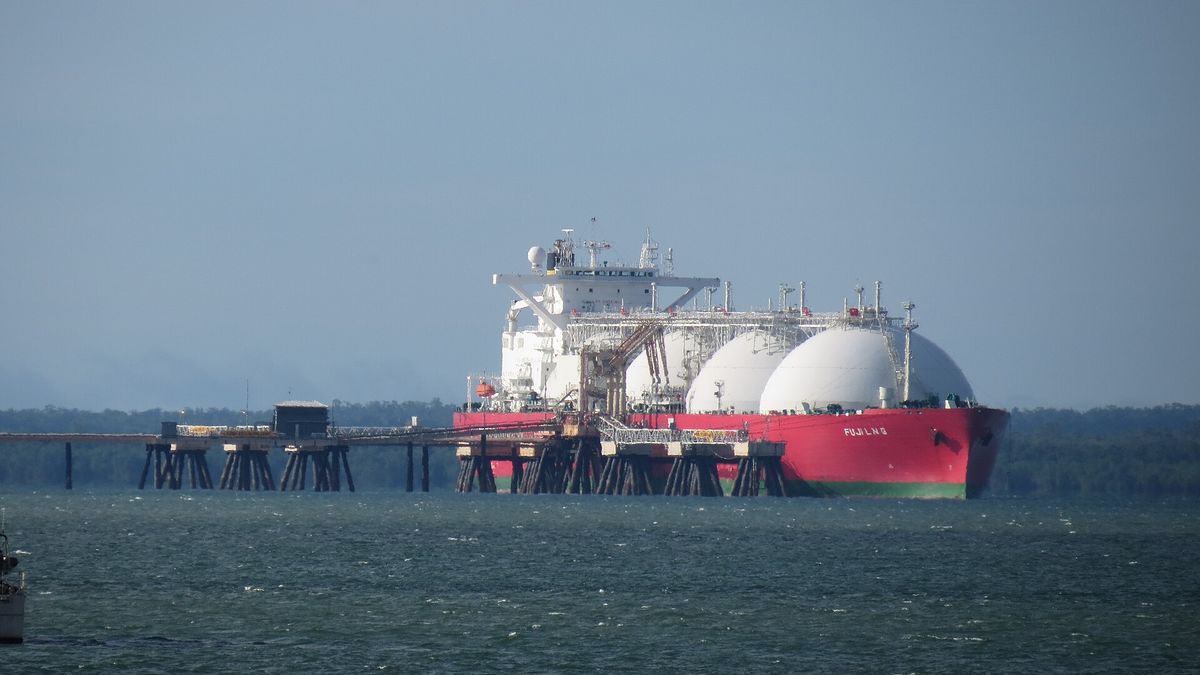
Spot prices for liquefied natural gas delivered to North Asia edged lower for a second straight week but stayed close to a four-year high, as Europe's unusually thin gas storage kept the two regions bidding for the same winter cargoes. The average price for December delivery into northeast Asia was estimated at $31.30 per million British thermal units in the week to Nov. 13, down from $31.40 a week earlier, according to Reuters as reported by Pipeline & Gas Journal. January delivery was assessed at $31.10.
The small move hides a market that remains tight going into the coldest months. For utilities and city-gas companies in Japan, South Korea and Taiwan that still need spot cargoes, prices above $30 make winter fuel far costlier than the $21.50 average for Asian spot LNG between March and October that the International Energy Agency calculated, itself almost 80% higher than a year earlier. The main pressure point has shifted west: Europe is drawing down storage early and from a low base, and the Atlantic cargoes that might otherwise sail to Asia are being pulled toward European terminals.
Europe's storage gap sets the price
European storage was 71.6% full on Nov. 10, almost 18 percentage points below the five-year average, said Aly Blakeway, head of Atlantic LNG at S&P Global Energy, according to the Reuters report. She said stocks could drop to about 21.5% by the end of March at the current withdrawal pace, which would raise the volume of LNG Europe needs to refill next summer.
Benchmark Dutch TTF gas rose to about 92 euros per megawatt-hour on Nov. 13, from about 86 euros a week earlier, Reuters reported. Analysts cited in the Al Attiyah Foundation's weekly review dated Nov. 14 said colder weather in Europe could speed up withdrawals and push storage below 70% this week.
That competition shows up in shipping and arbitrage data. Spark Commodities analyst Qasim Afghan said U.S. and Nigerian cargoes still earn more by going to Europe than to Asia, according to Reuters. S&P Global Energy assessed its Northwest Europe LNG marker for December at $29.435 on Nov. 12, a 60-cent discount to front-month TTF. Freight rates eased after three weeks of gains, with Atlantic rates falling to $31,000 a day and Pacific rates to $54,500, Afghan said.
The IEA had already flagged the risk. In its Global Gas Security Review released Nov. 3, it said Europe entered the heating season with its lowest storage in more than a decade, and that a cold winter combined with continued disruption at the Strait of Hormuz could leave EU stocks below 10% of working capacity by end-March 2027, according to a Platts summary. Low European stocks, along with limited storage in some Asian importers, could sharpen competition for flexible cargoes, the agency said.
Hormuz flows improve, North Asia waits
Supply from the Gulf is slowly recovering. LNG cargo flows through the Strait of Hormuz reached 16 shipments in the first part of November, compared with 26 in the whole of October, said Martin Senior, head of LNG pricing at Argus, according to Reuters. The Al Attiyah Foundation's review cited the same figures.
The IEA estimates that the effective halt to Hormuz flows cut LNG loadings from Qatar and the UAE by more than 60 billion cubic meters between March and October. It expects global LNG supply to fall about 3% this year, the steepest annual decline on record.
Buying in Asia has been patchy. Senior said spot demand was concentrated in South and Southeast Asia, while buyers in northeast Asia had mostly stayed out of the market. For the October buying round, see our earlier report on Asian LNG prices and winter buyers.
China's overall gas imports, counting both pipeline gas and LNG, rose 2.4% in October to about 10 million tons as buyers stockpiled ahead of winter, with the increase appearing to come from both LNG and Russian pipeline supply, Bloomberg reported on Nov. 10. The IEA said Asia-Pacific gas demand fell more than 1%, or about 10 billion cubic meters, in the first nine months of 2026, and it listed gas-to-coal switching across Asia among the reasons global gas demand is set to shrink this year.
A volatile November so far
Prices have swung widely this month. Platts assessed December JKM at $33.911 on Nov. 2, just below its Oct. 30 high of $34.076, the strongest reading since December 2022. Two days later the benchmark dropped nearly $2 to $31.545 as progress in U.S.-Iran talks pulled down the risk premium, S&P Global Energy reported. Japan's state energy agency JOGMEC said JKM briefly slipped into the mid-$29s on Nov. 5 before recovering by the end of that week.
Japanese stockpiles have also been falling. LNG inventories held by Japanese power producers stood at 1.92 million tons on Nov. 1, down 0.23 million tons from a week earlier, according to Ministry of Economy, Trade and Industry data cited in the JOGMEC review published by Global LNG Hub. For background, see our explainer on Japan's nuclear restarts and LNG.
Tokyo Gas President and CEO Shinichi Sasayama said in early November that spot prices could climb further into winter, depending on the weather, inventory drawdowns and developments in Iran, S&P Global Energy reported. He said the Hormuz disruption had not affected the company's own procurement because its supply is diversified, and that most of its long-term contracts are linked to crude oil. Brent settled at $95.84 a barrel on Friday, down 2.5% on the week, according to the Al Attiyah Foundation.
The next readings that matter are European storage data, which analysts expect to slip below 70% this week, and the Hormuz cargo count for the second half of November.
Sources
- Pipeline & Gas Journal (citing Reuters): Asian spot LNG holds near 4-year high as European storage worries persist (Nov. 13, 2026)
- Al Attiyah Foundation (via Marhaba): Al Attiyah Foundation Weekly Energy Market Review, 14 November 2026 (Nov. 15, 2026)
- Qatar Tribune (Al Attiyah Foundation weekly review): Crude gains on worries about renewed US attacks on Iran (Nov. 8, 2026)
- Global LNG Hub (citing JOGMEC): Natural gas prices weekly update: JKM, TTF and Henry Hub (9 November 2026) (Nov. 9, 2026)
- Platts, S&P Global Energy (via Hellenic Shipping News): Low EU gas stocks leave reduced buffer against supply shocks: IEA (Nov. 5, 2026)
- S&P Global Energy: Spot LNG price may rise further toward winter on weather, geopolitical risks: Tokyo Gas CEO (Nov. 5, 2026)
- Bloomberg (via Energy Connects): China oil imports rebound as more crude flows from Gulf (Nov. 10, 2026)
Our standards: Capital Times reports under the principles set out in our Editorial Standards and Ethics Policy. Spotted an error? Report it to our editors.