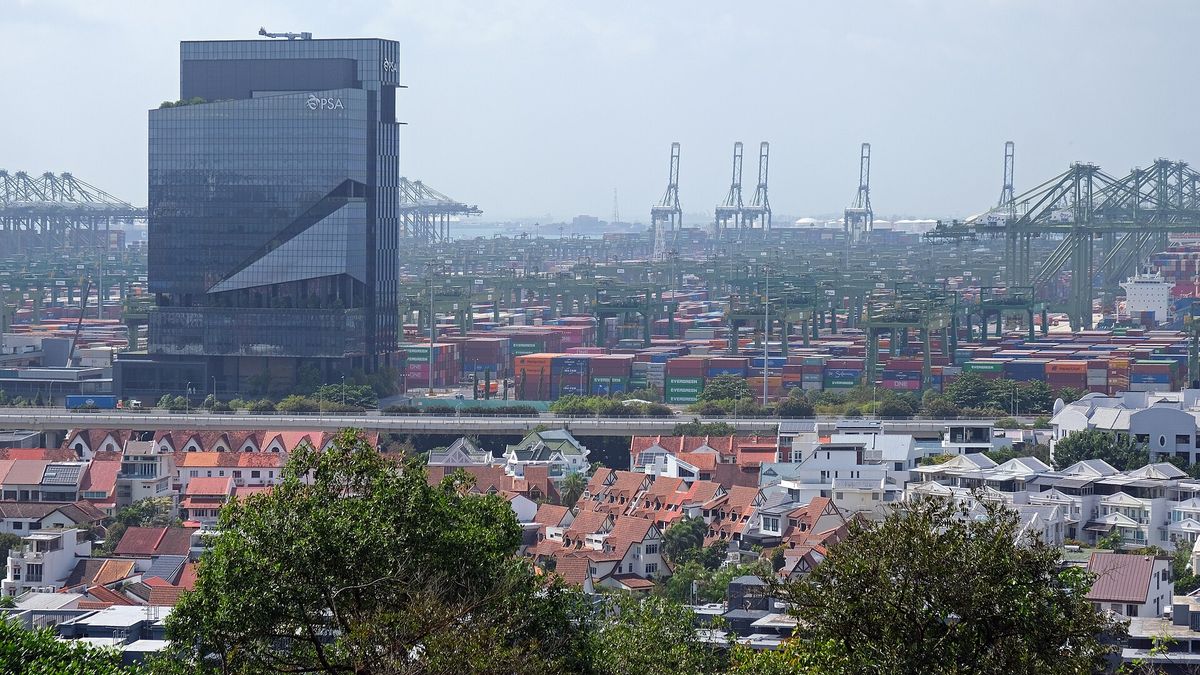
Capesize Earnings Top $42,000 a Day on Pacific Iron Ore Demand, Then Cool
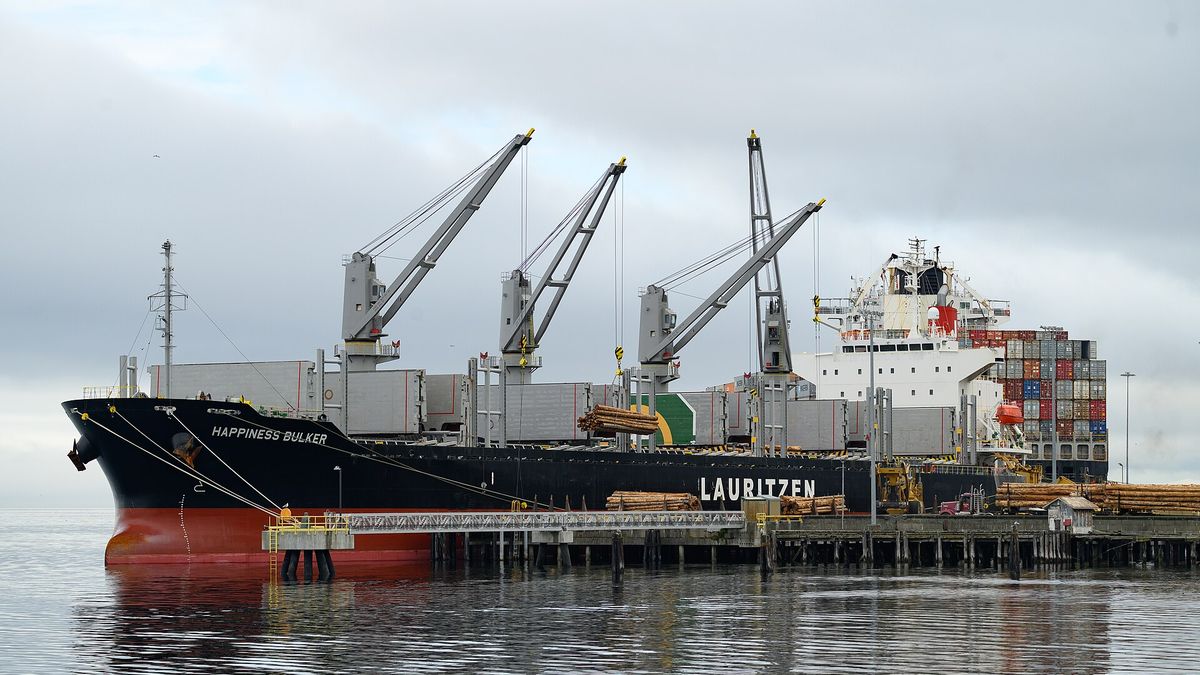
Pacific iron ore demand lifted the biggest bulk carriers to their best week in more than a month, but the rally faded on Friday and Monday while Gulf tanker rates kept sliding.
What to know
- The Baltic Dry Index rose for seven straight sessions to 3,020 points on Nov. 12, its highest level since Oct. 5, before easing to 2,921 on Monday, Nov. 16, according to Trading Economics data.
- Average capesize earnings closed the week to Nov. 13 at $42,798 a day, up from $39,395 a week earlier, as the Western Australia to China iron ore rate touched $15.20 a ton.
- Baltic Exchange data showed the Middle East Gulf to China VLCC route falling 188 Worldscale points from the previous Friday to WS1014.38.
HONG KONG
The Baltic Dry Index, the benchmark for freight on ships that carry iron ore, coal and grain, climbed for seven straight sessions to 3,020 points on Thursday, Nov. 12, its highest level since Oct. 5, according to Trading Economics data. The rally was led by capesize vessels, the largest bulk carriers, whose average daily earnings closed the week to Nov. 13 at $42,798, according to Baltic Exchange data.
The gains did not last. The index slipped 1.3% to 2,980 on Friday and fell about 2% on Monday, Nov. 16, to 2,921, according to Trading Economics data, as capesize rates gave back part of the week's rise. It eased again on Tuesday to 2,893, the data showed. For Asian steelmakers, utilities and miners, the swing matters because freight is a large part of the delivered cost of Australian and Brazilian iron ore landing in China, and of coal moving from Indonesia and Australia to power plants across the region.
Capesize rates rise on Pacific iron ore demand
The Pacific drove the move. The Baltic Exchange's C5 route, which tracks the cost of shipping iron ore from Western Australia to China, climbed from $13.80 a ton on Monday, Nov. 9, to $15.20 by Thursday before easing to between $14.50 and $14.60 at the end of the week, the exchange said in its weekly report published by The Edge Malaysia. A week earlier, C5 had closed Friday, Nov. 6, at $13.25.
The longer Brazil to China run, C3, went the other way. Fixtures softened from about $36 a ton to $35 as the week went on, the exchange said, describing a more mixed picture in the Atlantic.
The 182,000-deadweight-ton capesize average, known as the BCI 5TC, peaked at $43,860 a day on Thursday. Its Friday close of $42,798 compared with $39,395 a week earlier, an increase of about 8.6%, according to figures compiled by the shipping data site ShipUniverse, which match the Baltic Exchange's weekly numbers. ShipUniverse put the Pacific round voyage, C10, at $41,764 a day on Nov. 13 and the Atlantic round voyage, C8, at $48,250.
Daily index levels traced the run. ShipUniverse, a shipping data site, recorded the Baltic Dry Index at 2,805 on Nov. 6, then 2,854 on Monday, 2,862 on Tuesday and 2,959 on Wednesday before the Thursday peak. Trading Economics data showed the capesize index at 4,836 points on Thursday, its highest since Oct. 2, before it slipped 2.4% to 4,719 on Friday and another 3.4% to 4,558 on Monday.
The level remains well above last year's. A market report by two Greek shipping consultants published by The Sea Nation put the Baltic Dry Index at 2,125 in the week to Nov. 14, 2025.
Iron ore is the main cargo behind those numbers. Capital Times has reported on China's falling domestic iron ore output and rising imports and on the ramp-up of Guinea's Simandou mine, which adds long-haul tonnage from West Africa to the capesize market.
Panamax and supramax: grain and coal routes firm
Mid-sized ships were steadier. The panamax average rose 5.7% over the week to $19,063 a day on Nov. 13, and the supramax average added 1.1% to $23,203, according to ShipUniverse. Trading Economics data showed both indexes roughly flat on Monday.
Fixtures reported by the Baltic Exchange showed where Asian demand sat. A panamax hauling cargo from the U.S. Gulf to China was fixed at $27,350 a day, while a 76,000-ton ship on an Indonesian voyage went for $17,000. A 63,000-ton supramax was booked from North China via the North Pacific to Bangladesh at $27,000. The exchange said the supramax market was held back by weakness in the Indian Ocean.
VLCC tanker rates slide from extreme levels
Crude tankers moved in the opposite direction. The Baltic Exchange's TD3C benchmark, which prices a 270,000-ton cargo of crude from the Middle East Gulf to China, had fallen 188 Worldscale points since the previous Friday to WS1014.38, the exchange said in the same weekly report. It put the round-trip time-charter equivalent at about $1.08 million a day.
The exchange's report for the previous week also showed VLCC rates falling, with the round-trip equivalent then at about $1.3 million a day. Capital Times reported earlier on tanker attacks near Hormuz and their effect on Iraqi exports to Asia.
LNG carrier earnings were mixed. The exchange's Australia to Japan route, BLNG1, rose $200 to $54,600 a day for a 174,000-cubic-meter ship in the week to Nov. 13, with rates in the East holding above Atlantic levels.
For readers tracking Asian freight costs, the Baltic Exchange publishes its indexes each London business day, and its next weekly round-up covers the week to Friday, Nov. 20. Capesize owners will be watching whether the C5 rate holds above $14 a ton.
Sources
- The Edge Malaysia (The Baltic Exchange): Baltic Exchange shipping updates: Nov 13, 2026 (Nov. 13, 2026)
- The Edge Malaysia (The Baltic Exchange): Baltic Exchange shipping updates: Nov 6, 2026 (Nov. 6, 2026)
- ShipUniverse: Dry bulk weekly market report, week to Nov. 13, 2026 (Nov. 13, 2026)
- Trading Economics: Baltic Dry Index Advances for 7th Day (Nov. 12, 2026)
- The Sea Nation: Dry bulk in the doldrums: a market holding course while waiting for the next wind (Nov. 17, 2025)
Our standards: Capital Times reports under the principles set out in our Editorial Standards and Ethics Policy. Spotted an error? Report it to our editors.