BOJ Minutes Show Board Ready to Drop Twice-a-Year Hike Pace After Move to 1.25%
Records of the September meeting show members saying policy had entered a new phase, with one warning the bank may need to speed up if prices overshoot.
What to know
- Bank of Japan minutes released Nov. 5 show one member saying the bank should drop its 2024-2025 pace of two hikes a year and act more nimbly.
- The board raised its policy rate to around 1.25% on Sept. 18 by a 7-2 vote, with Toichiro Asada and Ayano Sato dissenting.
- On Oct. 30 the board held at 1.25% by 8-1, with Hajime Takata proposing a rise to 1.5%.
TOKYO
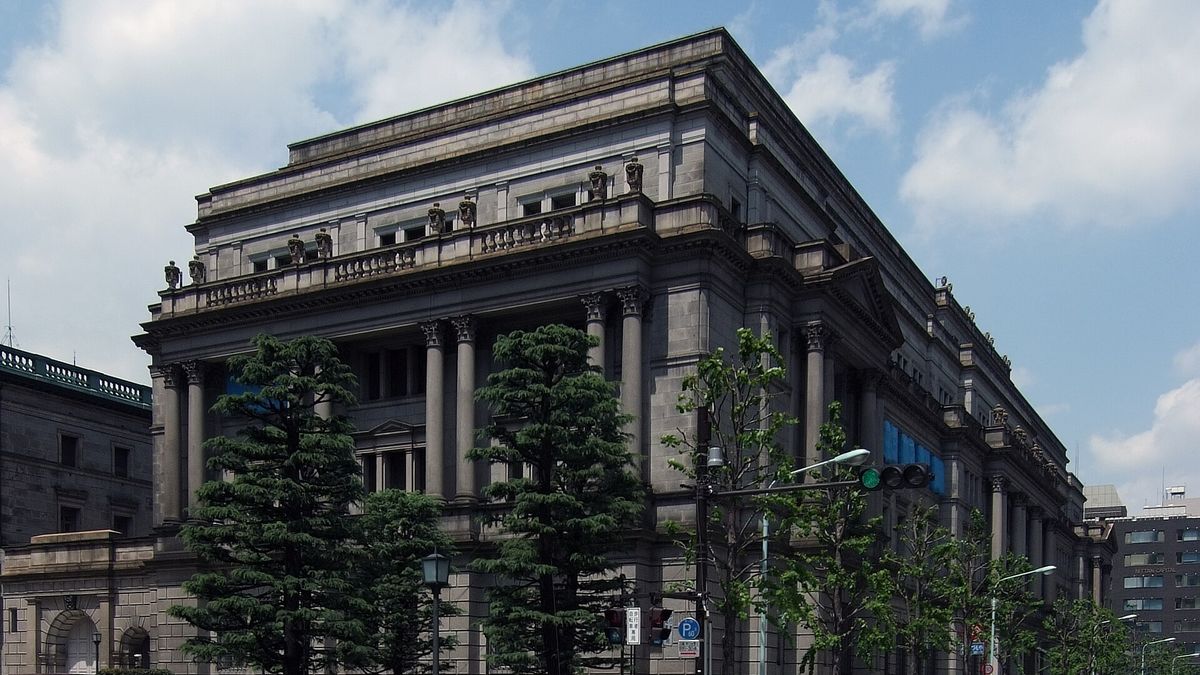
Bank of Japan board members said in September that the central bank should stop working to a set rhythm of rate increases and be ready to move faster if inflation overshoots, according to minutes of the Sept. 17-18 meeting released on Thursday, Nov. 5. At that meeting the board raised its short-term policy rate by 0.25 percentage point to around 1.25% in a 7-2 vote.
The record matters for investors in Asia because it describes a central bank that no longer sees its job as pushing inflation up. One member said that with underlying inflation near the 2% target, "there had been a shift in the phase of monetary policy." That points to a faster path for Japanese rates than the slow, predictable steps of the past two years, with knock-on effects for the yen, Japanese government bond yields and the yen-funded trades that move money around the region.
Bank of Japan board debates the pace of hikes
The September increase came three months after a hike in June, a shorter gap than before. One member said the bank had raised rates at a moderate pace of twice a year in 2024 and 2025, when Japan was moving in the opposite direction from other economies. With central banks in the United States and Europe now raising rates, that member said, the bank needed a nimble approach and should debate the size of each move rather than stick to a fixed pace.
Another member said that if signs of an upward deviation in prices appeared, the bank would need to accelerate its rate increases. A third said the bank should bring the policy rate closer to its approximate goal "relatively soon," leaving room to adjust in either direction.
Not everyone agreed on urgency. One member said underlying inflation was not rising fast enough for the bank to fall behind the curve, so there was no need for hasty action. Members as a group agreed the bank should keep raising rates and adjusting the degree of monetary easing as the economy and prices develop, the minutes said.
Most members judged that financial conditions would stay accommodative even after the September increase. One noted that higher stock prices and the weaker yen had loosened conditions further, and said the bank should study how to treat asset markets when it assesses financial conditions. Another said most companies reported that past and near-term rate increases had limited impact, with only a very few holding back investment because of interest costs.
Neutral rate and the market's 2% bet
The board spent part of the meeting on the neutral interest rate, the level that neither stimulates nor restrains the economy. One member said the two-year forward one-year rate in the overnight index swap market, seen as a gauge of where traders expect the hiking cycle to end, had recently topped 2%. A different member said market expectations for rate increases appeared somewhat ahead of the economy and of wage and price trends.
Many members said the neutral rate cannot be pinned down in advance because it is not directly observable. They favored raising rates step by step and checking how companies, households and lenders respond after each move. One member warned that the neutral rate could turn out higher than earlier estimates, depending on developments overseas. Another said the bank needed to communicate clearly so that markets did not build in one-sided expectations.
Government representatives from the Cabinet Office said at the meeting that the bank might need to take its neutral-rate estimates into consideration and should examine the cumulative effects of past increases, according to the minutes.
Dissent on both sides of the board
The September vote split the board in two directions. Toichiro Asada and Ayano Sato voted against the increase. Asada argued that consumer price inflation excluding fresh food had recently been below 2% and the economy could not necessarily be called strong. Sato said economic and price trends had not substantially accelerated and it was too early to raise rates.
From the other side, Hajime Takata and Naoki Tamura objected to the statement's description of the price outlook, arguing that underlying inflation had already broadly reached the target. Both still voted for the hike.
Takata has since gone further. At the Oct. 30 meeting the board kept the rate at around 1.25% by an 8-1 vote, according to the bank's statement. Takata dissented and proposed raising the rate to 1.5%, saying the bank should step up the pace of moving toward the neutral rate. The board also decided to more than double the pace of its exchange-traded fund sales to about 860 billion yen a year at book value, starting in January 2027. Capital Times covered that decision in its report on the October hold and ETF sales.
With markets already debating whether a December rate increase is in play, the September record shows how far the majority had moved: seven of nine members backed a hike only three months after the last one, and one of the members who wanted more is now voting for 1.5%.
Sources
- Bank of Japan: Minutes of the Monetary Policy Meeting on September 17 and 18, 2026 (Nov. 5, 2026)
- Bank of Japan: Change in the Guideline for Money Market Operations (Sept. 18, 2026)
- Bank of Japan: Statement on Monetary Policy (Oct. 30, 2026)
Our standards: Capital Times reports under the principles set out in our Editorial Standards and Ethics Policy. Spotted an error? Report it to our editors.