How Far Past 1.25%: BOJ's 1.1%-2.5% Neutral Range Splits Board Before December Meeting
Former Governor Haruhiko Kuroda says rates could end up above neutral, while the current board disagrees on how quickly to climb into a wide estimated range.
What to know
- Bank of Japan staff estimates put Japan's nominal neutral rate at 1.1% to 2.5%, against a policy rate of 1.25%.
- Former Governor Haruhiko Kuroda told Bloomberg on Nov. 16 that rates may even have to rise above neutral if inflation worsens.
- Overnight index swaps priced a more than 80% chance of a BOJ hike by December, Bloomberg reported on Nov. 17.
TOKYO
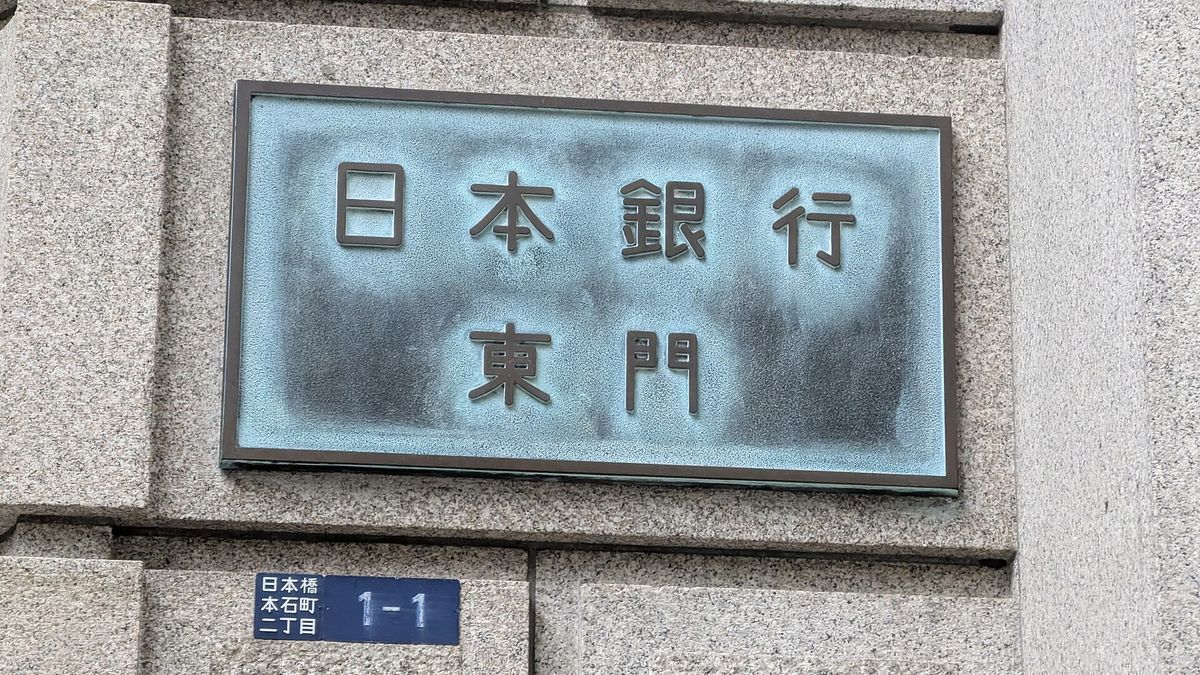
The Bank of Japan's own staff estimate that the interest rate at which policy neither speeds up nor slows Japan's economy sits somewhere between 1.1% and 2.5%. With the policy rate at 1.25% and a December increase widely expected, the argument on the nine-member board has moved past whether to keep raising rates and on to how far into that wide band to go, and how fast.
Haruhiko Kuroda, who preceded Kazuo Ueda as governor, added a voice to the hawkish side this week. In an interview with Bloomberg on Monday, published by The Japan Times on Tuesday, he said that if inflation became more serious, hikes would have to accelerate and rates "may even have to rise above the neutral rate." He pointed to the U.S. war with Iran, which is lifting Japan's costs for imported oil, raw materials and food, according to the report.
Kuroda no longer votes. But the question he raised, where the hiking cycle ends, matters for investors across Asia because it sets the long-run floor for Japanese government bond yields and the cost of borrowing in yen, a funding currency for trades well beyond Japan.
Where the BOJ board stands on the neutral rate
The range itself is not in dispute. A chart in board member Hajime Takata's speech in Tokushima on Monday puts Japan's natural rate of interest at minus 0.9% to plus 0.5% and the neutral rate at 1.1% to 2.5%, with the policy rate at the bottom edge. Toichiro Asada gave nearly the same band in Nagasaki on Nov. 12, describing it as slightly above 1% to 2.5%.
What the two men draw from it differs sharply. Takata, who proposed lifting the rate to 1.5% at the October meeting and lost the vote, said the bank should place its rate at an early stage in what he called a "good" position near the median of the range, so it can later move in either direction. By Capital Times' arithmetic, the midpoint of 1.1% to 2.5% is 1.8%, and two more quarter-point increases would take the rate to 1.75%.
Takata also said the bank should not aim at a precise neutral estimate or be tied to intervals that markets expect. Rising overseas interest rates could push Japan's neutral rate above market expectations, he said, and the bank would know it had reached neutral once higher borrowing costs started to hurt corporate behavior. Capital Times covered Takata's speech and the third-quarter GDP data on Monday.
Asada reads the same chart as a reason for caution. Because the policy rate is already inside the range, he said, further hikes are more likely to hit real activity than earlier ones did, and private consumption has not been strong. He warned of the risk that hikes slow the economy and drag underlying inflation lower. Asada dissented against the June and September increases, Reuters reported.
The rest of the board is spread between those poles. The summary of opinions from the Oct. 29-30 meeting, released on Nov. 10, records one member saying the neutral rate is likely "considerably above 1 percent" and another calling for the bank to "make haste slowly," watching financial conditions for a few months after each move. A third member argued that underlying inflation could be anchored near 2% without hurrying to neutral. Capital Times reported on the summary and its split over the pace of hikes when it was published.
What markets are pricing for December
Traders have largely settled the near-term question. Overnight index swaps priced a more than 80% chance of an increase by December, Bloomberg reported on Tuesday. Reuters said on Monday that many investors expect the BOJ to lift its rate to 1.5% in December or January.
The longer path is less settled, and the bond market is starting to position for it. Foreign investors were net buyers of Japanese government debt for a sixth straight week through Nov. 6, the longest run since March 2020, according to the Bloomberg report. Keita Matsumoto, head of financial markets at SMBC Nikko Securities, told Bloomberg that domestic banks were adding five- to 10-year bonds and that a stronger yen, driven by a narrowing U.S.-Japan rate gap, could ease pressure on the BOJ to raise rates quickly to counter currency weakness.
That view sits closer to Asada's camp than to Kuroda's. If the yen recovers and consumption stays soft, the case for stopping near the bottom half of the range gets stronger. If import costs keep climbing, the former governor's warning that rates could overshoot neutral becomes harder to dismiss.
The BOJ dates to watch before Dec. 18
Board member Naoki Tamura, who sits with Takata on the hawkish side according to Reuters, is scheduled to speak to local leaders in Yamanashi on Nov. 26, the bank's calendar shows. Ueda addresses business leaders in Nagoya on Nov. 30, and Reuters said markets will look to that speech and his news conference the same day for signals on the pace and timing of further hikes.
The policy meeting runs Dec. 17 and 18, with the decision due on the second day. A hike to 1.5% would leave the rate still in the lower half of the staff's own neutral band, and that is where the next argument begins.
Sources
- The Japan Times: Former BOJ chief Kuroda sees chance of rate rising above neutral (Bloomberg) (Nov. 17, 2026)
- The Japan Times: Investors return to JGBs as rate outlook shifts, SMBC Nikko says (Bloomberg) (Nov. 17, 2026)
- Bank of Japan: Economic Activity, Prices, and Monetary Policy in Japan: Japan's Money and Capital Market Transformation (Speech by Board Member Takata in Tokushima) (Nov. 16, 2026)
- Bank of Japan: Economic Activity, Prices, and Monetary Policy in Japan (Speech by Board Member Asada in Nagasaki) (Nov. 12, 2026)
- Reuters via MSN: Hawkish BOJ policymaker Takata calls for swift hike in rates to 'good' position (Nov. 16, 2026)
- Reuters via MSN: Dovish BOJ policymaker Asada pushes back against early rate hike (Nov. 12, 2026)
- Bank of Japan: Summary of Opinions at the Monetary Policy Meeting on October 29 and 30, 2026 (Nov. 10, 2026)
- Bank of Japan: Schedules of speeches and releases (Nov. 13, 2026)
Our standards: Capital Times reports under the principles set out in our Editorial Standards and Ethics Policy. Spotted an error? Report it to our editors.