Hong Kong GDP Grows 5.2% in Third Quarter, Beating Forecasts on 30% Export Jump
Goods exports and investment drove the fastest nine-month growth in five years, but household spending slowed and revised data with a new full-year forecast lands Nov. 13.
What to know
- Hong Kong's real GDP grew 5.2% from a year earlier in the third quarter, up from 4.2% in the second and above market expectations of 3.7%.
- Exports of goods rose 30.4% in real terms and gross domestic fixed capital formation climbed 7.3%, while private consumption growth eased to 2.8%.
- The Census and Statistics Department will publish revised third-quarter figures and an updated full-year forecast on Nov. 13.
HONG KONG
Hong Kong's economy grew 5.2% in the third quarter from a year earlier as exports of goods rose 30.4% on demand tied to artificial intelligence, advance estimates from the Census and Statistics Department showed on Nov. 3. The figure beat market expectations of 3.7%, according to The Standard, and followed 4.2% growth in the second quarter.
For investors, the numbers confirm that Hong Kong's recovery is being carried by trade and capital spending rather than by shoppers. That split matters for the city's banks, landlords and retailers, which depend on local demand, and for exporters and logistics groups riding the electronics cycle. On a seasonally adjusted basis, gross domestic product rose 1.9% from the second quarter.
Over the first three quarters, real growth was 5.1%, the quickest for that period in five years.
Exports and investment carry Hong Kong's growth
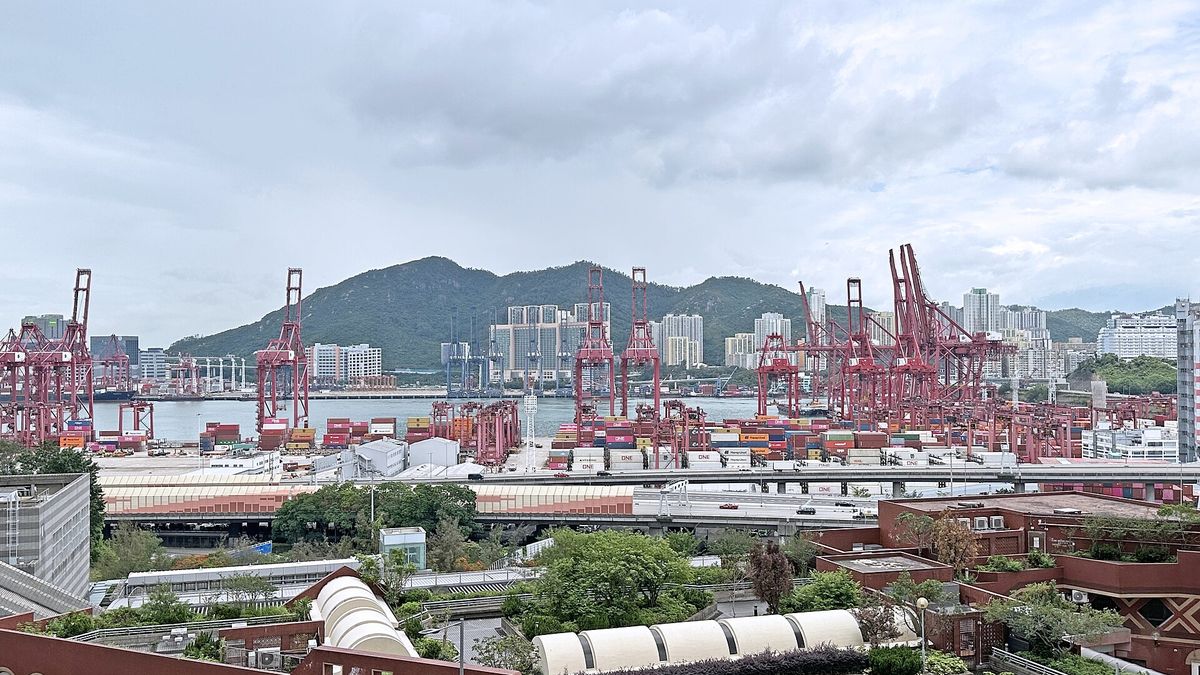
Goods exports rose 30.4% in real terms, faster than the 28.9% gain in the second quarter. Imports of goods grew 29.9%, which kept the net contribution from trade smaller than the headline export figure suggests. Hong Kong re-exports much of what it imports, so the two lines tend to move together.
The trade surge was already visible in monthly data: the city's exports rose 64.9% in September, the fastest growth in more than four decades.
Services exports, which include tourism and financial services, rose 4.3%, up from 3.2%. Services imports climbed 5.6%, from 3.1%, as more residents traveled.
Gross domestic fixed capital formation, the measure of spending on buildings, machinery and equipment, rose 7.3%, nearly double the 3.7% pace of the previous quarter. Financial Secretary Paul Chan said the quarter showed a "particularly strong investment sector," according to China Daily Hong Kong.
A government spokesman said the outlook was positive and that strong global AI investment should continue to support merchandise exports, with tourism, cross-boundary traffic and financial markets also helping, Dimsum Daily reported.
Consumers lag the headline
Private consumption grew 2.8%, slightly slower than 2.9% in the second quarter. Government consumption rose 1.7% after being virtually unchanged in the prior three months.
The gap between trade and household spending is the main caveat in the data. Retail sales did pick up in September, rising 6.4% from a year earlier to HK$33.4 billion against a market estimate of 4.7%, The Standard reported. But the consumption figure for the full quarter shows household spending growth still slowing.
Retail sales value rose 8.3% in the first nine months of the year, The Standard reported, after an August gain of 5.6%. Those figures are measured in value, while the GDP consumption line is in real terms, so the two do not map directly. Spending by visitors also counts as a services export in the national accounts rather than as local consumption, which helps explain why stronger shop tills have not yet lifted the household spending figure.
Kenny Shui Chi-wai, executive director of the Public Policy Institute at Our Hong Kong Foundation, expects fourth-quarter growth of 4% to 5% and full-year growth of about 5%, China Daily Hong Kong reported. He said it would be important to see whether consumption and employment can improve together, and pointed to the effect of interest rates on business investment and household spending.
Borrowing costs are part of that picture. Under the currency peg the Hong Kong Monetary Authority tracks U.S. policy rates, and the HKMA held its base rate at its latest decision.
Risks the government is watching
The spokesman said external uncertainties warrant close monitoring, citing tensions in the Middle East and tighter monetary policy at major central banks. Chan described Hong Kong as a fully open economy whose performance can be affected by geopolitics, capital flows and trade policy, according to China Daily Hong Kong. He also estimated that visitor numbers will exceed 50 million this year.
On property, Chan estimated home prices will rise 7% to 10% this year, The Standard reported.
The strength of goods exports also leaves the economy exposed to a single cycle. If spending on AI servers and chips slows, the trade line that lifted the third quarter would weaken quickly, and domestic demand is not yet strong enough to take its place.
The department will publish revised third-quarter GDP figures on Nov. 13, together with an updated growth forecast for the full year. That release will show whether the government lifts its outlook after nine months of growth averaging 5.1%.
Sources
- The Standard: HK economy grows at fastest pace in five years for first three quarters, Q3 GDP up 5.2pc (Nov. 3, 2026)
- Dimsum Daily: Hong Kong GDP grows 5.2% in third quarter as exports and investment strengthen (Nov. 3, 2026)
- China Daily Hong Kong: Hong Kong third-quarter GDP advance estimates (Nov. 3, 2026)
Our standards: Capital Times reports under the principles set out in our Editorial Standards and Ethics Policy. Spotted an error? Report it to our editors.