Hong Kong Passes 8.25% Tax Rate for Commodity Traders, Adds 15% Option for Shipping
The new regime targets physical traders with at least HK$700 million in revenue and ties the break to spending on Hong Kong maritime services.
What to know
- Hong Kong's Legislative Council on Nov. 25 passed a bill giving qualifying physical commodity traders a profits tax rate of 8.25%, half the normal rate, or an optional 15%.
- Traders must earn at least HK$700 million a year from qualifying trades and send at least 30% of their spending on specified maritime services to Hong Kong providers.
- The law, to be gazetted on Dec. 4, applies to years of assessment starting on or after April 1, 2025, and adds a 15% option for ship lessors, managers, agents and brokers.
HONG KONG
Hong Kong will tax the profits of qualifying physical commodity traders at half the normal rate after the Legislative Council passed a bill on Wednesday, Nov. 25, that the government hopes will draw oil, metals and grain trading desks to the city and the shipping business that comes with them.
The Inland Revenue (Amendment) (Tax Concessions for Shipping-related Activities and Physical Commodity Trading) Bill 2026 creates a new regime with an 8.25% profits tax rate for eligible traders. It also lets shipping companies that already enjoy concessions, and the new commodity traders, choose a 15% rate each year instead, a feature aimed at large multinationals covered by the OECD's global minimum tax rules, the government said.
The amendment ordinance will be published in the Gazette on Dec. 4. The concessions apply to qualifying profits for years of assessment starting on or after April 1, 2025, so eligible companies can claim them for the 2025/26 tax year, according to the government's news service. The government's announcement did not spell out the detailed conditions; those below are as set out in the bill introduced in June.
Who qualifies for the 8.25% rate
The bar is set high. A trader must earn at least HK$700 million a year from qualifying trading activities, according to tax alerts from PwC and EY published when the bill was gazetted in June. Both the purchase and sale contracts must be concluded in Hong Kong, the trades must involve physical delivery, and wholesaling and retailing do not count, KPMG said.
The bill lists 55 physical commodities in three groups, PwC said: energy and industrial goods such as crude oil, natural gas, biofuel and green methanol; farm products such as wheat and corn; and metal mine products such as copper and titanium. KPMG noted that the concession includes trading of gold ores and concentrates in physical form, but covers only physical trading, not derivatives.
Companies also need real staff in the city. To use the 8.25% rate, a trader needs at least three full-time employees and at least HK$3 million in annual operating spending in Hong Kong, while the 15% option requires one employee and HK$1 million, according to PwC. A safe harbor lets a company qualify if at least 75% of its profits and assets come from qualifying trades.
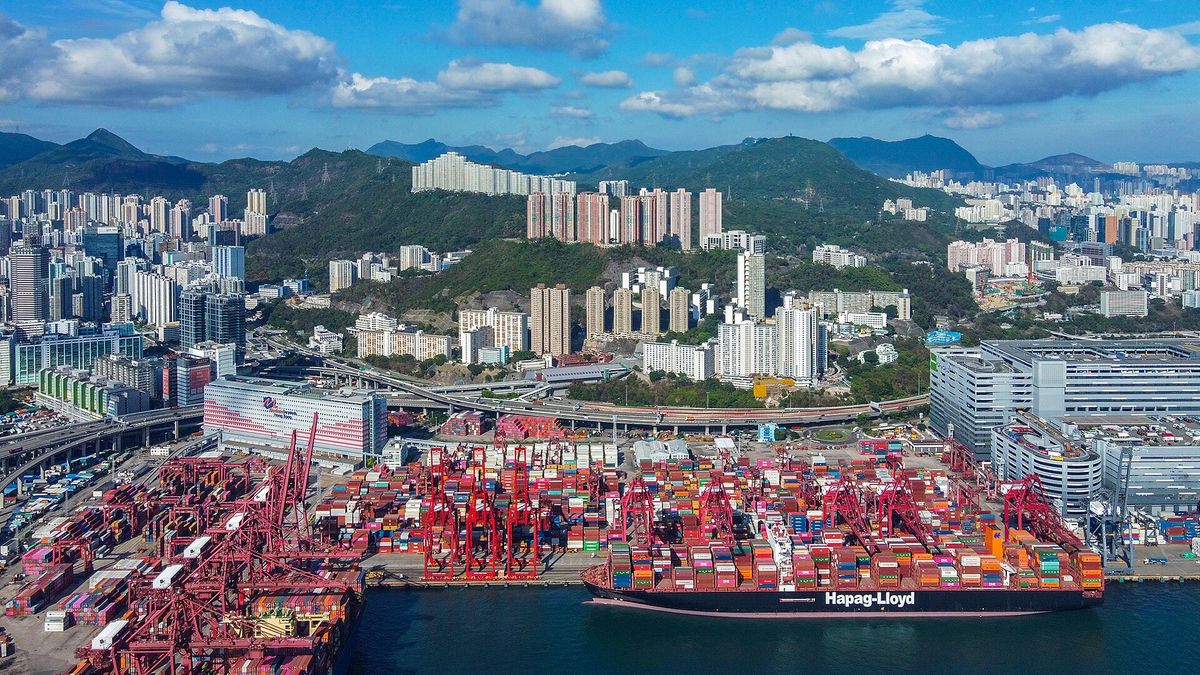
The most unusual condition links the tax break to the port. Traders that buy specified maritime services, such as ocean freight booking or chartering, marine cargo insurance, ship broking or certain arbitration services, must spend at least 30% of that money with Hong Kong providers, or alternatively at least 50% of their spending on any one of those services, EY said.
A 15% option for shipping groups
For the shipping sector, the bill keeps the existing concessionary rates of 0% for qualifying ship lessors and 0% or 8.25% for ship leasing managers and for ship agents, managers and brokers, and adds the 15% choice with lighter substance requirements, KPMG said. It also removes the one-year minimum lease term and replaces a 20% tax base concession on ship purchases under operating leases with a full immediate deduction of the cost.
The 15% option is a response to BEPS 2.0. Since 2025, Hong Kong has charged a minimum top-up tax on large multinational groups whose local units pay an effective rate below 15%, according to the Inland Revenue Department. A company taxed at 0% or 8.25% under a concession would simply owe the difference, so the new option is meant to cut the compliance work for such groups.
The government has been building out the shipping concessions since 2020. The number of qualifying ship lessors claiming them rose fivefold between the 2020/21 and 2023/24 tax years, the department said in June. A Transport and Logistics Bureau spokesperson said then that commodity traders are "an integral part of the maritime services ecosystem," Bastille Post reported.
Competition with Singapore and what to watch
The move puts Hong Kong in closer competition with Singapore, whose Global Trader Programme offers concessionary rates of 5%, 10% or 15%, with a different scope and conditions, according to KPMG. The accounting firm has urged Hong Kong to extend the regime to derivatives and trade financing, and to container leasing, freight forwarding and logistics.
Industry groups back the plan. Moses Cheng, chairman of the Hong Kong Maritime and Port Development Board, said in June that the bill "will give a real boost to Hong Kong's maritime services industry." The board says the city's maritime cluster includes about 1,200 port and maritime-related companies, and that physical commodity trading makes up more than half of global shipping volume.
A government spokesperson said the law supports its push to move the port from volume to value, in line with the national 15th Five-Year Plan and Hong Kong's own first five-year plan, the Hong Kong Economic Journal reported. Container volumes jumped in September from a weak 2025, but the city wants more of the higher-margin services that sit around the cargo.
Gold is the next likely step. Zhai Shanqi, a tax partner at PwC Hong Kong, told the newspaper he expects the government to add tax incentives for gold trading soon, a plan the 2026/27 budget said officials would explore, according to KPMG. Hong Kong is already preparing a gold clearing system for early 2027.
The Inland Revenue Department will issue guidance and keep in contact with the industry to answer questions. How strictly it tests the staffing and spending conditions will help decide whether global trading houses move real desks to Hong Kong.
Sources
- news.gov.hk, Hong Kong SAR Government: Bill passed for half-rate trading tax (Nov. 25, 2026)
- Hong Kong Economic Journal via Longbridge: Government Welcomes Legislative Council's Passage of Tax Incentives to Boost Commodities Trading (Nov. 25, 2026)
- Legislative Council Secretariat: LegCo to consider Inland Revenue (Amendment) (Tax Concessions for Shipping-related Activities and Physical Commodity Trading) Bill 2026 (Nov. 23, 2026)
- Inland Revenue Department: Inland Revenue (Amendment) (Tax Concessions for Shipping-related Activities and Physical Commodity Trading) Bill 2026 to be gazetted on Friday (June 10, 2026)
- Bastille Post: Inland Revenue (Amendment) (Tax Concessions for Shipping-related Activities and Physical Commodity Trading) Bill 2026 to be gazetted on Friday (June 10, 2026)
- PwC Hong Kong: Hong Kong Tax News Flash: shipping and physical commodity trading tax concessions bill (June 17, 2026)
- KPMG China: Hong Kong SAR unveils draft legislation on enhanced tax concessions (June 12, 2026)
- EY: Hong Kong Tax Alert 2026 Issue No. 7 (June 17, 2026)
- Hong Kong Maritime and Port Development Board: HKMPDB welcomes gazettal of tax concessions bill (June 12, 2026)
Our standards: Capital Times reports under the principles set out in our Editorial Standards and Ethics Policy. Spotted an error? Report it to our editors.