Starbucks Revenue Falls 4.5% as China Joint Venture With Boyu Shrinks International Sales
Selling a 60% stake in its 8,000-store China business to Boyu Capital cut International revenue by 37%, even as U.S. sales recovered and profit more than quadrupled.
What to know
- Starbucks' revenue fell 4.5% to $9.14 billion in the quarter ended Sept. 27, mainly because its China stores moved into a licensed joint venture with Boyu Capital.
- International segment revenue dropped 37% to $1.31 billion, while U.S. comparable store sales rose 7.7%.
- Starbucks expects fiscal 2027 revenue to fall about 1% and plans about 1,200 net new coffeehouses, led by its International business.
SEATTLE
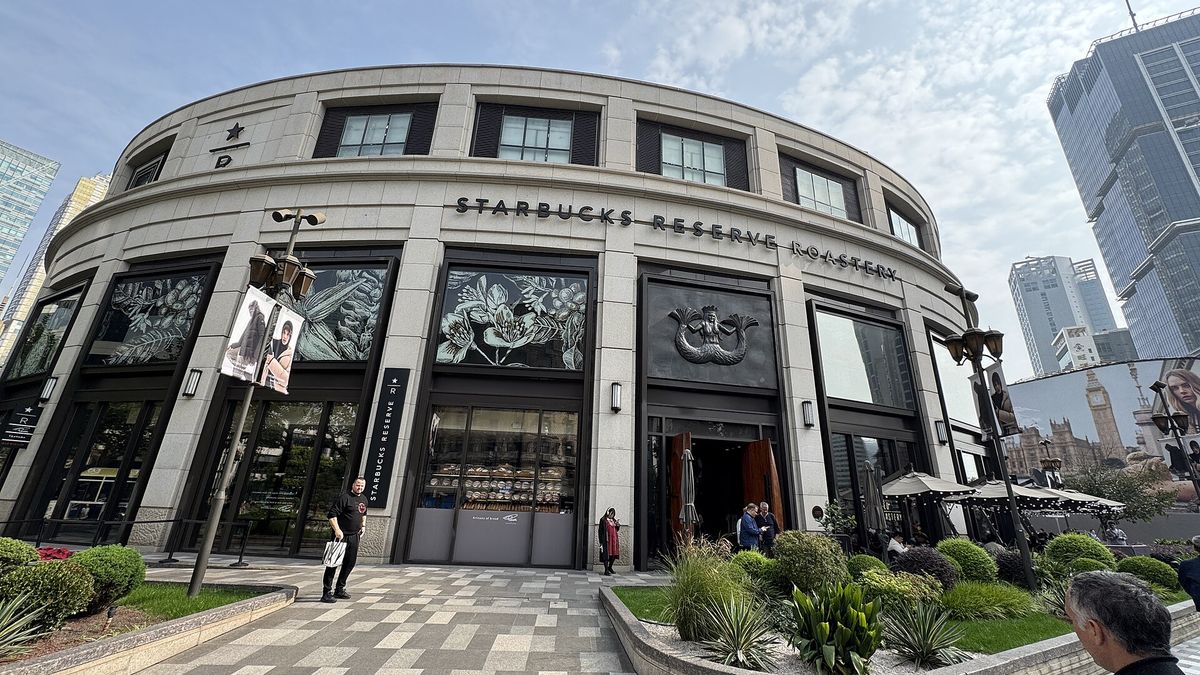
Starbucks Corp. said quarterly revenue fell 4.5% to $9.14 billion, as the coffee chain stopped booking store sales from China after handing control of its business there to Chinese investment firm Boyu Capital. The company said on Oct. 29 that the decline was mainly due to the conversion of its China retail operations to a licensed joint venture.
For investors in Asia, the results give a second full quarter of Starbucks without running its own stores in China, long one of its largest markets. Revenue from its International segment, which covers markets outside North America, dropped 37% to $1.31 billion in the quarter ended Sept. 27.
Profit moved the other way. Net earnings rose to $677.2 million from $133.1 million a year earlier, according to Xinhua, and earnings per share were 59 cents, up from 12 cents. Excluding one-time items, earnings rose 54% to 80 cents a share.
How the Boyu deal changed Starbucks' books
Starbucks agreed in November 2025 to sell a 60% stake in its China retail business to funds managed by Boyu Capital, in a deal that valued the operations at $4 billion, the Associated Press reported at the time. Starbucks kept 40% and still owns the brand, which it licenses to the venture. It put the total value of its China business, including sale proceeds, its remaining stake and future royalties, at more than $13 billion.
The deal closed on March 30, and Starbucks announced its completion on April 2. The roughly 8,000 company-operated coffeehouses in China are moving to a licensed model, and the partners share a long-term goal of up to 20,000 locations in the country, Starbucks said when it completed the transaction. Molly Liu, chief executive of Starbucks China, said the venture would focus on "driving hyper-localization."
The accounting effect is large. When the deal closed at the start of its fiscal third quarter, Starbucks removed the China business from its financial statements and reclassified 7,991 company-operated stores as licensed stores in its International segment, according to its quarterly filing with the U.S. Securities and Exchange Commission. Instead of booking those stores' sales and costs, it now records its share of the venture's income, and it told investors to expect lower revenue but a higher operating margin as a result.
The full-year release shows a pre-tax gain of $536.3 million from the divestiture and net proceeds of $2.54 billion in its cash-flow statement. Starbucks no longer reports a separate comparable sales figure for China.
The pressure that preceded the sale has been severe. Starbucks' same-store sales in China fell in each of the two fiscal years before the deal was announced, as cheaper local rivals such as Luckin Coffee expanded quickly, the AP reported. Chinese consumer brands have also reported softer spending this autumn, with Anta and Li Ning posting falling third-quarter sales.
U.S. recovery carries the quarter
Outside China, the turnaround that Chairman and CEO Brian Niccol calls "Back to Starbucks" showed through. Global comparable store sales rose 7.2%, driven by a 5.2% increase in average ticket and a 1.8% rise in transactions. U.S. comparable sales rose 7.7%, and North America revenue grew 6% to $7.33 billion.
International comparable sales rose only 0.9%, as transactions fell 2.8% and a higher average ticket made up the difference. The International segment still earned an operating margin of 19.7% on its smaller revenue base, compared with 12.3% in North America, the company's figures show.
Group operating margin under generally accepted accounting principles rose to 10.8% from 2.9% a year earlier. On an adjusted basis it was 14.0%. Restructuring and impairment charges fell to $272.8 million from $755 million, and Starbucks closed about 250 company-operated stores in North America in September as part of its restructuring.
For the full fiscal year, revenue rose 2% to $37.91 billion and adjusted earnings per share rose 28% to $2.72. Starbucks ended September with 41,607 coffeehouses worldwide after opening a net 303 in the quarter. About 68% are licensed.
Fiscal 2027 outlook leans on International growth
Starbucks guided for consolidated revenue to fall about 1% in fiscal 2027, which has 53 weeks. That includes roughly $700 million from the extra week, implying the China change still weighs on reported sales for part of the year. It expects North America comparable sales growth of about 4% and adjusted earnings of $3.15 to $3.25 a share, against $2.72 in fiscal 2026.
The company plans about 1,200 net new coffeehouses globally in the coming year, with International leading the growth. That points to licensed partners in Asia, including the Boyu venture in China, doing much of the store building while Starbucks collects royalties and its share of the venture's results.
Starbucks also said it would resume share buybacks in fiscal 2027. Its next quarterly dividend, 63 cents a share, is payable on Nov. 27 to shareholders of record on Nov. 13.
Sources
- Starbucks Corp.: Starbucks Reports Q4 and Full Fiscal Year 2026 Results (Oct. 29, 2026)
- Xinhua via The Star: Starbucks Q4 revenue falls 4.5 pct, net income surges 408.8 pct (Oct. 30, 2026)
- Starbucks Corp.: Starbucks and Boyu Capital Finalize Joint Venture to Accelerate Long-Term Growth in China (April 2, 2026)
- Associated Press via KUOW: Starbucks sells 60% stake in China business in $4 billion deal (Nov. 3, 2025)
- Starbucks Corp. via U.S. Securities and Exchange Commission: Form 10-Q for the quarter ended June 28, 2026 (July 29, 2026)
Our standards: Capital Times reports under the principles set out in our Editorial Standards and Ethics Policy. Spotted an error? Report it to our editors.