Thailand's 300,000 Baht Thai ESG Tax Break Ends Dec. 31 With TISA Plan Still Pending
Purchases made this year are the last to earn the bigger deduction and the five-year holding rule, while a broader savings account is still being worked out.
What to know
- Thai ESG fund purchases made from Jan. 1, 2024 to Dec. 31, 2026 can be deducted up to 30% of assessable income, capped at 300,000 baht, with a five-year holding period.
- Outside that window the cap is 100,000 baht a year, according to Bangkok Bank's published fund rules.
- TISA, a proposed savings account with a deduction of up to 800,000 baht, was approved by economic ministers in December 2025, but its benefit criteria were still being drafted in mid-2026, Thairath reported.
BANGKOK
Thai taxpayers who want the full Thai ESG fund deduction have five weeks left. Units bought by Dec. 31, 2026 are the last to qualify for the enlarged allowance of up to 300,000 baht and the shorter five-year holding period.
The cabinet approved the bigger break on July 30, 2024, lifting the annual cap from 100,000 baht and cutting the minimum holding period from eight years to five for purchases made from Jan. 1, 2024 through Dec. 31, 2026, according to a summary by accounting firm HLB Thailand. Under the rules Bangkok Bank publishes for its fund customers, investments made outside that window are deductible only up to 100,000 baht a year. The bank's page does not spell out the holding period for purchases after 2026; units bought before 2024 carried an eight-year requirement.
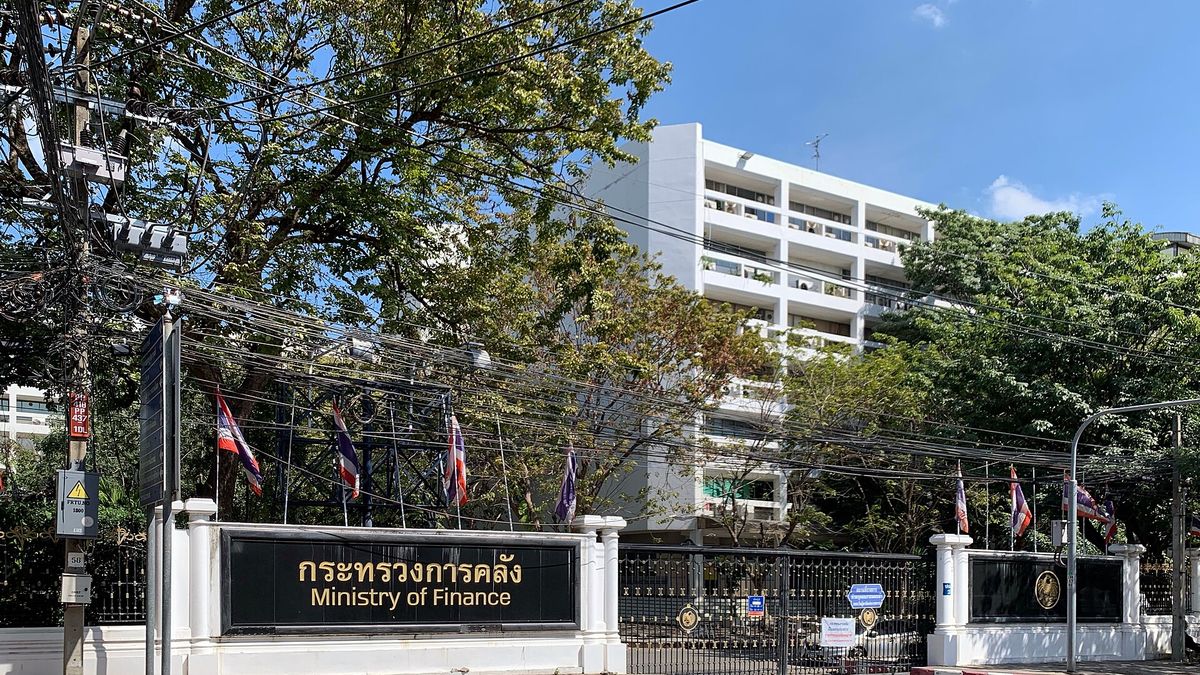
The Finance Ministry has a bigger change in mind. Its proposed Thailand Individual Savings Account, or TISA, would fold several savings and investment tax breaks into one larger allowance, but its final rules were still being drafted as of mid-2026. For now, the current rules decide what can be claimed on 2026 returns.
How the Thai ESG deduction works this year
For units bought this year, the deduction is the amount invested, up to 30% of assessable income and no more than 300,000 baht, Bangkok Bank's disclosure shows. It is claimed only for the year of purchase, and there is no obligation to keep buying in later years.
The Thai ESG allowance sits outside the 500,000 baht combined ceiling that covers retirement mutual funds (RMFs), provident funds, the Government Pension Fund, the National Savings Fund and annuity insurance premiums. A taxpayer with enough income can therefore use both.
The value of the deduction depends on the marginal rate. Thailand taxes net income from 0% on the first 150,000 baht to 35% above 5 million baht, according to Forvis Mazars Thailand. For someone whose income stays in the 20% bracket, a 300,000 baht deduction saves 60,000 baht of tax. At the 100,000 baht cap that Bangkok Bank lists for purchases outside the 2024 to 2026 window, the same investor would save 20,000 baht.
The catch is the holding period. Units bought during the enhanced window must be held for five consecutive years from the first investment date, with exceptions only for death or disability. Bangkok Bank's disclosures spell out what happens on an early sale: the investor repays the tax saved, plus a surcharge of 1.5% a month that cannot exceed the tax owed, and the gain on redemption is taxed as well.
Investors who switched long-term equity fund (LTF) units into Thai ESGX funds in 2025 are on a separate track. They can deduct up to 50,000 baht a year from 2026 to 2029, according to Bangkok Bank and Forvis Mazars, so that slice of the allowance does not need new money before Dec. 31.
A tax saving does not protect the investment itself. Equity funds can fall in value and the lock-up is long, so buying units only to use up an allowance carries real risk.
What TISA would change
TISA has been in the works for about a year. On Dec. 8, 2025, the Council of Economic Ministers approved the scheme, which would let taxpayers deduct up to 800,000 baht for retirement savings, The Nation reported. Three days later, Deputy Prime Minister and Finance Minister Ekniti Nitithanprapas said revised rules would go to the cabinet that month, with the 2026 tax year as the target, according to The Nation. The paper described the LTF and Thai ESG breaks as short-term measures that had cost about 40 billion baht in tax revenue.
That timetable slipped. In July 2026, Thairath reported that the Finance Ministry, the Securities and Exchange Commission, the Stock Exchange of Thailand and the Federation of Thai Capital Market Organizations were still preparing the plan and aimed to settle the benefit criteria by September.
The draft Thairath described has two parts. The first is a deductible allowance of 600,000 to 800,000 baht a year, with a holding period of at least five years and withdrawals allowed from age 55. The second is an extra 200,000 baht allowance: contributions would not be deductible, but capital gains and dividends would be tax-free. Eligible assets would include Thai shares, government bonds, investment-grade corporate bonds and exchange-traded funds. These figures were proposals, not final rules.
Until TISA is approved and its final rules are published, 2026 purchases should be planned under the existing Thai ESG, RMF and insurance limits.
Other deductions to check before Dec. 31
Several smaller items also depend on what happens in the calendar year. A new deduction for rooftop solar systems covers actual equipment and installation costs up to 200,000 baht, for one system, claimed in the year it connects to the grid, according to Forvis Mazars. It runs from 2026 to 2028.
Donations to state schools and other eligible education institutions made through the Revenue Department's e-Donation system count twice for tax purposes from Jan. 1, 2025 to Dec. 31, 2027, the cabinet decided in June, Thairath reported. Total donation deductions are still capped at 10% of income after expenses and other deductions.
Other standing allowances include up to 100,000 baht for life insurance premiums on policies of 10 years or more, 25,000 baht for the taxpayer's own health insurance and 100,000 baht for home mortgage interest, Forvis Mazars says. Keep receipts and fund confirmations, since the deductions are claimed on the return.
The 2026 return, Form PND 91 for salaried workers, is filed between Jan. 1 and March 31, 2027, with online filing open until April 8, 2027, according to Forvis Mazars. Single people must file if assessable income exceeds 120,000 baht. Tax of 3,000 baht or more can be paid in three installments, while filing and paying late draws a surcharge of 1.5% a month on the tax due.
Foreign residents have one more item. Anyone in Thailand for 180 days or more in a calendar year is a tax resident, and foreign income earned in a year of residence from Jan. 1, 2024 onward is taxed when it is brought into the country, the Revenue Department says. Its foreign tax credit tool lets residents offset tax paid abroad, but only for income from countries that have a tax treaty with Thailand.
Readers comparing regional options can see how Singapore's SRS and CPF top-ups and Hong Kong's MPF tax-deductible voluntary contributions work, both of which also reward savings made before a deadline.
This article is general information, not financial advice.
Sources
- Bangkok Bank: Tax benefits of Thai ESG Fund
- Bangkok Bank: Tax Benefits of Thai ESGX Fund
- HLB Thailand: Improved tax incentives for investment in Thai ESG Funds approved by cabinet (Aug. 6, 2024)
- The Nation Thailand: Council of Economic Ministers approves 800,000-baht tax exemption for savings (Dec. 8, 2025)
- Thairath Online: Learning from Japan: From NISA Model to Thailand's First TISA! Tax Benefits on Stocks and Bonds (July 22, 2026)
- The Nation Thailand: Ekniti says revised TISA rules will be submitted to Cabinet this month (Dec. 11, 2025)
- Forvis Mazars Thailand: Personal income tax return (PND 91) A Closer Look - November 2026 (Nov. 9, 2026)
- Thairath Online: Donors Rejoice! Cabinet Approves Double Tax Deductions for Education Donations Until Dec 2027 (June 17, 2026)
- The Revenue Department of Thailand: Manual for Foreign Tax Credit Calculation Tool (Personal Income Tax)
Our standards: Capital Times reports under the principles set out in our Editorial Standards and Ethics Policy. Spotted an error? Report it to our editors.