Hang Seng Falls 3.4% in Week, Tech Index Sinks 6.5% Before China Data, Tencent Results
Hong Kong gave back most of the prior week's rally as AI shares slid, mainland buyers added a net HK$11.9 billion, and Shanghai held up better.

What to know
- The Hang Seng Index closed at 23,637 on Nov. 13, down 844 points or 3.4% for the week, and the Hang Seng Tech Index fell 6.5% to 3,813.
- The Shanghai Composite slipped about 0.4% for the week to 3,634 and the Shenzhen Component Index lost about 1.9% to 10,968.
- Mainland investors bought a net HK$11.87 billion of Hong Kong shares through Stock Connect over the week, Capital Times calculations from HKEX data show.
HONG KONG
Hong Kong's Hang Seng Index fell 3.4% in the week ended Friday, Nov. 13, and the Hang Seng Tech Index lost 6.5%, as a selloff in artificial intelligence shares erased most of the previous week's rally. Mainland shares held up better: the Shanghai Composite slipped about 0.4%.
The Hang Seng closed Friday at 23,637, down 370 points or 1.5% on the day, on turnover of HK$195.86 billion, RTHK reported. That left it 844 points below its Nov. 6 close of 24,481. The tech gauge ended at 3,813, against 4,078 a week earlier, and the Hang Seng China Enterprises Index finished at 7,937, a weekly drop of about 4.1%. The weekly percentages are Capital Times calculations from closing levels published by RTHK and The Standard.
The reversal matters for investors across Asia because the prior week had looked like a turn. The Hang Seng rose 5.1% in the week to Nov. 6, its best since March 2025, and the tech index gained 8.6%, according to RTHK. More than half of that advance is gone, and the coming week brings China's October activity data and results from Tencent and Alibaba.
Hang Seng Tech bears the brunt
The Hang Seng fell in four of five sessions. It eased 0.1% on Monday, rose 0.4% to 24,557 on Tuesday, then dropped 0.98% on Wednesday, 1.3% on Thursday and 1.5% on Friday, RTHK's daily reports show. Capital Times covered the midweek slide in its report on Wednesday's trading.
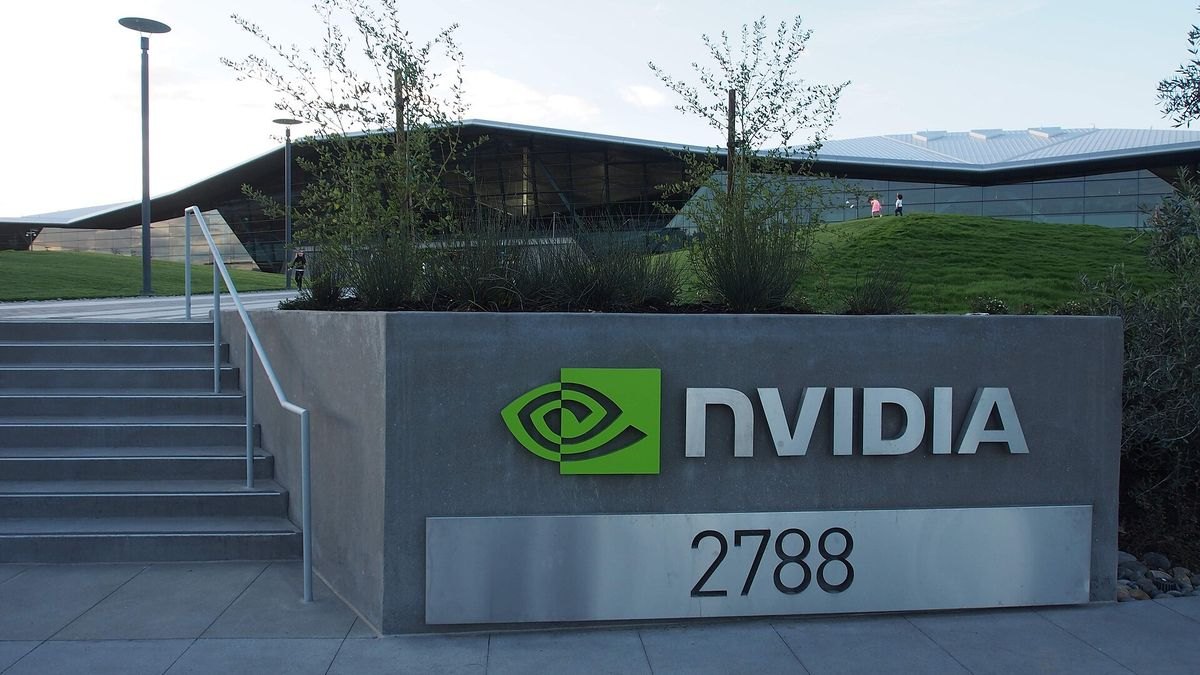
The heaviest selling came after the resignation of Nvidia's chief executive, which RTHK said dominated the week across regional markets. On Thursday, U.S. House Speaker Mike Johnson said there was growing consensus in Congress on limiting chip exports to China, Reuters reported in a story carried by The Standard.
AI model developers were hit hardest on Friday. Z.AI fell 10% and MiniMax 8.19%, according to The Standard. Lenovo lost 6.33%, Kuaishou 4.5% and Xiaomi 3.74%, while Alibaba dropped 3.46% and Tencent 3%. Chipmaker Hua Hong Grace Semiconductor retreated 6.1%; Semiconductor Manufacturing International Corp. slipped 0.45%.
Developer Longfor Group was the worst-performing blue chip, down 6.43%. Oil producers went the other way as crude prices rose on tensions in the Middle East: PetroChina gained 2.8%, the best showing among index members, and China Petroleum and Chemical Corp. added 1.71%, The Standard reported.
Shanghai Composite slips, ChiNext swings
Mainland shares were steadier for most of the week. The Shanghai Composite rose for three sessions through Wednesday, helped on Monday by a State Council pledge to improve mechanisms for stabilizing the capital market, RTHK reported, citing state television. On Wednesday, technology shares led: the ChiNext Composite rose 3.1% and Shanghai's STAR 50 gained 2.8%.
Thursday and Friday undid that. The Shanghai Composite fell 0.67% and then 0.59% to close at 3,634, on turnover of 770.6 billion yuan on Friday. The Shenzhen Component Index lost 2.05% on Friday to 10,968 and the ChiNext Index dropped 3.32% to 2,426, RTHK reported. Optical-module makers Zhongji Innolight and Eoptolink Technology, which depend heavily on U.S. customers, slumped.
For the week, the Shanghai Composite was down about 0.4% from its Nov. 6 close of 3,649 and the Shenzhen Component about 1.9% from 11,175, by the same Capital Times calculation from RTHK closing levels. The blue-chip CSI 300 edged up 0.05% on Monday and 0.07% on Tuesday and added 0.41% on Wednesday to 4,075.71, against 4,054.28 on Nov. 6, according to China Securities Index Co. data that ran through Wednesday when checked. The week before, the index had broken a 12-week losing streak, RTHK reported. Capital Times reported on the earlier rebound in its story on China's buyback loan program.
Analysts quoted by RTHK were cautious. Societe Generale analysts wrote that Beijing's support measures may put a floor under sentiment, but that lasting gains need stronger corporate profits and domestic demand. Nanhua Futures analysts said they expect stock indexes to trade in a range in the near term.
Credit figures released on Friday pointed to weak borrowing demand. New yuan loans shrank by 100 billion yuan in October, the third monthly contraction this year, according to Reuters calculations from People's Bank of China data. Outstanding yuan loans grew 4.7% from a year earlier, a record low, Reuters reported.
Stock Connect flows: mainland buyers add HK$11.9 billion
Mainland investors bought into the Hong Kong decline. Southbound trading through the Shanghai and Shenzhen Stock Connect links showed net purchases on four of the five days and a net HK$11.87 billion for the week, according to Capital Times calculations from daily statistics published by Hong Kong Exchanges and Clearing.
The largest net buying came on Thursday, at HK$5.85 billion, as the Hang Seng fell 1.3%. Wednesday brought HK$4.57 billion and Friday HK$2.33 billion. Tuesday, the one day the Hang Seng rose, was the only session of net selling, at HK$2.74 billion.
Southbound buy and sell orders together came to HK$85.92 billion on Friday. Northbound turnover in mainland shares was 230.06 billion yuan the same day.
The week ahead: China's October data, Tencent and Alibaba
The National Bureau of Statistics is scheduled to publish October industrial production, retail sales, fixed-asset investment and property investment and sales at 10 a.m. Beijing time on Monday, Nov. 16, according to its 2026 release calendar. The monthly home price index for commercial residential buildings is due at 9:30 a.m. the same day. The bureau notes that calendar dates are preliminary.
Tencent lists its third-quarter results announcement for Wednesday, Nov. 18, on its investor calendar. Alibaba's investor relations site shows its September quarter results on Thursday, Nov. 19.
Sources
- RTHK: Tech fallout weighs on HK, mainland markets (Nov. 13, 2026)
- The Standard: Hang Seng falls 370 points as tech stocks plunge (Nov. 13, 2026)
- RTHK: HK stocks slip as tech rout spreads to Asian markets (Nov. 6, 2026)
- The Standard: Hong Kong stocks close lower, Z.AI dives 10pc (Nov. 6, 2026)
- RTHK: HK stocks slip as mainland steadies on policy pledge (Nov. 9, 2026)
- RTHK: Tech gains, oil price falls lift HK, mainland markets (Nov. 10, 2026)
- RTHK (Xinhua/Reuters): Mainland stocks edge higher, HK shares end down (Nov. 11, 2026)
- RTHK: HK, region take toll as Nvidia fate hangs in balance (Nov. 12, 2026)
- The Standard (Reuters): China's access to Nvidia chips in doubt as curbs gain traction in US Congress (Nov. 13, 2026)
- The Standard (Reuters): China's October new bank loans shrink for third time this year as credit demand weakens (Nov. 13, 2026)
- Hong Kong Exchanges and Clearing: Stock Connect daily statistics, Nov. 13, 2026 (and Nov. 9 to 12 files) (Nov. 13, 2026)
- China Securities Index Co.: CSI 300 Index: daily performance, Nov. 5-11, 2026 (Nov. 11, 2026)
- National Bureau of Statistics of China: Regular Press Release Calendar of NBS in 2026 (Dec. 26, 2025)
- Tencent Holdings: Investors: Investor kit and calendar (Nov. 15, 2026)
- Alibaba Group: Quarterly Results: September Quarter 2026 Results (Nov. 6, 2026)
Our standards: Capital Times reports under the principles set out in our Editorial Standards and Ethics Policy. Spotted an error? Report it to our editors.