Hong Kong Banks Borrow HK$7.66 Billion via HKMA Discount Window, Most Since 2019
Overnight borrowing from the monetary authority peaked on Thursday as one-month HIBOR edged back up to 2.68% and the aggregate balance held near HK$54 billion.
What to know
- Hong Kong banks borrowed HK$7.655 billion through the HKMA's discount window on Nov. 12, the largest daily amount since December 2019, and repaid it the next day.
- One-month HIBOR, the benchmark for most new mortgages, rose to 2.67714% on Nov. 13 from 2.56113% on Nov. 6, according to HKMA data.
- The 91-day Exchange Fund Bill priced at an average 2.79% on Nov. 10, with bids of HK$168.7 billion for HK$67.9 billion on offer.
HONG KONG
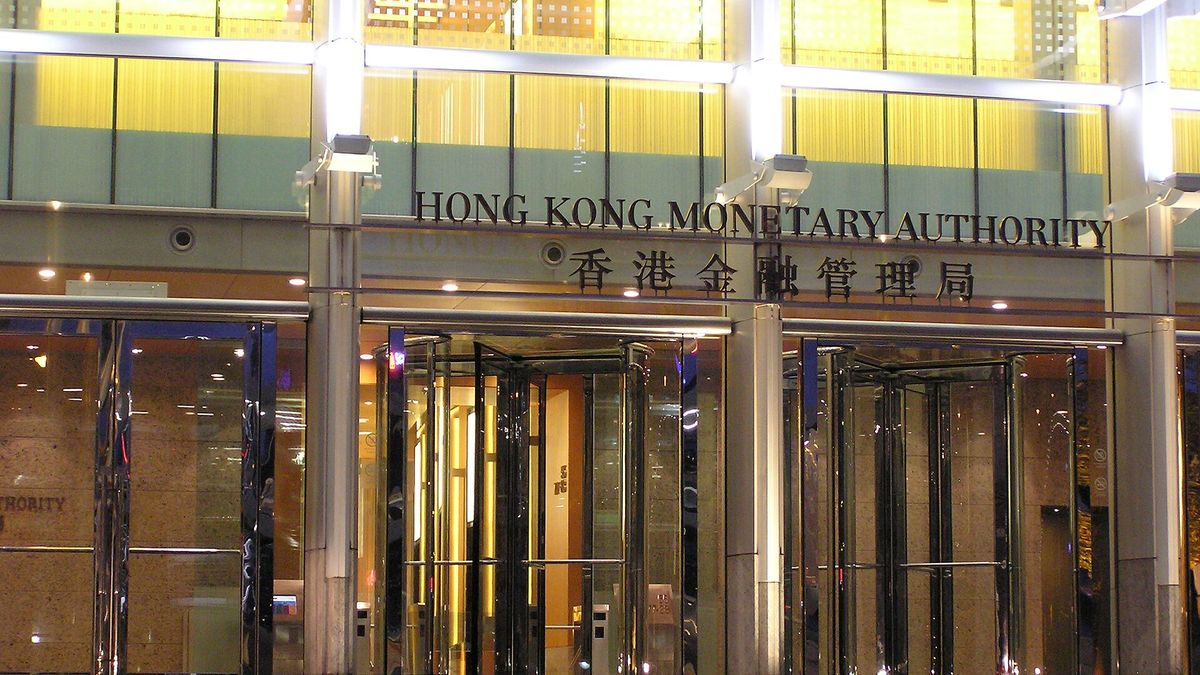
Hong Kong banks borrowed HK$7.655 billion overnight from the Hong Kong Monetary Authority's discount window on Thursday, Nov. 12, the largest single-day draw on the facility since December 2019, as short-term Hong Kong dollar funding tightened through the week.
The borrowing, reported by the Chinese-language AASTOCKS news service on Friday morning and shown in the HKMA's daily interbank liquidity figures, was repaid the following day. It still matters to investors and homeowners across the city. Hong Kong's banking system is running on a thin cushion of spare cash, and the rate banks charge each other for one-month money, HIBOR, sets the cost of most new mortgages and of the carry trades that borrow in Hong Kong dollars to buy higher-yielding U.S. dollar assets.
Three discount window draws in one week
The discount window is the HKMA's standing facility for banks that need short-term Hong Kong dollar funds. Use of it this year has been sporadic and mostly small. Thursday's draw was not.
HKMA data show banks took HK$1.78 billion from the facility on Monday, Nov. 9, then HK$2.519 billion on Wednesday, Nov. 11, before the HK$7.655 billion on Thursday. Each amount was reversed the next business day. The last time daily borrowing ran higher was Dec. 31, 2019, when banks drew HK$13.4 billion at the year-end, according to the same HKMA series. Before last week, the biggest draw this year was HK$4.734 billion on Feb. 16.
The overnight interbank rate jumped to 3.03% on Nov. 11, from 2.07% a day earlier, according to the HKMA's daily figures, before easing to 2.31% on Thursday and 2.29% on Friday. The HKMA's base rate, which applies to discount window borrowing, stayed at 4.25%, where it was left after the Federal Reserve's Oct. 29 decision. Neither the AASTOCKS report nor the HKMA data gave a reason for the borrowing.
Because the loans briefly added cash to the system, the aggregate balance, the sum of banks' clearing accounts at the HKMA and the main gauge of interbank liquidity under the currency peg, rose to HK$61.71 billion at Thursday's close. It fell back to HK$54.06 billion on Friday once the loans were repaid, close to the roughly HK$54 billion level it has mostly held since early October.
HIBOR edges up from its November low
The one-month HIBOR fixing, which most Hong Kong floating-rate mortgages track, rose to 2.67714% on Friday, Nov. 13, up from 2.56113% on Nov. 6, according to HKMA data. That reverses part of its slide from 2.71494% on Oct. 29, the day the HKMA held its base rate and big lenders kept their prime rates unchanged.
HSBC and BOC Hong Kong have kept their best lending rates at 5% and Standard Chartered at 5.25% since October 2025, The Standard reported on Oct. 29. One-month HIBOR remains more than two percentage points below those prime rates. Capital Times has covered the HKMA's latest base rate decision and bank prime rates in more detail.
The government's own short-dated paper drew heavy demand. At the Nov. 10 Exchange Fund Bills tender, the 91-day bill priced at an average yield of 2.79%, with HK$168.655 billion of applications for HK$67.876 billion on offer, the HKMA said. The 182-day bill averaged 2.93%, with HK$71.322 billion bid for HK$19 billion. Both average yields were lower than at the Nov. 3 tender, when the 91-day bill averaged 2.81% and the 182-day bill 2.98%, HKMA results show.
Further out, a HK$1.25 billion re-opening of a 7-year government bond on Nov. 11 drew HK$6.693 billion of bids, a bid-to-cover ratio of 5.35, at an average yield of 3.708%. The same day, the government sold HK$1.5 billion of 1-year floating-rate notes indexed to HONIA, the Hong Kong dollar overnight index average, at an average spread of 0.23 percentage point, with applications of HK$5.155 billion.
Exchange Fund and the week ahead
On Friday the HKMA also published the Exchange Fund's analytical accounts for October. Foreign assets rose HK$57.0 billion during the month to HK$3,633.0 billion, and the monetary base, which includes the aggregate balance, banknotes and Exchange Fund paper, stood at HK$2,094.7 billion at the end of the month. Earlier figures on the fund's investment income are in Capital Times' report on its third-quarter results.
The next signal on short-term funding comes on Tuesday, Nov. 17, when the HKMA tenders HK$69.281 billion of 91-day bills, HK$15 billion of 182-day bills and HK$5 billion of 364-day bills, all for settlement on Nov. 18. The HKMA is scheduled to publish the Exchange Fund's abridged balance sheet and Currency Board Account on Nov. 30.
Sources
- Hong Kong Monetary Authority: Daily Figures of Interbank Liquidity (Open API) (Nov. 13, 2026)
- AASTOCKS: 金管局經貼現窗向銀行投放76.6億元流動性 規模近七年最大 (Nov. 13, 2026)
- Hong Kong Monetary Authority: Exchange Fund Bills Tender Results (Nov. 10, 2026)
- Hong Kong Monetary Authority: Exchange Fund Bills Tender Results (Nov. 3) (Nov. 3, 2026)
- Hong Kong Monetary Authority: Results of 7-year HKD HKSAR Institutional Government Bonds tender through re-opening (Nov. 11, 2026)
- Hong Kong Monetary Authority: Tender results of 1-year HONIA-indexed Floating Rate Notes (Nov. 11, 2026)
- Hong Kong Monetary Authority: Analytical Accounts of the Exchange Fund (Nov. 13, 2026)
- The Standard: Hong Kong major lenders keep prime rate unchanged (Oct. 29, 2026)
Our standards: Capital Times reports under the principles set out in our Editorial Standards and Ethics Policy. Spotted an error? Report it to our editors.