India's Solar Additions Hit Nine-Month Record as Large Projects Slow and Rooftops Gain
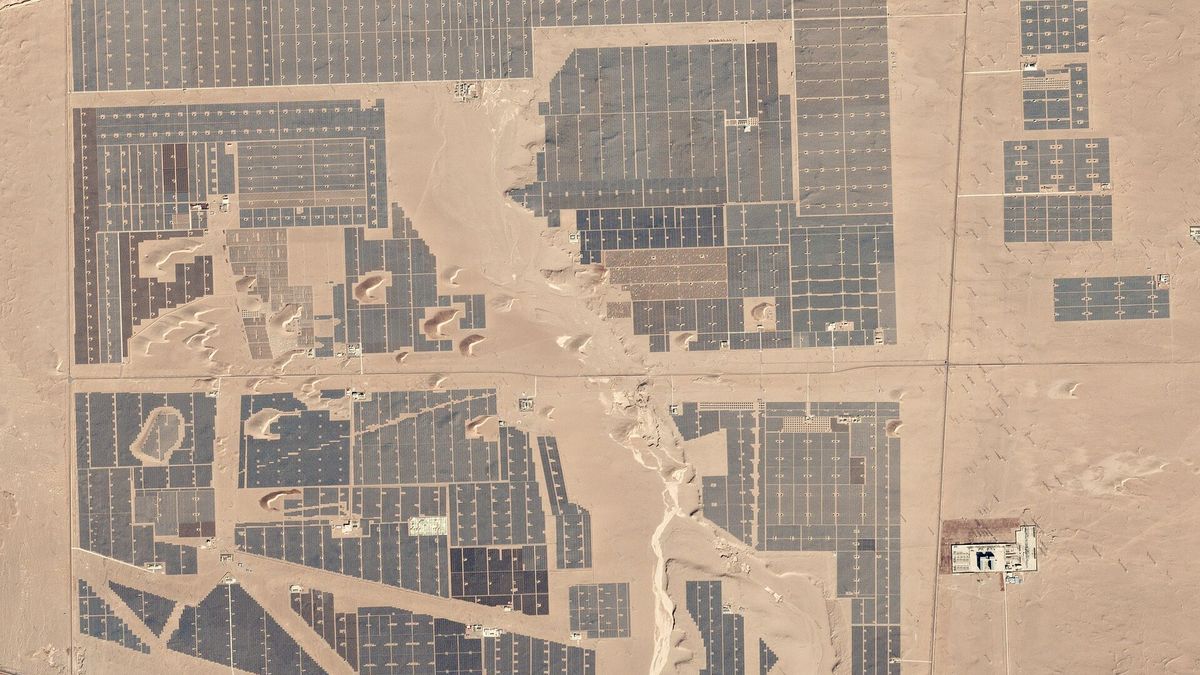
Two research firms counted record additions of 35 GW to 38.5 GW through September and a slide in utility-scale installations. Mercom India Research put rooftop systems at a record 42% of third-quarter capacity.
What to know
- India added a record amount of solar capacity in the first nine months of 2026: 38.5 GW by Mercom India Research's count, up 40.3%, and about 35.2 GW by JMK Research & Analytics' count, up about 19.5%.
- Both firms show large projects slowing: Mercom put third-quarter large-scale additions at 6.3 GW, down 24% from the prior quarter, and JMK counted 5.4 GW of utility-scale additions, down from 12.12 GW in the first quarter.
- Mercom said rooftop installations rose 22% to 4.7 GW in the third quarter, a record 42% of the total, and that large-scale solar tenders fell 47% to 22.6 GW in the nine months.
NEW DELHI
India added a record amount of solar capacity in the first nine months of 2026, according to two separate research counts, but installations of large projects slowed as the year went on. Mercom India Research, in a report published on Thursday, put January to September additions at 38.5 gigawatts, up 40.3% from a year earlier, and linked the slowdown to shortages of locally made cells and delays in grid connections. JMK Research & Analytics counted about 35.2 GW.
The figures matter to investors well beyond India. India's clean power capacity ranks third in the world behind China and the U.S., according to the Associated Press, and its build-out is still growing. Capital Times has separately covered China's solar installations. Mercom's data suggest demand is intact while delivery is getting harder.
India solar installations: what the nine-month numbers show
By Mercom's count, solar accounted for 77% of the 50 GW of new power capacity India added from January to September. Large-scale projects contributed 27.3 GW, up 21% from 22.5 GW in the same period of 2025. Rooftop systems made up 29.1% of the nine-month total, compared with 18.5% a year earlier.
The country has already installed more solar this year than in all of 2025, Raj Prabhu, chief executive of Mercom Capital Group, said in the report. Cumulative solar capacity stood at 176.6 GW at the end of September, or 31% of India's total installed power capacity and 58% of its renewable capacity.
Much of the growth came early. Developers rushed to commission plants before June 1, when a government rule known as ALMM List-II began requiring projects to use solar cells from an approved list of manufacturers, and before a waiver on interstate transmission charges started to be phased out in July, Mercom said.
The separate count by JMK Research & Analytics, published in October and reported by the trade publication TaiyangNews, put nine-month solar additions lower, at about 35.2 GW, a rise of about 19.5%, and also described the period as a record. The totals differ, but JMK's tally shows the same pattern: utility-scale additions of 12.12 GW in the first quarter, 6.87 GW in the second and 5.4 GW in the third. JMK counted about 9.8 GW of rooftop additions in the nine months, about 34% of them in the third quarter.
Large projects slow as rooftop solar takes a record share
By Mercom's count, India added nearly 11 GW of solar in the July to September quarter, the fourth-highest quarterly total on record. That was 19% more than a year earlier but 9.5% less than in the second quarter.
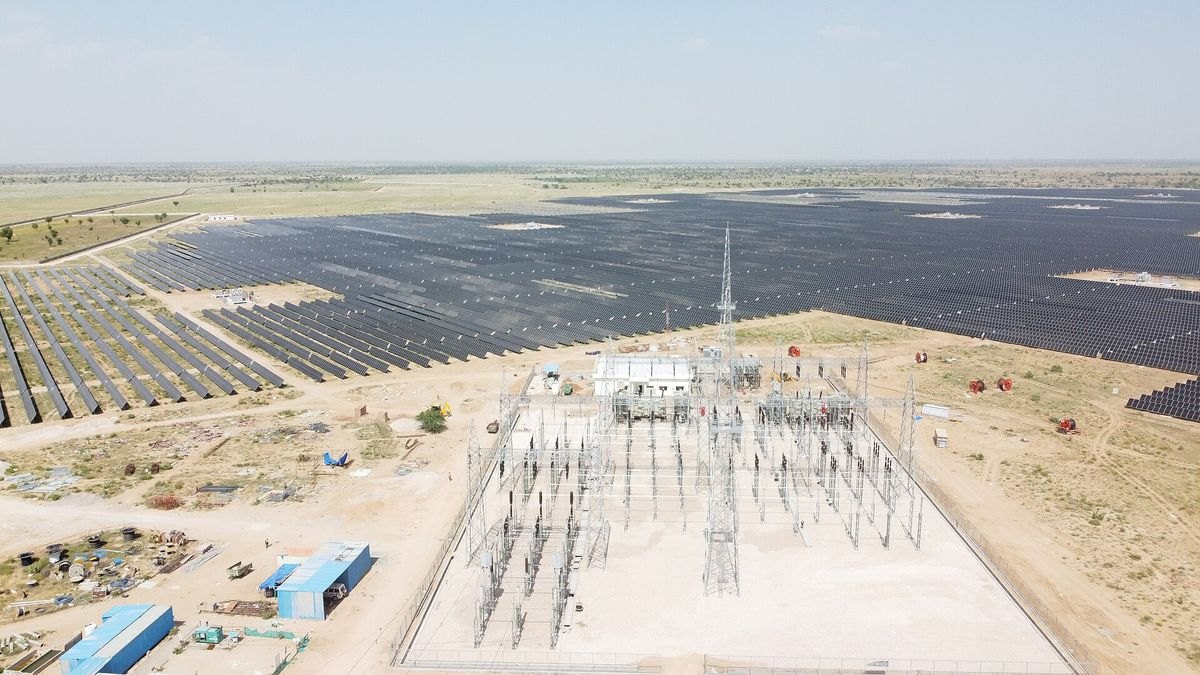
Large-scale additions fell to 6.3 GW, down 24% from the prior quarter and 11% from a year earlier. Rajasthan, Gujarat and Maharashtra accounted for 28%, 25% and 14% of that capacity.
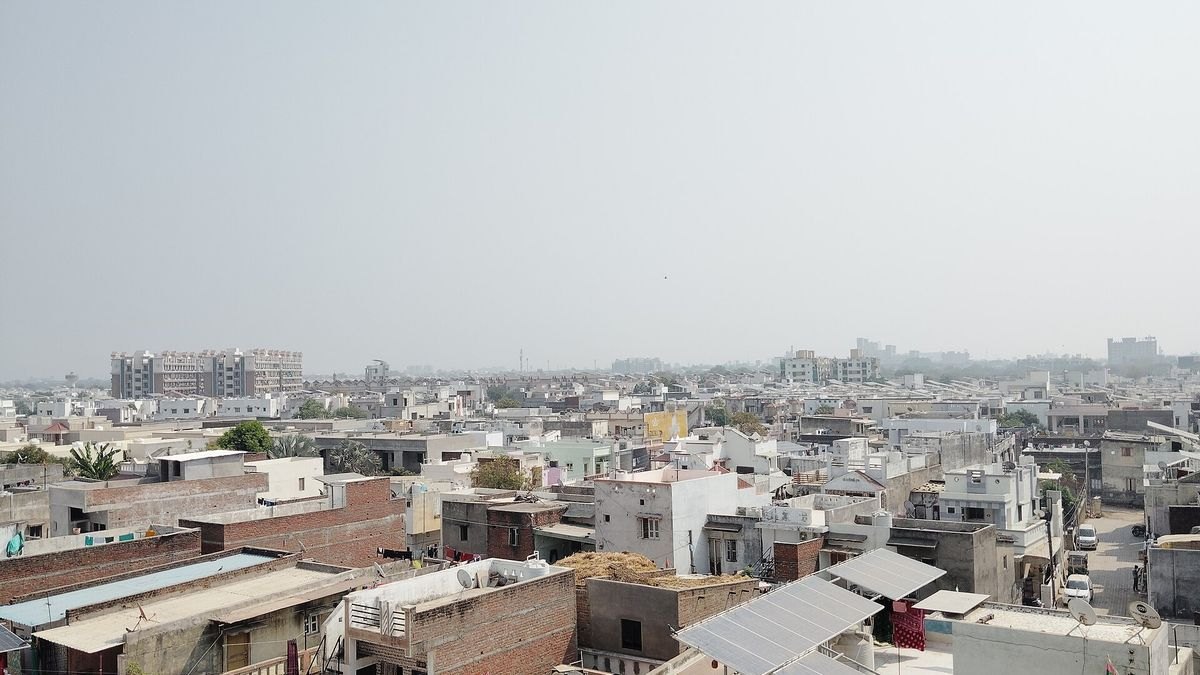
Rooftop installations moved the other way. They rose 22% from the second quarter to 4.7 GW and were 122% higher than the 2.1 GW added in the third quarter of 2025. Rooftop systems made up 42% of quarterly additions, a record. Priya Sanjay, managing director of Mercom India, said the government's PM Surya Ghar rooftop program has sped up household installations ahead of its March 2027 deadline, while savings on electricity bills are driving demand from commercial and industrial users.
Sanjay said the ALMM List-II rule has worsened a shortage of domestic solar cells and pushed module prices higher because of a gap between supply and demand, not because components cost more. That is squeezing developers' margins, she said, and concerns about module quality and supplier availability could strengthen calls for the rule's deadline to be extended.
Prabhu listed transmission bottlenecks, cell availability, higher costs and delays in land, grid connectivity and power offtake as the factors slowing commissioning. The project pipeline is large, he said, but "what matters now is how much of that capacity can actually be brought online."
Tenders fall and the grid lags the 900 GW goal
The pipeline of new work is thinning. Government agencies announced 22.6 GW of large-scale solar tenders in the nine months, down 47% from 42.6 GW a year earlier, and auctioned 13 GW, down 23% from 16.6 GW, Mercom said. Unsigned power purchase and power supply agreements have tied up developers' working capital, according to Sanjay.
The slowdown comes weeks after New Delhi raised its ambitions. India announced in late September a goal of 900 GW of non-fossil power capacity by 2035, nearly twice its existing target of 500 GW by 2030, the Associated Press reported on Saturday. Clean power capacity is now just over 300 GW. The government has also approved nearly $20 billion for transmission and battery storage under its Green Energy Corridor plan, which is meant to help states absorb up to 135 GW of renewable energy by 2033, according to the AP. Capital Times has separately covered India's funding plan for grid storage.
The grid is the weak point. Nikit Abhyankar of the India Energy and Climate Centre at the University of California, Berkeley, told the AP that if transmission does not catch up, "there is no way India can meet this target." About 1,835 million units of solar and wind output were curtailed in July and August alone, the Centre for Research on Energy and Clean Air said in a quarterly report cited by the Press Trust of India, and about 9.1 gigawatt-hours of battery capacity is in operation.
Coal still fills the gap. Ghanshyam Prasad, chair of the Central Electricity Authority, said earlier this month that India could need as much as 150 GW of additional coal-fired capacity by 2035, the AP reported.
JMK Research expects India to add another 10 GW to 12 GW of solar and wind in the final quarter, taking combined installations for calendar 2026 past 50 GW.
Sources
- Mercom India: India's Solar Capacity Rises 21% YoY in 9M Despite Cell Shortages (Nov. 12, 2026)
- JMK Research & Analytics: India Added 35.2 GW of Solar and 4.69 GW of Wind Capacity in the First Nine Months of 2026 (Oct. 9, 2026)
- TaiyangNews: JMK: India Installed 35.2 GW Solar During 9M 2026 (Oct. 12, 2026)
- Associated Press via ET EnergyWorld: India seeks to triple clean energy capacity to 900 gigawatts by 2035, but major hurdles remain (Nov. 14, 2026)
- Press Trust of India via ET EnergyWorld: Renewables overtake coal in capacity, but coal still supplied most of summer's new power: CREA (Nov. 11, 2026)
Our standards: Capital Times reports under the principles set out in our Editorial Standards and Ethics Policy. Spotted an error? Report it to our editors.