CATL Details Sodium-Ion Grid Battery as Wood Mackenzie Sees Cell Cost Parity With LFP
CATL's Tener Sodium is rated at 7.5 MW for four hours and ships overseas in summer 2027. System costs may not match lithium until after 2030.
What to know
- CATL's Tener Sodium storage block is rated at more than 30 MWh and 7.5 MW for four hours, with overseas deliveries due in summer 2027, ESS News reported on Friday, citing a company webinar.
- Wood Mackenzie said on Nov. 5 that supply agreements for sodium-ion batteries exceed 70 GWh and that leading makers should match LFP cell costs by the end of 2026, with system-level parity only after 2030.
- CATL said on Friday it plans 6,000 passenger car battery swap stations in China in 2027, a network its chairman has tied to sodium-ion adoption, according to CnEVPost.
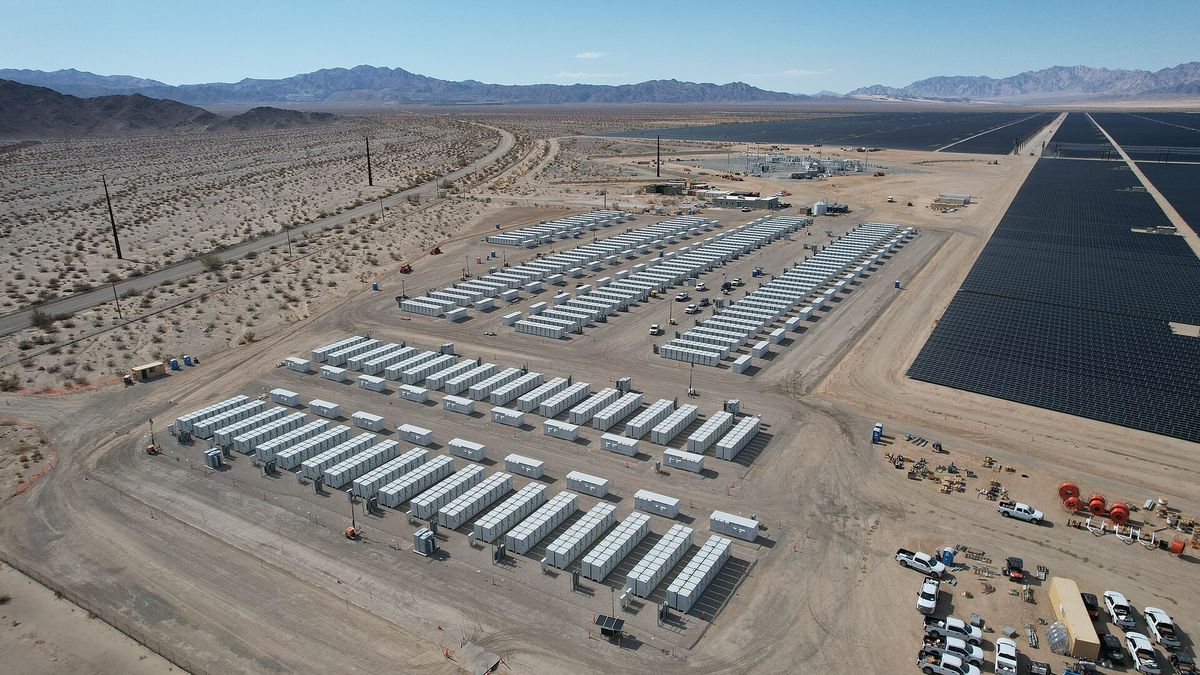
CATL has put firmer numbers on Tener Sodium, its sodium-ion battery for power grids, and they show how the world's largest battery maker plans to sell a chemistry that still costs more than lithium to buy. Each block is rated at more than 30 megawatt-hours and delivers 7.5 megawatts for four hours, the trade publication ESS News reported on Friday, citing specifications a CATL product manager presented in an Oct. 29 webinar.
The details arrived in the same fortnight as a Wood Mackenzie report that put sodium-ion supply agreements at more than 70 gigawatt-hours worldwide, and as CATL said on Friday it would roughly double its battery swap network in China next year. For investors in Asia's battery supply chain, the question is how quickly sodium can take volume from lithium iron phosphate (LFP), the chemistry Wood Mackenzie still calls the bankable choice for grid storage. CATL sees sodium partly as a hedge against sharp swings in lithium prices, according to CnEVPost.
CATL Tener Sodium: what the specifications show
The system is built from cabinets of about 4 MWh each, sold in sets of two to eight, according to ESS News. CATL lists round-trip efficiency of 95% and says the battery will retain 70% of its capacity after 20 years at one cycle a day. It is rated to operate from minus 35 degrees Celsius to 55 degrees.
CATL's pitch rests on what happens around the cells. In a model of a 500 MWh project, the company compared 16 Tener Sodium blocks with 23 blocks of its EnerX LFP system and found the sodium layout used roughly 32% less land, 6,630 square meters against about 9,700. It estimated engineering, procurement and construction costs 9.2% lower, ESS News reported.
That comparison has limits. The estimate leaves out transport and the substation, the publication said, and CATL sells other LFP products that would probably compete more closely with Tener Sodium than EnerX does. The degradation curves shown were described by the CATL manager as older estimates.
The timetable has also slipped a little. When the product was launched in Munich in June, CATL said in a statement that each unit had more than 30 MWh of rated capacity and that international deliveries would start in June 2027, after first shipments in China in September 2026. The system is now being delivered in China, and the webinar gave an overseas window of summer 2027, following production in August 2027, according to ESS News. CATL plans an LFP version using the same cabinets, at around 50 MWh for eight.
Sodium-ion battery costs: parity for cells, not yet for systems
Wood Mackenzie's report, published Nov. 5 and covering China, the U.S., Germany and India, said leading manufacturers should reach cell-level cost parity with LFP by the end of 2026. Parity for modules and complete systems is not expected until after 2030.
Sodium-ion storage costs a global average of $229 per kilowatt-hour up front, against $200 for LFP, the consultancy said. It estimated a 21% lower total cost of ownership over a 20-year project life, because sodium systems avoid the capacity top-ups that lithium projects need and cost less to run.
"The 2030-2035 window is where the economics decisively shift," Priya Shrivastava, a senior research analyst at Wood Mackenzie, said in the release. For projects being built now, the firm said, LFP remains the bankable choice for two- to four-hour storage.
Policy is narrowing the gap in China. Beijing reimposed a consumption tax on lithium-ion batteries in July, with LFP facing a 2% levy from September 2026 and 4% from September 2027, while sodium-ion is exempt through the end of 2028, according to Wood Mackenzie. Capital Times has separately covered CATL's third-quarter results.
The consultancy also listed obstacles: China's export controls, a thin supply chain in India and slow factory expansion in the U.S. Planned manufacturing capacity exceeds demand for now, ESS News said in its account of the report.
Orders, factories and CATL's battery swap network
CATL's own order book is large. It signed a three-year contract in April to supply 60 GWh of sodium-ion storage batteries to the Chinese system integrator HyperStrong, which the company called the largest sodium battery order to date, CnEVPost reported. A document published by environmental authorities in Ningde in May showed a plan to spend 5 billion yuan on 40 GWh of annual sodium-ion capacity at its Fuding base in Fujian province. ESS News reported in June that a further 160 GWh is planned at Jining in Shandong province.
Shipments are still small next to those plans. CATL is targeting at least 1 GWh of sodium-ion shipments by the end of 2026, Wood Mackenzie said, and BYD has 30 GWh of manufacturing capacity planned in China.
In cars, the constraint is range. CATL's Naxtra sodium cells reach an energy density of up to 175 watt-hours per kilogram and give a range of more than 400 kilometers, the company has said, according to CnEVPost. A CATL executive said in June that 10,000 to 20,000 electric vehicles would carry its sodium batteries this year.
Chairman Robin Zeng told an industry event in Shanghai that the range is enough for daily city driving and that more swap stations can ease worries about longer trips, CnEVPost reported on Tuesday, citing Bloomberg. On Friday, CATL said it plans 6,000 passenger car swap stations in 2027, made up of 5,000 in cities and 1,000 on highways across 297 Chinese cities. It had 2,520 stations at the end of September and aims for more than 3,000 by the end of this year.
Zeng has told investors that sodium-ion batteries could in the long run replace 30% to 40% of the existing battery market, according to CnEVPost. The next checks on that claim are CATL's year-end shipment figure against its 1 GWh target and whether Tener Sodium ships overseas in summer 2027 as now scheduled.
Sources
- ESS News (pv magazine): Clarifying the CATL Tener Sodium, with new specifications and availability (Nov. 13, 2026)
- Wood Mackenzie: Sodium-ion batteries establish a foothold as a lithium alternative, unlocking value from supply chain diversity and cold weather performance (Nov. 5, 2026)
- ESS News (pv magazine): Sodium-ion batteries approach cost parity with LFP, says WoodMac (Nov. 6, 2026)
- CnEVPost: CATL targets 6,000 passenger car battery swap stations in 2027, potentially overtaking Nio (Nov. 13, 2026)
- CnEVPost: CATL says expanding swap network will help accelerate sodium-ion battery adoption (Nov. 10, 2026)
- CnEVPost: CATL plans 40 GWh sodium battery capacity expansion after securing world's largest order (May 9, 2026)
- ESS News (pv magazine): CATL sets sodium-ion BESS delivery timeline, outlines cold-weather specs (June 23, 2026)
- CnEVPost: CATL expects at least 10,000 EVs to use its sodium batteries this year (June 24, 2026)
- CATL (PR Newswire via Kyodo News PR Wire): CATL Debuts World's First Field-Validated Sodium-Ion BESS, Bringing Sodium Storage to Commercial Reality (June 23, 2026)
Our standards: Capital Times reports under the principles set out in our Editorial Standards and Ethics Policy. Spotted an error? Report it to our editors.