Cathay Pacific Orders 14 More Airbus Jets, Lifting Committed Investment Above HK$150 Billion
The Hong Kong carrier exercised rights for 11 A330-900 widebodies with a basic price of US$5.1 billion, plus three A321neos for budget arm HK Express.
What to know
- Cathay Pacific exercised purchase rights for 11 Airbus A330-900s with a basic price of about US$5.114 billion (HK$39.889 billion), for delivery between 2031 and 2035.
- The group also ordered three more A321neos for HK Express, taking total new aircraft deliveries from 2026 to 120 against a plan of 150.
- Cathay said its committed investment for 2026 to 2035 now exceeds HK$150 billion, and Airbus said firm A330-900 orders from the group stand at 41.
HONG KONG
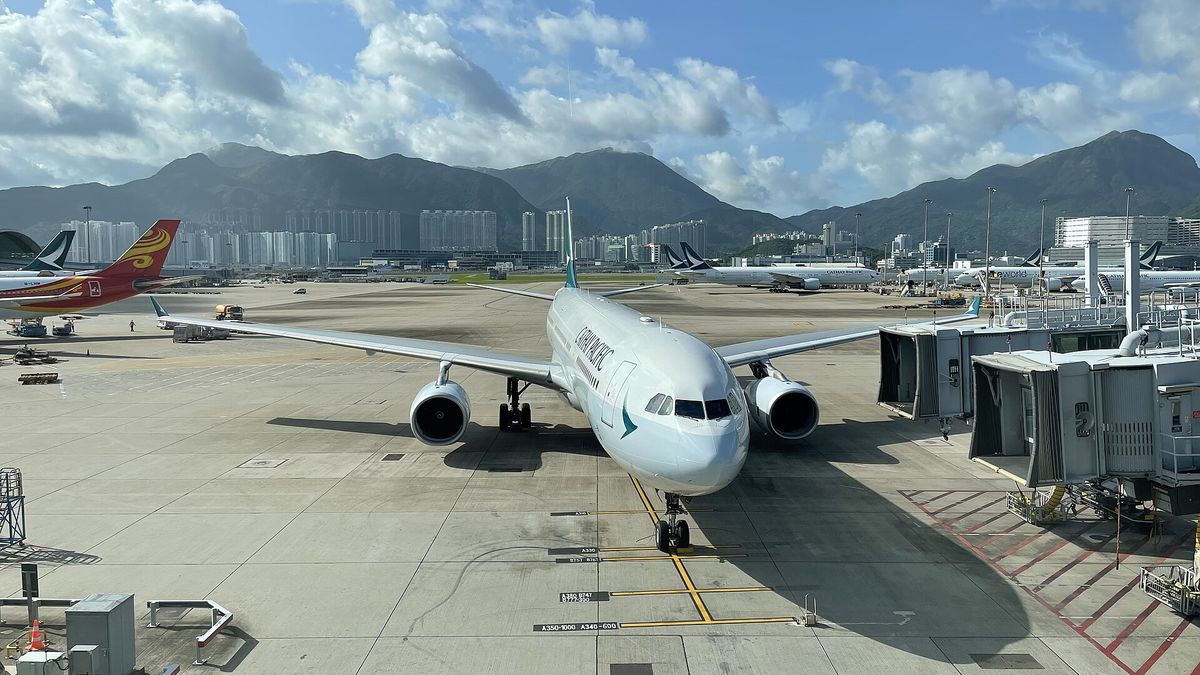
Cathay Pacific Airways ordered 14 more Airbus jets on Wednesday, including 11 A330-900 widebodies with a basic price of about US$5.114 billion (HK$39.889 billion), and said its committed investment for 2026 to 2035 now exceeds HK$150 billion.
The order is a bet on regional traffic through Hong Kong well into the 2030s. The A330-900s are due between 2031 and 2035, the company said in a Hong Kong stock exchange announcement, and are meant mainly for routes within Asia, where the carrier's existing mid-size widebodies are aging.
Cathay exercised purchase rights it obtained under a 2024 agreement with Airbus, when it ordered 30 of the same model. The latest deal takes the group's firm commitment for the type to 41, Airbus said in a statement from Toulouse.
The group also exercised rights for three more A321neo narrowbodies, on top of the 32 A321neo and A320neo aircraft it ordered in 2023. Those planes are for HK Express, the group's budget carrier, which Cathay said is focused on destinations in mainland China and other short-haul routes.
What Cathay Pacific Is Paying
The US$5.114 billion figure is the aircraft basic price, which covers the airframe, optional features and engines for the 11 widebodies. It is not what Cathay will pay.
Airbus granted “significant price concessions,” the announcement said, so the actual consideration is lower. Cathay obtained a waiver from the Hong Kong Stock Exchange from the listing rule that would require it to disclose the real price, arguing that publication would cost it the discounts. The company said the concessions were comparable with those in its earlier aircraft purchases.
Each aircraft will be paid for in cash in eight installments. Seven fall due before delivery, and the balance, which the filing described as a substantial portion of the price, is payable at handover.
Cathay said it intends to fund the purchase wholly or partly with commercial bank loans, finance leases, sale and leaseback arrangements and cash from operations. The deal counts as a discloseable transaction under the listing rules because its size falls between 5% and 25% on the relevant tests, which means shareholders do not need to vote on it.
The stock exchange announcement covers only the A330-900s. The three A321neos appear in the airline's and Airbus's press statements, without a price.
A330-900 Jets to Replace Older Regional Widebodies
The new jets will progressively replace Cathay's existing mid-size widebody fleet and allow for growth, the filing said. They will principally serve regional destinations in Asia and could be used on longer routes later.
Cathay Pacific operates 43 A330-300s with an average age of 18.2 years, trade publication AeroTime reported, citing ch-aviation data. The carrier said in 2024 that the first 30 A330-900s would arrive by the end of 2031, according to AeroTime, so the 11 added on Wednesday stretch deliveries of the type out to 2035.
Alex McGowan, Cathay's chief operations and service delivery officer, said in the Airbus statement that the order supports regional flying across Asia-Pacific while “providing greater flexibility to operate longer flights.”
Airbus said the A330neo, powered by Rolls-Royce Trent 7000 engines, can fly up to 8,100 nautical miles (15,000 kilometers) nonstop, and that it cuts fuel burn by 25% compared with previous-generation competitor aircraft. That is the manufacturer's claim.
The Bigger Fleet Plan
The order lifts the number of new aircraft Cathay expects to receive from 2026 onward to 120, the company said. Its stated plan is 150 deliveries and a network of 150 destinations within 10 years, both conditional on what it called favorable market conditions.
Chief Executive Officer Ronald Lam said the planes would “enhance connectivity at our home hub Hong Kong.” He put total committed investment for 2026 to 2035 at more than HK$150 billion.
The delivery pipeline spans A321neo and A320neo narrowbodies, A330-900 regional widebodies, Boeing 777-9 long-haul jets, and A350F and A330 freighters, according to Cathay's statement.
It has been built up in steps. Cathay exercised rights for 14 more Boeing 777-9s in August 2025, taking its firm commitment for that model to 35, and for two more A350F freighters in May 2026, AeroTime reported. As of June 30, the group had 105 aircraft on firm order and purchase rights for another 87, the publication said, citing Cathay's interim report. Those figures predate Wednesday's deal.
Capital Times has reported separately on Hong Kong airport's transfer services with Hangzhou and Wuhan.
Investors get the next reading on demand when Cathay publishes its October traffic figures, which had not been filed with the Hong Kong exchange as of Sunday afternoon. The first of the 11 additional A330-900s is not expected until 2031.
Sources
- Cathay Pacific Airways Limited (Hong Kong Stock Exchange announcement): Discloseable Transaction: Purchase of 11 Airbus A330-900 Aircraft (Nov. 11, 2026)
- Cathay Pacific: Cathay continues to invest in the Hong Kong international aviation hub by ordering 14 more new aircraft (Nov. 11, 2026)
- Airbus: Cathay Group orders 14 additional Airbus aircraft (Nov. 11, 2026)
- AeroTime: Cathay Pacific orders 11 more Airbus A330neos, raising total to 41 (Nov. 11, 2026)
Our standards: Capital Times reports under the principles set out in our Editorial Standards and Ethics Policy. Spotted an error? Report it to our editors.