Luckin Profit Jumps 45%, Yum China's 10%, Even as Same-Store Sales Fall Up to 11%
China's top coffee chain and restaurant company are earning fatter margins, but older stores are selling less against last year's subsidy-inflated base.
What to know
- Luckin Coffee's third-quarter net income rose 45.4% to 1.86 billion yuan as delivery expenses fell 38.1%, while same-store sales at its self-operated outlets dropped 11.1%.
- Yum China's operating profit grew 13% to $451 million on revenue of $3.5 billion, but its same-store sales fell 3% and KFC's average ticket was 5% lower.
- Yum China raised its 2026 target to more than 2,400 net new stores and plans from 2027 to return about 100% of annual free cash flow after payouts to minority partners.
SHANGHAI
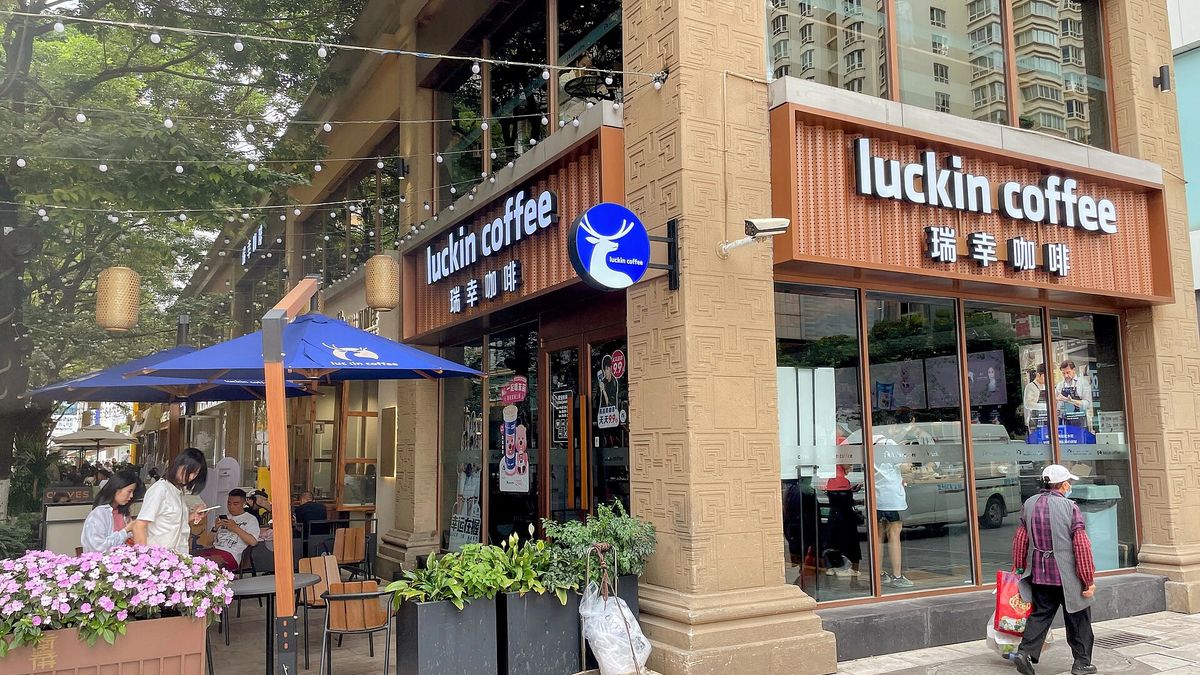
Luckin Coffee, China's largest coffee chain, and Yum China, the country's biggest restaurant company, reported higher third-quarter profit on Tuesday even as sales at their established stores fell. Luckin's net income rose 45.4% to 1.86 billion yuan (US$277 million), while same-store sales at its self-operated outlets dropped 11.1%. Yum China, the operator of KFC and Pizza Hut in the country, lifted operating profit 13% to $451 million as its same-store sales slipped 3%.
Both companies blamed the sales decline largely on a tough comparison with 2025, when food delivery platforms poured money into subsidies. For investors in Asia, the results are an early read on restaurant economics once that price war, which Yicai Global described as a battle among Meituan, JD.com and Alibaba Group, drops out of the numbers. At Luckin, fewer cheap delivery orders are costing volume but widening margins.
Luckin Coffee Swaps Delivery Orders for Pickup
Luckin's net revenue rose 17% to 17.89 billion yuan in the quarter ended Sept. 30, according to results the company filed with the U.S. Securities and Exchange Commission. Net income excluding share-based compensation and some deal costs climbed 50.9% to 2.14 billion yuan, which Chief Executive Guo Jinyi called a quarterly record.
Fewer takeout orders and lower delivery costs lifted profitability at its own stores, Guo said, according to Yicai. Luckin said delivery expenses fell 38.1% to 1.79 billion yuan because more customers collected drinks in stores rather than ordering them to their doors. That cost shrank to about 10% of net revenue from 18.9% a year earlier, by Capital Times' calculation from the filing, and the operating margin at self-operated stores widened 5.8 percentage points to 23.3%.
The cost was weaker sales at existing shops. Same-store sales at self-operated outlets have now fallen for three straight quarters, from a 0.1% dip in the first quarter to 5.3% in the second and 11.1% in the third, after growing 14.3% in the same period of 2025. Luckin tied the decline mainly to the high base created by platform subsidies a year earlier. Guo said the pullback in subsidies was still weighing on order volumes and average prices, but the trend improved during the quarter and the recovery should pick up in the fourth, Yicai reported.
The chain kept expanding. It added a net 2,599 stores in the quarter, including 40 in Malaysia, 14 in Singapore and two in the United States, ending September with 38,909. Average monthly transacting customers hit a record 123 million, up 9.6%. The rest of the market has been moving the other way: total coffee shops in China fell to 227,000 in June from 243,000 in January, Yicai reported in August, citing Zhaimen Canyan data. Global rival Starbucks has handed control of its China stores to Boyu Capital in a joint venture this year.
Yum China Leans on Cheaper Meals and More KFC Stores
Yum China's total revenue rose 8% to $3.5 billion, though only 2% excluding currency translation, the Shanghai-based company said. Core operating profit, which strips out currency effects and one-off items, grew 6%. Net income rose 10% to $311 million, and diluted earnings per share climbed 20% to 91 cents, or 12% excluding currency moves.
Diners came more often but spent less. Same-store transactions rose 3%, the 15th consecutive quarterly gain. At KFC, transactions also rose 3%, partly on smaller orders from newer formats such as KCOFFEE and KPRO, while the average ticket was 5% lower. Chief Executive Joey Wat said same-store sales suffered from comparisons with last year's delivery platform subsidies and from bad weather in August. She added in the statement: "Dine-in and takeaway performance improved sequentially, bucking the previous trend."
Unlike Luckin, Yum China is still moving further into delivery. Delivery sales grew 7% and made up about 54% of company sales, up from 51% a year earlier, which raised rider costs. Restaurant margin still widened 50 basis points to 17.8% on leaner operations and cheaper commodities. Pizza Hut's operating margin jumped 210 basis points to 11.0%, helped by license fees it no longer pays to Yum Brands after Yum China completed its purchase of the Pizza Hut brand for the mainland on Aug. 7.
The company opened a record 692 net new restaurants in the quarter, taking its total to 19,989, and raised its full-year goal to more than 2,400 net openings. That would lift its store count above 20,500 by the end of 2026. The expansion comes as broader demand stays soft: China's services activity stalled in October as new orders shrank.
Buybacks Continue, and the Comparison Base Eases
Both companies are handing more cash back. Yum China, listed in New York and Hong Kong (stock code 9987), added $1 billion to its share repurchase authorization, leaving about $1.3 billion available, and declared a dividend of 29 cents a share payable Dec. 22. It said it remains on track to return $1.5 billion to shareholders this year.
From 2027, Yum China plans to return roughly all of its annual free cash flow after dividends paid to minority partners in its subsidiaries. It expects that to average about $900 million to more than $1 billion a year in 2027 and 2028, below this year's $1.5 billion.
Luckin, whose shares trade over the counter in the United States, approved a new buyback of up to $500 million over 12 months, to begin once its current $500 million program is used up or expires. It had repurchased $391 million of stock under that program by Sept. 30, and held 14.33 billion yuan in cash, deposits and short-term investments.
Luckin's next test looks easier on paper. In the fourth quarter of 2025, its same-store sales grew just 1.3%, after a 14.3% jump in the previous quarter.
Sources
- Luckin Coffee Inc. via U.S. SEC: Luckin Coffee Announces Third Quarter 2026 Financial Results (Form 6-K, Exhibit 99.1) (Nov. 3, 2026)
- Yum China Holdings, Inc. via U.S. SEC: Yum China Reports Third Quarter 2026 Results (Form 8-K, Exhibit 99.1) (Nov. 3, 2026)
- Yicai Global: China's Luckin Coffee Posts Record Profit in Third Quarter, Cuts Delivery Fees by USD165 Million (Nov. 4, 2026)
- Yicai Global: China's Luckin Coffee Opens Over 5,000 New Stores in First Half While Rivals Scale Back (Aug. 4, 2026)
- World Coffee Portal: Luckin Coffee has opened more than 5,200 new stores in China this year (Aug. 3, 2026)
Our standards: Capital Times reports under the principles set out in our Editorial Standards and Ethics Policy. Spotted an error? Report it to our editors.