Hong Kong Airport Adds Hangzhou, Wuhan Transfers After Transit Lifts Traffic 10.2%
One check-in and through baggage now link two big mainland cities to HKIA's global network, as the hub leans on connecting passengers to grow.
What to know
- Hong Kong International Airport launched Hangzhou-Hong Kong and Wuhan-Hong Kong transfer services on Nov. 3, letting travelers check in once with bags sent to their final destination.
- HKIA handled 4.86 million passengers in September, up 10.2% from a year earlier, with transfer and transit passengers the main driver.
- Over the 12 months to September, HKIA passenger throughput rose 11.5% to 65.4 million, according to the Airport Authority.
HONG KONG
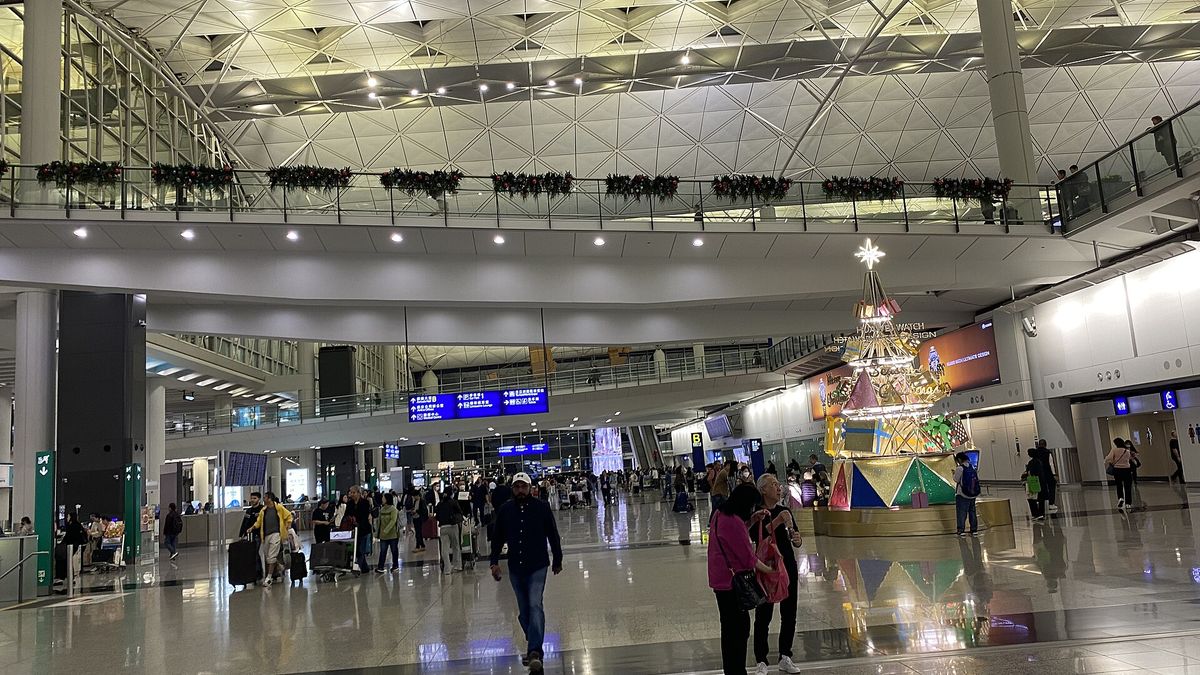
Hong Kong International Airport opened two new transfer services last week that let travelers from Hangzhou and Wuhan check in once and have their bags carried through to an overseas destination, a step aimed at the connecting traffic that drove the hub's 10.2% passenger growth in September.
The "Hangzhou-Hong Kong" and "Wuhan-Hong Kong" services were launched on Nov. 3 at the Super Terminal Expo at the airport, under a Civil Aviation Administration of China (CAAC) strategy for linking mainland cities to Hong Kong's international network, the Airport Authority Hong Kong (AAHK) said. For airlines and investors in the region, the change matters because transit passengers, not visitors, are now the fastest-growing part of Hong Kong's airport business, and through-check services widen the pool of mainland travelers who can use the city as a gateway.
How the Hangzhou and Wuhan transfer services work
Passengers check in at their departure airport and their baggage is transferred directly to the final destination, even if they change airlines along the way, according to the AAHK. The services also run in reverse, for overseas travelers connecting through Hong Kong to the two mainland cities.
That removes a familiar friction for mainland travelers flying long haul via Hong Kong on separate tickets: collecting bags and checking in again. Hangzhou Xiaoshan International Airport and Wuhan Tianhe Airport are the mainland partners, and executives from Air China, Zhejiang Loong Airlines, Cathay Group, Hong Kong Airlines and Greater Bay Airlines attended the launch, the AAHK said.
Han Jun, deputy administrator of the CAAC, said at the event that Beijing's 15th Five-Year Plan explicitly supports Hong Kong in consolidating its status as an international aviation hub. He said the regulator would deepen cooperation on route network expansion, aviation logistics and smart civil aviation.
Mable Chan, Hong Kong's secretary for transport and logistics, said the government would work with the CAAC, the AAHK and airlines to "further expand the network covered by these transfer services." Neither official named further cities or a timetable.
HKIA passenger traffic leans on transfers
The new links build on a trend already visible in the airport's numbers. HKIA handled 4.86 million passengers in September, up 10.2% from a year earlier, the AAHK reported on Oct. 20. Transfer and transit passengers posted double-digit growth and were the main driver, while visitor numbers rose a slower 5.0%. The Chinese mainland made the strongest regional contribution, and the decline in Middle East traffic continued to ease, the authority said.
Flight movements rose 7.0% to 32,175 in September, and cargo grew 6.3% to 433,000 tonnes, helped by a 26.9% jump in transshipments. Volumes to Europe fell after the European Union removed its duty-free de minimis exemption in July, the AAHK said.
Over the first nine months of 2026, the airport handled 49.1 million passengers, up 10.1%. On a rolling 12-month basis, throughput rose 11.5% to 65.4 million passengers and 405,945 flights.
Visitor arrivals into the city itself have been running strong, as Capital Times reported in its look at September's mainland-led surge. The airport figures show that a growing share of HKIA's passengers never leave the terminal.
Competition for Asia's connecting passengers
Hong Kong is not alone in chasing transit traffic. Korean Air said in its preliminary third-quarter results on Oct. 16 that passenger revenue rose to 2.9174 trillion won, with growth coming from inbound travel and transit via Incheon, while outbound Korean demand eased on fuel surcharges and a weaker won. The carrier said it would keep focusing on inbound and transit passengers in the fourth quarter to protect profitability, as high fuel costs linked to the Middle East conflict persist. It also pointed to a Dec. 17 integration date as it aligns service protocols across its expanding network.
In Singapore, growth has been slower. Changi Airport's third-quarter passenger movements edged up just 0.4% to 17.4 million.
The AAHK has used the expo, which drew more than 6,000 industry professionals over three days, to press its "Hub of Asia" pitch. HKIA was named The STE Airport of the Year at the event's awards on Nov. 4, along with honors for cargo, passenger services and sustainability.
The next marker is the AAHK's October traffic report. The authority published August data on Sept. 17 and September data on Oct. 20, and the October release will show whether transfer passengers are still outpacing visitors before the new mainland links have a full month of operation.
Sources
- Airport Authority Hong Kong: Global Aviation Event Spotlights HKIA as Hub of Asia (Nov. 3, 2026)
- Airport Authority Hong Kong: HKIA Records Double-Digit Passenger Traffic Growth in September and Wins Three Best Airport Awards (Oct. 20, 2026)
- Airport Authority Hong Kong: HKIA Wins Airport of the Year and Three Other Awards at Super Terminal Expo (Nov. 4, 2026)
- AJOT: Korean Air reports tentative Q3 results achieving record revenue despite high fuel prices (Oct. 16, 2026)
Our standards: Capital Times reports under the principles set out in our Editorial Standards and Ethics Policy. Spotted an error? Report it to our editors.