Jin Air to Base Merged Budget Airline in Busan, Absorbing Air Busan and Air Seoul
Hanjin Group bowed to pressure from Busan, but only 39 Jin Air staff work in the city today and its pilots' union objects.
What to know
- Hanjin Group agreed on Nov. 26 to place the headquarters of the merged Jin Air, Air Busan and Air Seoul in Busan, the city government said.
- The combined carrier will fly 60 aircraft with about 4,200 employees and targets first-year revenue of around 3 trillion won.
- At the end of 2025, only 39 of Jin Air's 2,188 employees were based in Busan, and its pilots' union has opposed the move.
SEOUL
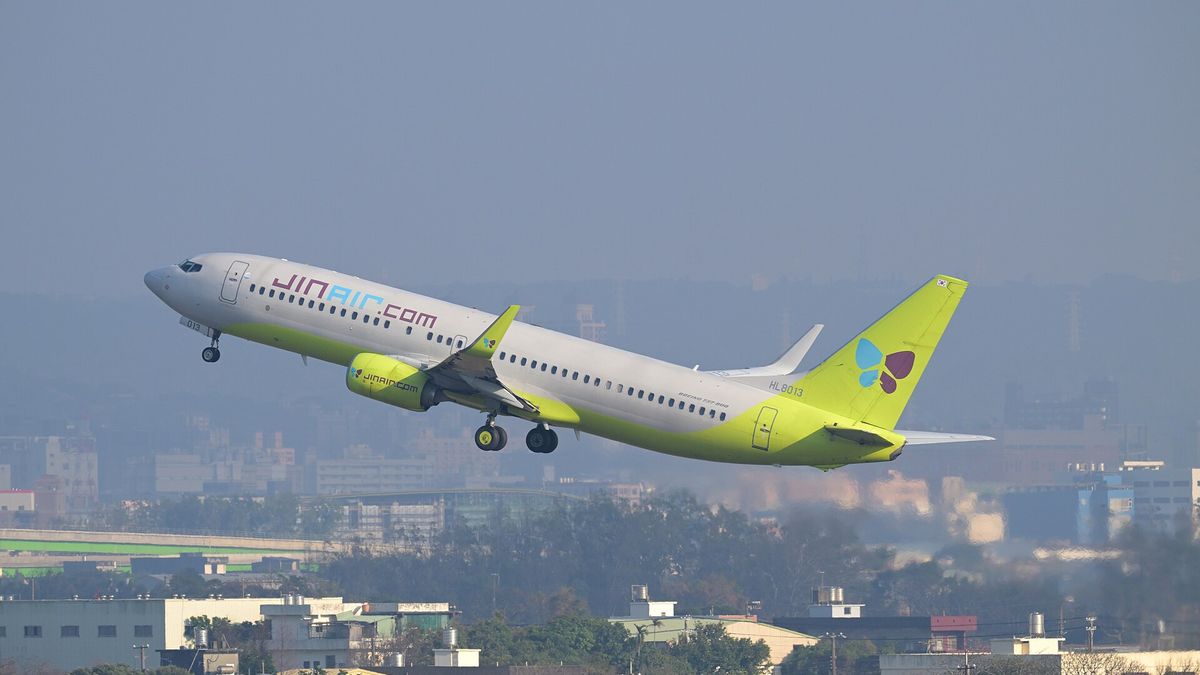
South Korea's biggest budget airline-in-waiting will be run from Busan. Hanjin Group, which controls Korean Air, agreed on Nov. 26 to put the headquarters of the merged Jin Air, Air Busan and Air Seoul in the southeastern port city, the Busan city government said, after the city repeatedly pressed for the head office.
Hanjin Group Chairman Cho Won-tae and Busan Mayor Chun Jae-soo struck the deal at a meeting at Busan City Hall, according to The Korea Times and the Korean outlet Newsfield. Korean Air Vice Chairman Woo Kee-hong and Jin Air chief executive-designate Lee Jin-ho also attended, Newsfield reported.
The combined carrier will fly under the Jin Air brand with 60 aircraft: 33 from Jin Air, 21 from Air Busan and six from Air Seoul, The Korea Times reported. It will have about 4,200 employees and expects first-year revenue of around 3 trillion won (about $2.23 billion). The three airlines carried a combined 15 million passengers in the first nine months of 2026.
Chun said in a briefing that the move would strengthen "the global competitiveness of Hanjin Group and Busan's economy." A Hanjin official said the group would develop Gimhae International Airport and the planned Gadeokdo New Airport into key hubs. Details on routes, staffing and investment have not been disclosed, and Hanjin said it would keep consulting on the specifics, Newsfield reported.
A reversal two weeks after approval
The decision marks a shift. When the Fair Trade Commission and the Ministry of Land, Infrastructure and Transport cleared the three-way combination on Nov. 12, the airline's plan treated Busan as a second hub rather than a home base, The Korea Times reported at the time. The approved plan raises international routes from Gimhae from 28 to 33 and weekly flights from 281 to 339, and Jin Air pledged to keep Air Busan's existing facilities and build an independent maintenance base there.
Busan had campaigned hard. The local community repeatedly opposed the plan to fold in Air Busan, which will cease to exist as a separate legal entity once Jin Air absorbs it. Busan-based lawmakers twice tried and failed to call Cho as a witness at this autumn's parliamentary audit, according to Newsfield. Asiana Airlines owns 58.40% of Air Busan, and Korean Air holds 54.91% of Jin Air.
The budget merger is the second stage of Korean Air's takeover of Asiana. The full-service carriers combine on Dec. 17, when Asiana flights move to Korean Air flight numbers. Korean Air said that will lift the number of flights under its own brand by 50%, according to The Korea Times. The merged airline will take over 11 international routes that only Asiana flew, including Barcelona and Clark in the Philippines, add Melbourne and Hiroshima, and raise Incheon-New York JFK service from three to four daily flights. Korean Air expects the deal to add at least 300 billion won to operating profit. The fight for control of Korean Air's parent, Hanjin KAL, continues in the background.
Moving the people is the hard part
On paper, Jin Air is a Seoul company. At the end of 2025, 1,959 of its 2,188 employees, or 89.5%, were based in Seoul and only 39 worked at its Busan and Gimhae branches, according to Korea Workers' Compensation and Welfare Service data cited by The Korea Times. Air Busan had 1,041 of its 1,299 staff in Busan, while all 419 Air Seoul employees worked at Incheon. Across the three airlines, just 27.6% of the workforce was in Busan.
A real headquarters would need route planning, finance, human resources and corporate management to have a substantive presence in the city, experts told The Korea Times. Jin Air's pilots' union has opposed the decision, saying staff were not consulted and no protections were set for changes to their working and living conditions. A Jin Air official told The Korea Times that personnel moves had not yet been decided.
At least one academic was skeptical about the business case. Hwang Yong-sik, a business professor at Sejong University, told the paper the relocation "does not offer significant benefits" from a strategy standpoint, though he said it carried significance as corporate social responsibility.
The bet on Busan rests partly on traffic that is already growing. Foreign visitors have been spreading beyond Seoul, and foreign card spending in Busan has passed 1 trillion won, as Capital Times reported earlier.
What to watch
The merged Jin Air is due to start operating on March 17, 2027. Before then it must pass safety inspections, win approvals from overseas aviation authorities and report monthly to the transport ministry on its commitments, including consumer protection, The Korea Times reported. Air Busan has pushed its shareholder vote on the merger from Dec. 7 to Feb. 3, Newsfield reported, with the merger ratio unchanged.
Earnings give Jin Air some room to absorb the cost. It swung to a third-quarter operating profit of 7.8 billion won from a loss of 22.5 billion won a year earlier, as sales rose 35.7% to 413.1 billion won, The Herald Business reported. Investors will look for how many head-office jobs actually move south, and whether Gimhae gets the extra routes on schedule. Fleet counts differ slightly by source: when regulators approved the deal, The Korea Times put the fleet at about 58 aircraft based on end-2025 counts, while the latest figure is 60.
Sources
- The Korea Times: Integrated LCC headquarters to be based in Busan (Nov. 26, 2026)
- The Korea Times: Jin Air's Busan relocation complicates workforce integration (Nov. 27, 2026)
- The Korea Times: Korean Air to expand flight, cargo networks after Asiana merger (Nov. 26, 2026)
- The Korea Times: FTC approves combination of Jin Air, Air Seoul, Air Busan (Nov. 12, 2026)
- Newsfield: Hanjin Group Chairman Cho Won-tae Visits Busan City Hall to Agree on Integrated LCC Headquarters a Month After Parliamentary Audit, Following Two Failed Bids to Name Him as a Witness (Nov. 27, 2026)
- Skift: Three South Korean Carriers Are Merging Into One Low-Cost Giant (Aug. 24, 2026)
- The Herald Business: Jin Air holds joint workshop for cabin crew managers ahead of merger (Nov. 12, 2026)
Our standards: Capital Times reports under the principles set out in our Editorial Standards and Ethics Policy. Spotted an error? Report it to our editors.