Burberry Swings to Profit as South Korea Sales Jump 12% and Japan Stays Weak
The British luxury house posted a fifth straight quarter of growth, but fewer mainland Chinese visitors to Japan held its Asia Pacific region to a 3% gain.
What to know
- Burberry reported a first-half operating profit of 54 million pounds, against a loss of 18 million pounds a year earlier, on revenue of 1.098 billion pounds.
- Comparable retail sales rose 3% in Asia Pacific, with South Korea up 12% in the second quarter and Japan down 1%, and rose 7% in Greater China.
- The company expects wholesale revenue to grow 10% to 12% this fiscal year and will report third-quarter trading on Jan. 21, 2027.
LONDON
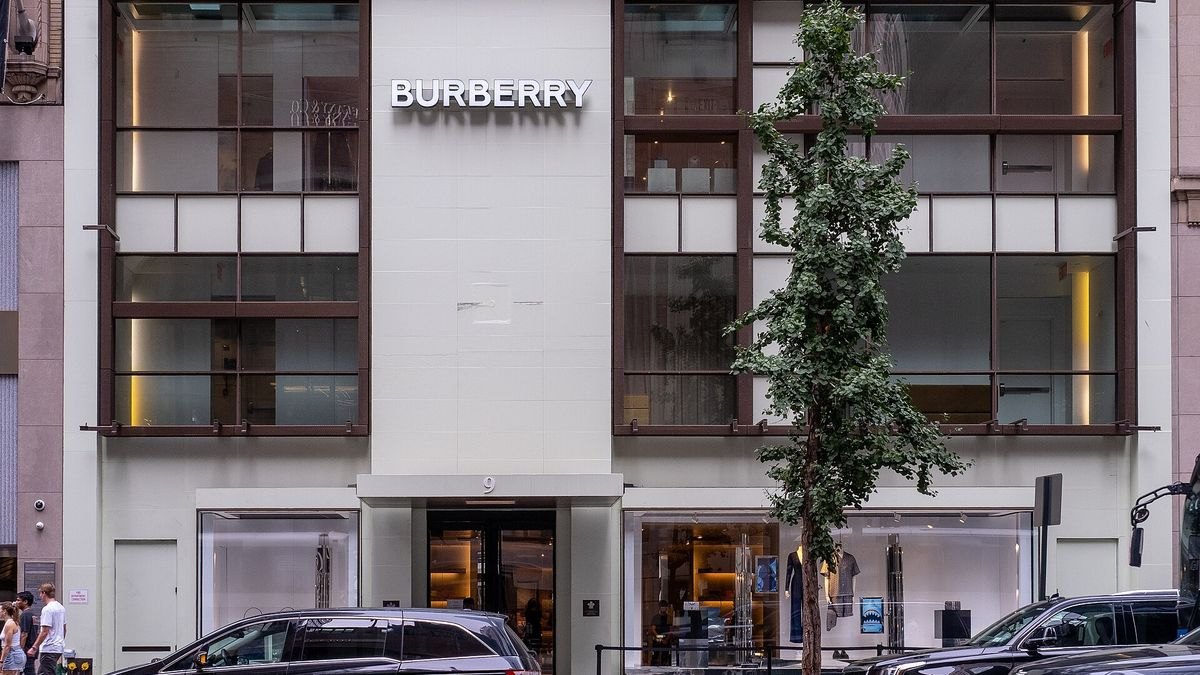
Burberry Group swung to a first-half operating profit of 54 million pounds from a loss of 18 million pounds a year earlier, as comparable store sales rose 4% and South Korea delivered 12% growth in the latest quarter while Japan slipped.
The results, published on Thursday, give investors in Asia a detailed read on where luxury demand is holding up. The region outside Greater China grew more slowly than the Americas or China, and the trench coat maker put the blame on one factor: fewer mainland Chinese tourists shopping in Japan.
Revenue for the 26 weeks to Sept. 26 rose 6% to 1.098 billion pounds, both at reported and constant exchange rates, the company said in its interim statement. Adjusted operating profit, which strips out restructuring costs, more than tripled to 62 million pounds from 19 million pounds, and the adjusted operating margin widened to 5.7% from 1.9%.
Profit attributable to shareholders was 6 million pounds, against a loss of 26 million pounds in the same period last year. Burberry did not declare an interim dividend.
South Korea up, Japan down in Burberry's Asia Pacific
Comparable retail sales in Asia Pacific, which Burberry defines as Asia outside Greater China and which includes Japan, South Korea, Southeast Asia, Australia and New Zealand, rose 3% in each of the two quarters. That was the slowest pace among the three regions that grew.
Within it, South Korea grew 12% in the July to September quarter on local demand, the statement said. Japan declined 1% in the quarter. Burberry said that was an improvement on the first quarter but that Japanese stores were still hurt by a continued drop in inbound visitors from mainland China.
Capital Times has separately covered Kering's latest sales in Asia.
Greater China, which covers the mainland, Hong Kong, Macau and Taiwan, did better. Comparable sales there rose 7% in the half, slowing to 5% in the second quarter from 9% in the first. The company credited spending by local customers and travel within the region, and said it had outperformed a difficult market.
The Americas led with 12% growth in the half. Europe, the Middle East, India and Africa fell 2%, which Burberry attributed to reduced tourist activity and weak traffic, particularly at outlet stores.
Currency took some shine off the Asian numbers. Retail and wholesale revenue from Asia Pacific was 155 million pounds, up 6% at constant rates but only 2% as reported. The yen averaged 214 to the pound in the half, against 196 a year earlier, and the won averaged 1,953 against 1,869, according to the statement. Greater China revenue rose 15% as reported to 291 million pounds.
Taken together, the two Asian regions brought in 446 million pounds, or about 42% of Burberry's retail and wholesale revenue. Asia Pacific also holds the largest share of its shops: 122 of 412 directly operated stores at the end of September, 81 of them concessions.
Margins, cash and the turnaround
Chief Executive Joshua Schulman, who launched the Burberry Forward plan two years ago, said five straight quarters of growth and better quality of sales showed that “our strategy is working.”
Outerwear sales grew at a double-digit rate in the half, and leather goods picked up in the second quarter, the company said. Online sales rose at a mid-teens rate. Wholesale revenue climbed 17% at constant rates to 174 million pounds, ahead of the company's guidance.
Gross margin edged up to 68.3% from 67.9%. Burberry said more goods sold at full price, and it also booked a one-off supply chain rebate. Adjusted net operating expenses were flat at constant rates, and restructuring charges fell to 8 million pounds from 37 million pounds.
Cash was the weak spot. Free cash outflow widened to 147 million pounds from 50 million pounds, mainly because the company rebuilt inventory ahead of its peak selling period and took deliveries earlier than last year. Net debt, including lease liabilities, stood at 988 million pounds, or 1.7 times adjusted earnings before interest, tax, depreciation and amortization, compared with 2.2 times a year earlier.
What Burberry expects next
For the fiscal year ending in March 2027, Burberry said it expects revenue growth and wider margins, while staying cautious about what it called an uncertain external environment. It forecast wholesale revenue growth of 10% to 12%, capital spending of about 100 million pounds and annualized cost savings of about 100 million pounds, of which 80 million pounds were achieved last year.
At exchange rates on Oct. 30, the company estimated that currency moves would add about 20 million pounds to full-year revenue and have little effect on adjusted operating profit.
Burberry said its revenue is usually higher in the second half of the fiscal year than in the first because the business is seasonal. The company will publish its third-quarter trading update on Jan. 21, 2027, and plans a capital markets day for investors in London in March.
Sources
- Burberry Group plc (London Stock Exchange RNS): Burberry Group plc interim results for 26 weeks ended 26 September 2026 (Nov. 12, 2026)
- FashionUnited: Burberry returns to profitability as first-half revenue rises by 6 percent (Nov. 12, 2026)
- TheIndustry.fashion: Burberry profits jump as turnaround delivers fifth consecutive quarter of sales growth (Nov. 12, 2026)
Our standards: Capital Times reports under the principles set out in our Editorial Standards and Ethics Policy. Spotted an error? Report it to our editors.