Kering's Gucci Sales Fall 6% as Weaker Traffic in China and Japan Stalls Recovery
Jewelry and eyewear kept group revenue roughly flat, but Asia Pacific traffic remained the main drag on the Italian brand.
What to know
- Kering's third-quarter revenue was 3.35 billion euros, stable as reported and down 1% on a comparable basis.
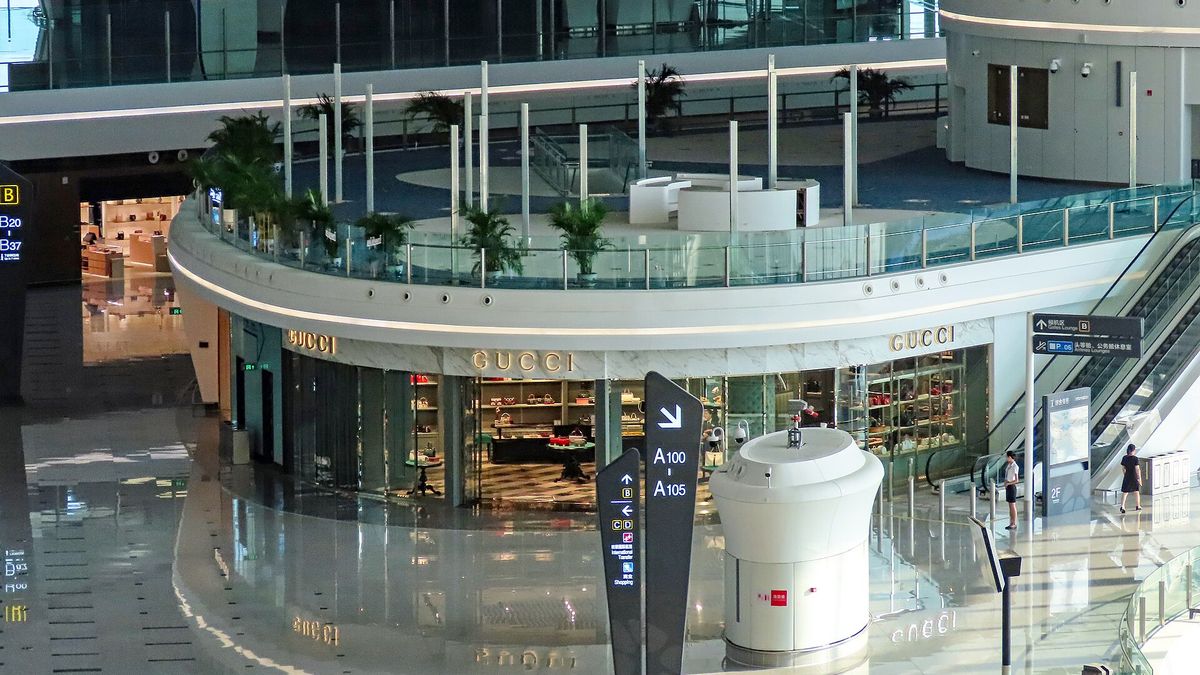
- Gucci revenue fell 6% on a comparable basis to 1.29 billion euros, with retail sales down 9% on lower traffic in mainland China and Japan.
- Kering Jewelry grew 11% on a comparable basis, helped by Boucheron in Japan and South Korea.
PARIS
Kering said Gucci's third-quarter sales fell 6% on a comparable basis to 1.29 billion euros, as fewer shoppers walked into its stores in mainland China and Japan, leaving the French luxury group's revenue down 1% at 3.35 billion euros.
For investors in Asia, the numbers show where the luxury slowdown is still concentrated. Kering said in its results release on Oct. 22 that North America was Gucci's most resilient market, while lower traffic hurt performance in Asia Pacific, particularly mainland China, and in Japan.
Shares in Kering fell 11.5% in Paris trading on Oct. 23, the morning after the release, according to Sharecast News.
Gucci's retail problem is foot traffic
The decline at Gucci came almost entirely from its own stores. Sales through directly operated retail, including e-commerce, dropped 9% on a comparable basis in the quarter. Wholesale rose 45% to 120 million euros, which the company attributed to a rebound in orders against a low base a year earlier.
On a reported basis, Gucci revenue was 4% lower than the 1.343 billion euros it posted in the third quarter of 2025, when sales had fallen 14% on a comparable basis. Over the first nine months of 2026, Gucci revenue totaled 4.05 billion euros, down 5% on a comparable basis.
Chief Executive Luca de Meo said the quarter reflected the phasing the company had expected, in a softer economic environment. He called the recovery of Gucci the group's "defining priority" and described Kering's transformation as a multi-season effort. According to Sharecast, he pointed to gains in conversion, average price and average ticket at Gucci, with traffic remaining the main constraint.
Kering also told investors that Gucci faced a tougher comparison base and a weaker boost from new products than in the second quarter, Sharecast reported. Danni Hewson of AJ Bell noted in comments carried by Sharecast that Kering had increased sales in the second quarter for the first time in three years, said the update suggested the recovery may be faltering, and noted that Kering reaffirmed its margin target without repeating its earlier aim of returning to revenue growth in 2026.
The wider Fashion and Leather Goods division, which also includes Saint Laurent, Bottega Veneta and Balenciaga, posted revenue of 2.74 billion euros, down 3% on a comparable basis. Retail sales at the houses other than Gucci rose 2%. Kering said Saint Laurent's growth came mainly from North America and Western Europe, and that Bottega Veneta again outperformed in key markets. The company did not publish revenue figures for those brands.
Jewelry and eyewear find buyers in Japan and Korea
The picture in Asia was not uniformly weak. Kering Jewelry, which includes Boucheron and Pomellato, grew revenue 11% on a comparable basis to 239 million euros, with sales in its own stores up 18%, FashionUnited reported. The release credited Boucheron's performance in Japan and South Korea, and said Pomellato did particularly well in Japan.
That contrast matters for retailers and landlords in Tokyo, Seoul and Hong Kong. The same Japanese shoppers who visited Gucci stores less often were still spending on high-end jewelry. LVMH reported a similar split in its own third quarter, when its Watches and Jewelry sales rose 6% while China weighed on fashion.
Kering Eyewear, which makes frames for the group's fashion houses as well as its own brands such as Lindberg and Maui Jim, grew revenue 4% on a comparable basis to 373 million euros. The company said growth came from all regions.
Taken together, the group's quarterly revenue was flat on a reported basis against 3.33 billion euros a year earlier (the 2025 figures exclude Kering Beauté). A favorable currency effect added 1 percentage point. Nine-month revenue was 10.57 billion euros, unchanged on a comparable basis.
Fewer stores, margin target kept
Kering is shrinking its store network as it tries to lift profitability. It closed 128 stores and opened 23 in the first nine months, for 105 net closures, already ahead of its original target of 100 for the year. The group now plans at least 125 net closures in 2026, according to the release.
The company confirmed its aim to improve its recurring operating margin this year through cost savings, while continuing to spend on what it called the desirability of its brands. It said short-term revenue trends reflected a more challenging economic environment.
Kering did not give a breakdown of group sales by region in the quarterly update. Gucci's nine-month revenue of 4.05 billion euros compares with 4.37 billion euros a year earlier, a shortfall of about 320 million euros with one quarter of the year left.
Sources
- Kering via GlobeNewswire: Kering: Revenue for the Third Quarter of 2026 (Oct. 22, 2026)
- Sharecast News (Hargreaves Lansdown): Kering shares slide as third-quarter Gucci sales fall (Oct. 23, 2026)
- FashionUnited: Kering: Q3 revenue remains stable as jewelry and eyewear offset Gucci contraction (Oct. 23, 2026)
- Kering via GlobeNewswire: Revenue for the third quarter of 2025 (Oct. 22, 2025)
Our standards: Capital Times reports under the principles set out in our Editorial Standards and Ethics Policy. Spotted an error? Report it to our editors.