Maersk Lifts 2026 Profit Forecast to $8.5 Billion, but Shares Drop 11% on Third-Quarter Miss
The Danish shipping group's third upgrade of the year rests on freight rates, not cargo, and analysts question how long port congestion and Strait of Hormuz disruption will hold prices up.
What to know
- Maersk raised its 2026 underlying EBIT guidance to $8 billion to $8.5 billion, from $4.5 billion to $6.5 billion.
- Third-quarter EBIT rose to $3.3 billion, below the $3.61 billion analysts expected, according to Bloomberg.
- Spot freight rates on the Shanghai Containerized Freight Index rose 46% from the second quarter while Maersk's ocean volumes were roughly flat.
COPENHAGEN
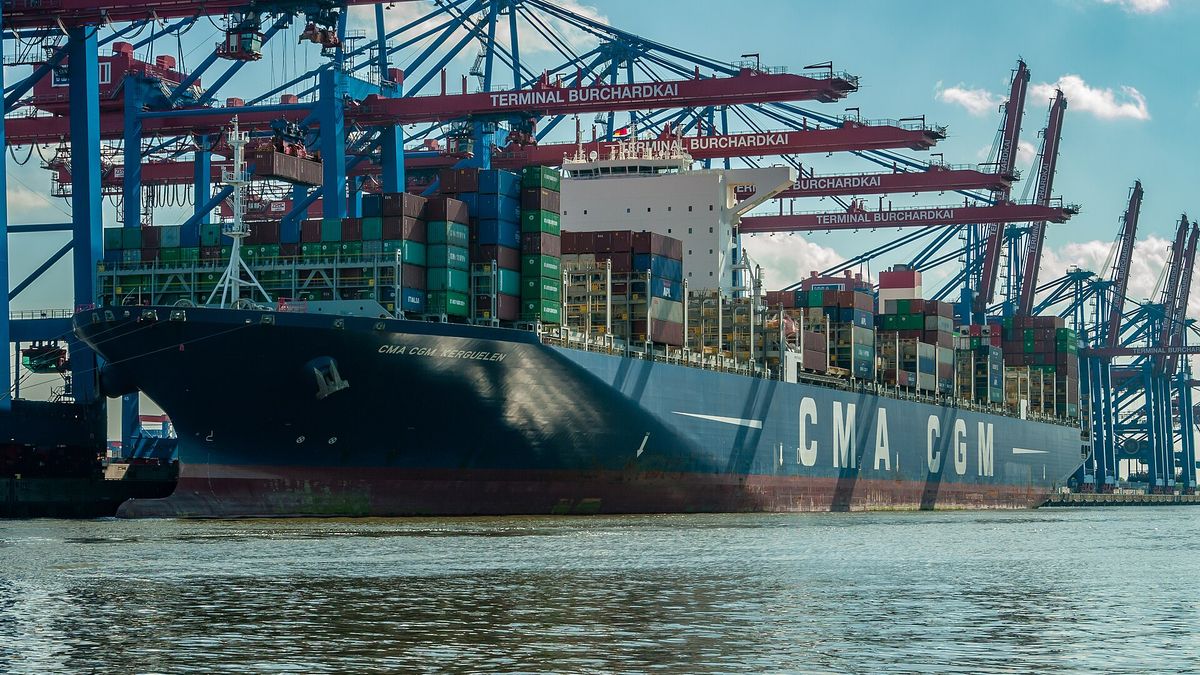
A.P. Moller-Maersk raised its 2026 profit forecast for the third time this year last Thursday, lifting expected underlying EBIT to $8 billion to $8.5 billion from $4.5 billion to $6.5 billion. Investors sold anyway. The Copenhagen-listed shares fell as much as 11.6% in morning trading, their steepest drop since April 2025, according to Bloomberg, after third-quarter profit came in below estimates.
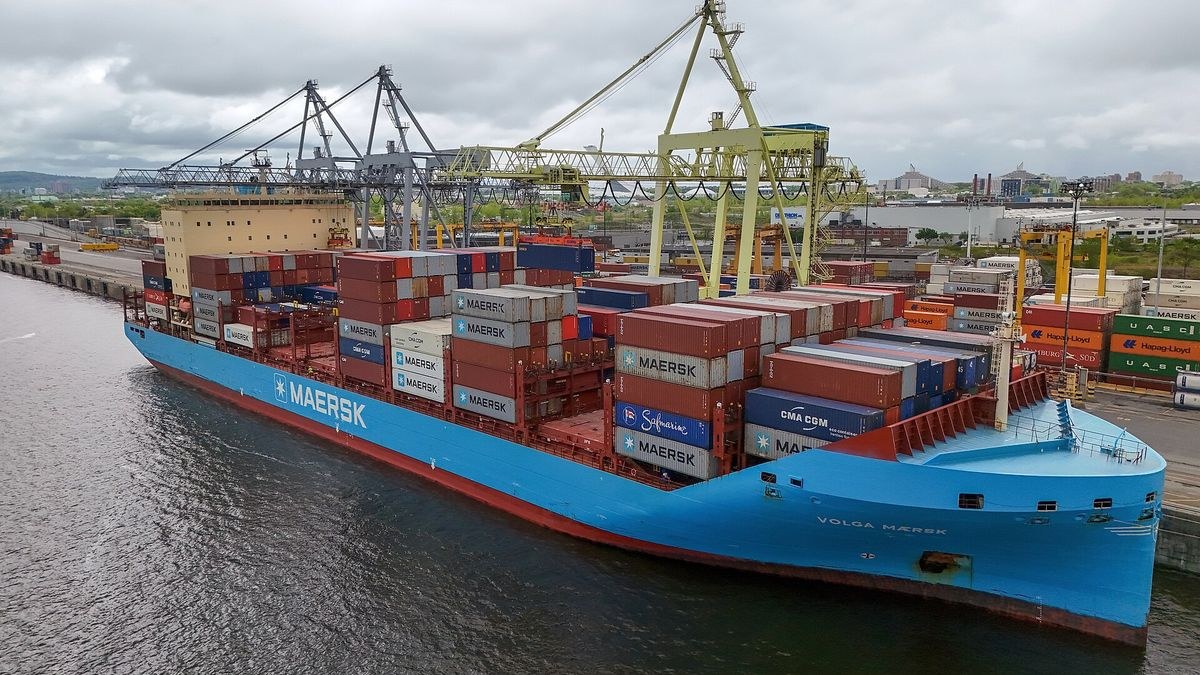
The Danish group is one of the largest carriers on the Asia-Europe and trans-Pacific lanes, so its numbers are a direct read on what exporters in China, Southeast Asia and India pay to move goods. The quarter showed those costs climbing fast. Spot rates on the Shanghai Containerized Freight Index rose 46% from the second quarter, according to FreshPlaza's account of the report, and Reuters reported that the company's rates more than doubled from a year earlier. Its ocean volumes, by contrast, were largely flat.
Maersk's third-quarter profit misses forecasts
Group revenue rose 27% to $18.1 billion in the July to September quarter, FreshPlaza reported. EBITDA climbed to $4.7 billion from $2.7 billion a year earlier, and EBIT rose to $3.3 billion from $1.3 billion, for a margin of 18.1%. Free cash flow was $2.4 billion, Maersk's investor site shows.
The headline growth still fell short. An LSEG poll had put third-quarter EBITDA at $5.04 billion, Reuters said, and Bloomberg's survey had EBIT at $3.61 billion. Mikkel Emil Jensen, an analyst at Sydbank, told Bloomberg that ocean volumes grew less than expected and costs ran higher, citing lower activity in the Middle East and bad weather.
The ocean unit did most of the work. Its EBIT reached $2.6 billion, against $567 million a year earlier, with vessel utilization at 96%. Logistics and Services revenue rose 13% and its EBIT margin edged up to 5.8% from 5.5%. In Terminals, volumes rose 2.6%, led by Africa and Europe, while utilization slipped to 85% from 90%.
The new full-year range also put underlying EBITDA at $14 billion to $14.5 billion, up from $10.5 billion to $12.5 billion. That was broadly in line with LSEG's consensus of $14.02 billion, Reuters reported, but the EBIT range sat entirely below the $8.66 billion average estimate compiled by Bloomberg. Jensen said the guidance implies slightly lower earnings in the fourth quarter than in the third. Maersk kept its $1 billion share buyback running and still expects global container volumes to grow about 4% this year.
Chief Executive Vincent Clerc pushed back on the market reaction, telling reporters that "some analysts need to look into the spreadsheets," according to Bloomberg. Even after the drop, the stock was still up about 36% for the year.
Congestion and Hormuz drive rates, not demand
The upgrade is a price story. Port congestion has tied up ships, and average global port waiting times reached 16.6 hours in the quarter, the highest since January 2023, according to figures reported by FreshPlaza. The continued closure of the Strait of Hormuz raised bunker fuel, handling and operating costs and hurt schedule reliability, FreshPlaza reported. Typhoons added to congestion at Asian ports, and Asian exports slowed in July and August because of weather.
Demand has held up better than many feared. Clerc said global trade had "remained remarkably resilient," and Reuters noted that spending on semiconductors and AI data centers has supported global trade this year, a trend that has kept Asian chip and server exporters busy. Maersk said U.S. economic activity stayed strong, while import growth weakened in Europe and the Middle East. Growth in China was held back by soft domestic demand, it said.
Haider Anjum, an analyst at Jyske Bank, told Bloomberg that disruption around Hormuz, typhoons and congestion are lifting earnings and questioned how long those tailwinds will last. Some analysts expect the effect to fade as more ships return to the Suez Canal and new vessels are delivered, Reuters reported. Maersk is continuing a gradual return to the canal, and said its ME1 service between India and Europe will resume Suez transits.
For Asian shippers, that is the trade-off to watch: a shorter route through Suez would add effective capacity and push rates down, just as energy costs tied to the Gulf remain high. Capital Times has reported on how the same Gulf disruption lifted TotalEnergies' LNG profit and Asian gas prices.
Asia investments continue
Maersk is still adding capacity in South Asia. APM Terminals has started building the Laldia terminal in Chattogram, Bangladesh, which will add 900,000 TEU of annual capacity, and Maersk has ordered 26 dual-fuel container ships of 18,600 TEU each for delivery in 2029 and 2030, according to FreshPlaza's summary of the report.
Maersk's guidance assumes free cash flow of about $3 billion for 2026. The fourth quarter will show whether rates hold as Suez traffic picks up.
Sources
- A.P. Moller-Maersk: Interim Report Q3 2026 (Nov. 5, 2026)
- Reuters via Baird Maritime: Maersk shares fall despite third profit guidance raise in 2026 (Nov. 5, 2026)
- Bloomberg via gCaptain: Maersk slides as upgraded guidance is lower than anticipated (Nov. 5, 2026)
- FreshPlaza: Maersk raises 2026 earnings forecast as freight rates increase 46% (Nov. 5, 2026)
Our standards: Capital Times reports under the principles set out in our Editorial Standards and Ethics Policy. Spotted an error? Report it to our editors.