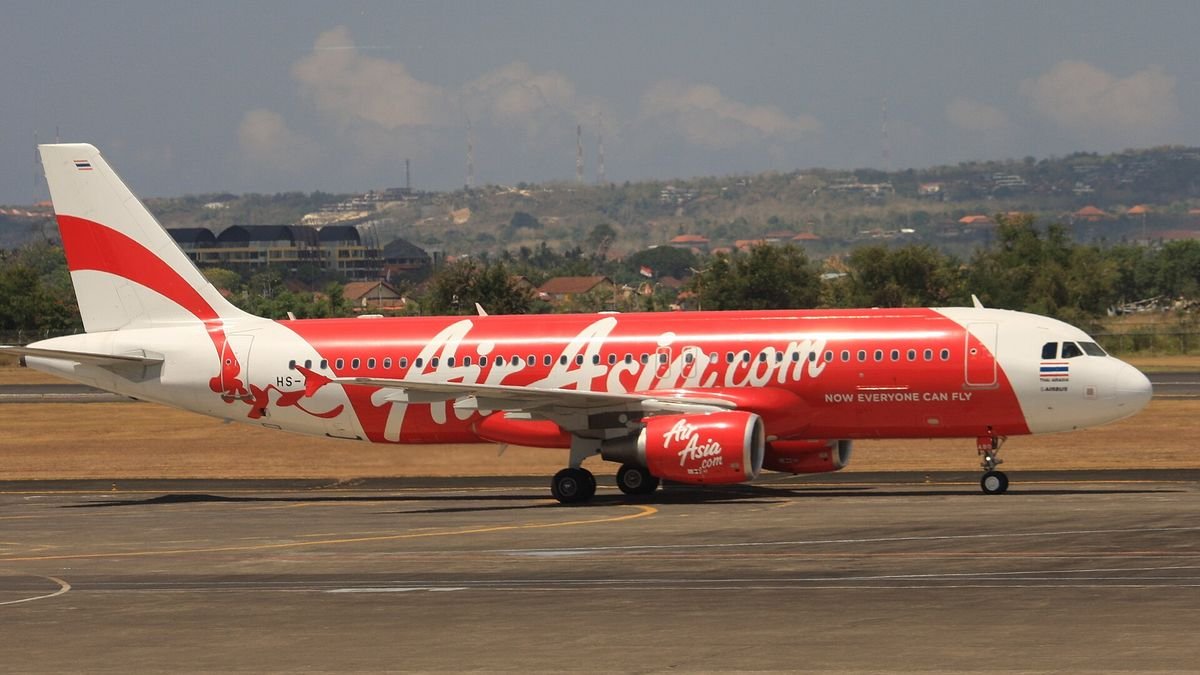
Thai AirAsia Parent AAV Posts 2.37 Billion Baht Loss as Jet Fuel Jumps 61%
Asia Aviation cut seats by a quarter and raised fares, but fuel at $137.5 a barrel and a weaker baht pushed its third-quarter loss to nearly three times last year's.
What to know
- Asia Aviation reported a third-quarter 2026 net loss of 2,367.9 million baht, up 171% from 874.7 million baht a year earlier.
- Average jet fuel prices rose 61% from a year earlier to $137.5 a barrel, and fuel took 42% of sales revenue.
- Thai AirAsia plans to grow its operating fleet from 42 to 54 aircraft by December and lift domestic capacity by more than 40% quarter on quarter.
BANGKOK
Asia Aviation, the Bangkok-listed parent of Thai AirAsia, reported a third-quarter net loss of 2,367.9 million baht on Wednesday, according to figures carried by Kaohoon International, nearly three times the 874.7 million baht it lost a year earlier, as average jet fuel prices rose 61% to $137.5 a barrel and revenue fell 17% to 8,224.8 million baht.
The result matters beyond one airline. Thai AirAsia held 37% of Thailand's domestic air market in the second quarter, The Nation reported, and its numbers show how expensive fuel and a softer tourism season are squeezing Thailand's travel economy, one of the few engines the government has relied on while exports and consumption struggle. Foreign arrivals have fallen in 2026, and the airline's results suggest carriers are protecting margins by flying less rather than chasing volume.
Thai AirAsia shrinks capacity, raises fares
The airline cut seat capacity by 26% from a year earlier to 4.41 million seats and reduced available seat kilometers by 33%, according to figures reported by Kaohoon International. That was a deeper cut than the roughly 20% reduction management had signaled in August, when it said the trims would fall mainly on international routes to India, China and Hong Kong and on fifth-freedom services.
Passengers carried fell 29% to 3.36 million, and the load factor slipped four percentage points to 76%. Domestic traffic dropped 25% to 2.38 million passengers after the airline temporarily suspended operations at Suvarnabhumi Airport in August and September and consolidated its Bangkok flights at Don Mueang. International passengers fell 37% to 0.99 million.
Pricing did much of the work. The average domestic fare rose 28% to 1,590 baht and the average international fare rose 26% to 3,066 baht, lifting the overall average fare 24% to 2,023 baht. Revenue per available seat kilometer climbed 29% to 1.96 baht.
It was not enough. Fuel expense came to 3,380.9 million baht, or 42% of sales revenue, even though fuel consumption fell 33%. Unit costs rose faster than unit revenue: cost per available seat kilometer jumped 40% to 2.50 baht, and 36% to 1.68 baht excluding fuel, as fewer flights spread fixed costs thinly and aircraft redelivery costs rose. EBITDA was negative 409.8 million baht, compared with a positive 361 million baht in the third quarter of 2025, according to the company's release for that period.
In August the company said it had hedged only 13% of its expected third-quarter fuel needs, at $89 a barrel, The Nation reported, leaving most of its consumption exposed to market prices.
Weaker baht and thinner cash cushion
Currency moves added to the damage. Asia Aviation booked an unrealized foreign exchange loss of 140.6 million baht because of the baht's depreciation, and its core net loss was 2,255.4 million baht. The basic loss per share was 0.1843 baht, against 0.0681 baht a year earlier.
The balance sheet is the bigger concern for shareholders and bondholders. Cash and cash equivalents fell to 1,442.6 million baht at the end of September, down 61% from the end of 2025. Interest-bearing debt excluding lease liabilities rose 29% to 15,633.2 million baht after new debenture issues, and the net interest-bearing debt-to-equity ratio rose to 1.5 times from 0.6 times. The company had reported a ratio of 1.1 times at the end of June, after raising 3.815 billion baht from a bond sale that month and saying it was considering sale-and-leaseback deals.
The third-quarter loss follows a second-quarter net loss of 2.326 billion baht, when average fuel prices more than doubled from a year earlier to $182.5 a barrel. The two quarters together leave the airline deep in the red for the year so far, after it posted a first-half net loss of 1.485 billion baht.
The broader market was in a better mood. The SET Index rose 1.58% to 1,496.31 on Tuesday, according to Kaohoon International.
Fleet to grow to 54 aircraft for high season
Management expects a strong fourth-quarter recovery as the high travel season starts. Thai AirAsia plans to restore suspended routes from Bangkok to major domestic destinations, increase its operating fleet from 42 to 54 aircraft by December and expand domestic capacity by more than 40% from the third quarter, aiming to win back a 40% share of the domestic market.
That plan is more ambitious than the 52 aircraft the company had pointed to in August, when Chief Executive Phairat Pornpathananangoon said the airline was prioritizing liquidity and profitable routes. Whether the recovery comes will depend heavily on fuel: the fourth-quarter results, due early next year, will show how much of the rebuilt capacity the airline could fill at fares high enough to cover it.
Sources
- Kaohoon International: AAV Records THB2.3 Billion Net Loss on High Fuel Costs During Low Season (Nov. 11, 2026)
- The Nation: AAV posts 2.33bn-baht Q2 loss, cuts Q3 capacity 20% (Aug. 15, 2026)
- e-Global Travel Media: Thai AirAsia Defies Fuel Shock as AAV Q2 Revenue Rises (Aug. 18, 2026)
- Asia Aviation PCL: AAV announces financial results for the third quarter of 2025 (Nov. 13, 2025)
- Kaohoon International: Market Roundup 10 November 2026 (Nov. 10, 2026)
Our standards: Capital Times reports under the principles set out in our Editorial Standards and Ethics Policy. Spotted an error? Report it to our editors.