Japan Orders Chubu Electric to Fix Governance as Hamaoka Scandal Drives ¥215 Billion Loss Forecast
The industry ministry wants an improvement plan by the end of November, a week after the utility flagged a record annual loss and wrote off its stalled nuclear restart.
What to know
- Japan's industry ministry issued a business improvement order to Chubu Electric Power on Nov. 6 over manipulated seismic data at the Hamaoka nuclear plant.
- Chubu must submit an improvement plan by the end of November; it is the fourth major utility to receive such an order under the electricity business law.
- Chubu said on Oct. 29 it expects about ¥380 billion of extraordinary losses and now forecasts a ¥215 billion net loss for the year to March 2027.
TOKYO
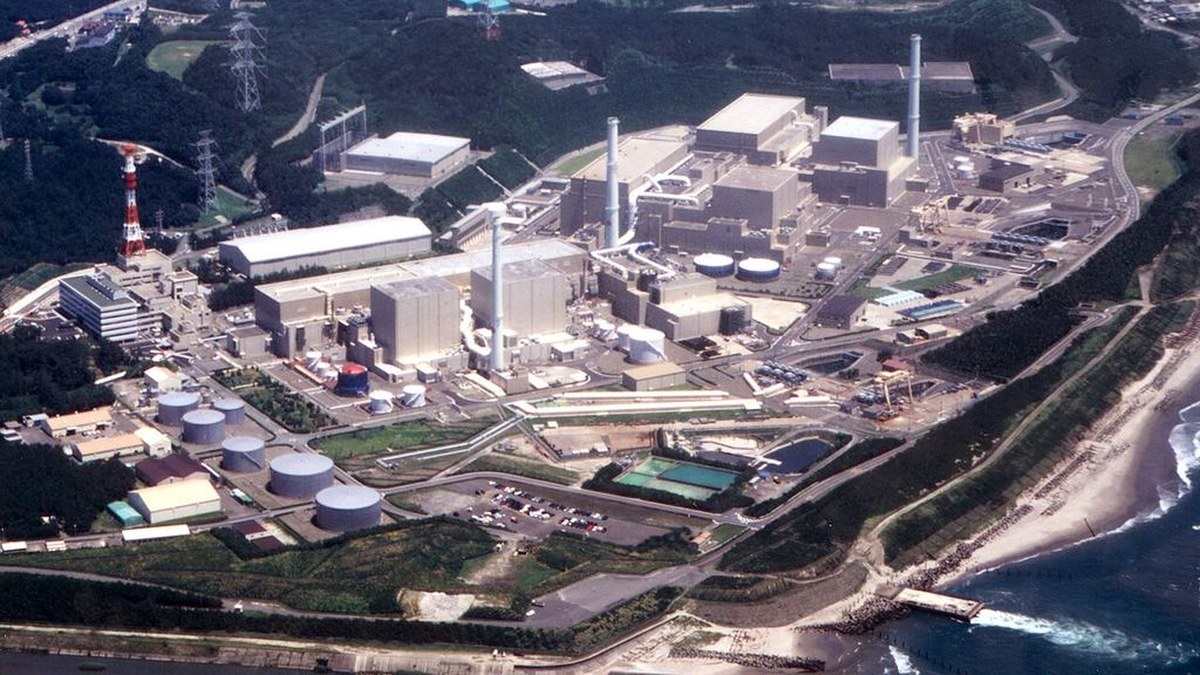
Japan's industry ministry ordered Chubu Electric Power to overhaul how it is run, issuing a formal business improvement order on Nov. 6 over manipulated earthquake data used in safety screenings for its Hamaoka nuclear plant. The utility must submit an improvement plan by the end of November, Jiji Press reported.
The order lands a week after Chubu, Japan's third-largest power company, warned of about ¥380 billion in extraordinary losses for the fiscal year ending March 2027. That swung its net profit forecast from ¥160 billion to a loss of ¥215 billion, according to a summary of the company's Oct. 29 statement by the energy newsletter Japan NRG, which said the loss could be the largest in Chubu's history. For investors in Asian utilities and gas, the case matters for two reasons: it removes two reactors from Japan's restart pipeline for years, and it keeps one of the country's biggest power producers buying imported liquefied natural gas.
What the ministry demanded from Chubu Electric
The Ministry of Economy, Trade and Industry also told Chubu to spell out the responsibilities of its executives and employees, Jiji reported. It is the fourth time a major electric utility has received such an order under the electricity business law.
Yoshifumi Murase, commissioner of the Agency for Natural Resources and Energy, summoned Chubu President Minoru Yasui to the ministry and pressed the company to pursue fundamental reform and do everything possible to rebuild public trust. Yasui told reporters afterward, "We deeply regret (the scandal)," according to Jiji.
Yasui took the top job on Oct. 1. His predecessor as president and Chairman Satoru Katsuno stepped down at the end of September after an outside panel found the utility had for years supplied manipulated seismic data for Hamaoka's No. 3 and No. 4 reactors so the figures would meet requirements, the Associated Press reported. Neither departing executive was directly linked to the manipulation, but the panel said top management had made an early restart a key goal and harshly reprimanded the team handling the permit, which may have pushed staff into wrongdoing.
How the Hamaoka scandal grew
Chubu applied to restart the two reactors in 2014 and 2015. The Nuclear Regulation Authority suspended the screening after a whistleblower tip led to an internal probe, and in September the company withdrew both applications. It has said it plans to reapply only after preventive measures and a restructuring.
The problems did not stop at the seismic data. In early September, Chubu admitted that employees had falsified 14 construction and expense reports tied to the decommissioning of Hamaoka's No. 1 and No. 2 units, Nuclear Engineering International reported. The utility received about ¥800 million in reimbursements it was not entitled to from a state-backed decommissioning fund. Chubu said safety was not affected because no used fuel remains in those units.
The fallout has spread to regulation for the whole industry. The NRA plans to require utilities to keep records from safety reviews and to revise the Reactor Regulation Act in the 2027 Diet session, Japan NRG said, citing Nikkei. The regulator is expected to decide on additional inspections by late December.
What it means for Japan's nuclear restarts and LNG demand
Hamaoka sits about 200 kilometers west of Tokyo, on a coast exposed to potential Nankai Trough earthquakes. With no restart date in sight, the region served by Chubu has to rely on other sources of power, and the AP noted that Japan's push for restarts has been driven by rising energy costs.
The setback adds to a broader slowdown. Energy Intelligence reported on Nov. 6 that Japan's nuclear revival is falling well short of expectations and that its 2030 generation target is increasingly out of reach, as scandals, regulatory hurdles, construction setbacks and local opposition push many restarts years into the future. According to the NRA figures cited by the AP in September, 11 reactors were operating and 20 were offline. Commercial operation of the Ohi No. 3 reactor has also been delayed to Feb. 16, 2027, from Jan. 22, to fix a generator problem, Japan NRG reported.
That keeps Japan a heavy buyer of LNG. Japan NRG, citing Reuters, said Japan could regain the title of the world's largest LNG importer in 2026, with forecasts of 62 million to 63 million tons against 61 million to 62 million tons for China. Japanese utilities have been locking in long-term supply: Kyushu Electric recently signed a 15-year deal for LNG Canada cargoes. For background on how reactor restarts feed into gas demand, see Capital Times' explainer on Japan's nuclear restarts.
Households are already paying more. Tokyo Electric Power's standard household bill for November rose ¥177 to a record ¥9,738, Japan NRG said, citing Nikkei.
The next test for Chubu is the improvement plan due to the ministry by Nov. 30. The NRA's decision on extra inspections follows by late December.
Sources
- Jiji Press via Nippon.com: Chubu Electric Gets Biz Improvement Order over Data Scandal (Nov. 6, 2026)
- Japan NRG: Japan NRG Weekly, November 2, 2026 (Nov. 2, 2026)
- Associated Press via Spectrum News: Japanese utility execs resign over falsified quake safety data for 2 nuclear reactors (Sept. 14, 2026)
- Nuclear Engineering International: Hamaoka restart withdrawn (Sept. 22, 2026)
- Nuclear Engineering International: Chubu hit by fresh Hamaoka scandal (Sept. 1, 2026)
- Energy Intelligence: Japanese Nuclear Operators Continue to Struggle in Restart Push (Nov. 6, 2026)
Our standards: Capital Times reports under the principles set out in our Editorial Standards and Ethics Policy. Spotted an error? Report it to our editors.