China Adds 830,000 Ounces of Gold in October, Its Biggest Purchase in Three Years
The central bank stepped up buying as bullion prices fell, while foreign-exchange reserves edged up to $3.405 trillion.
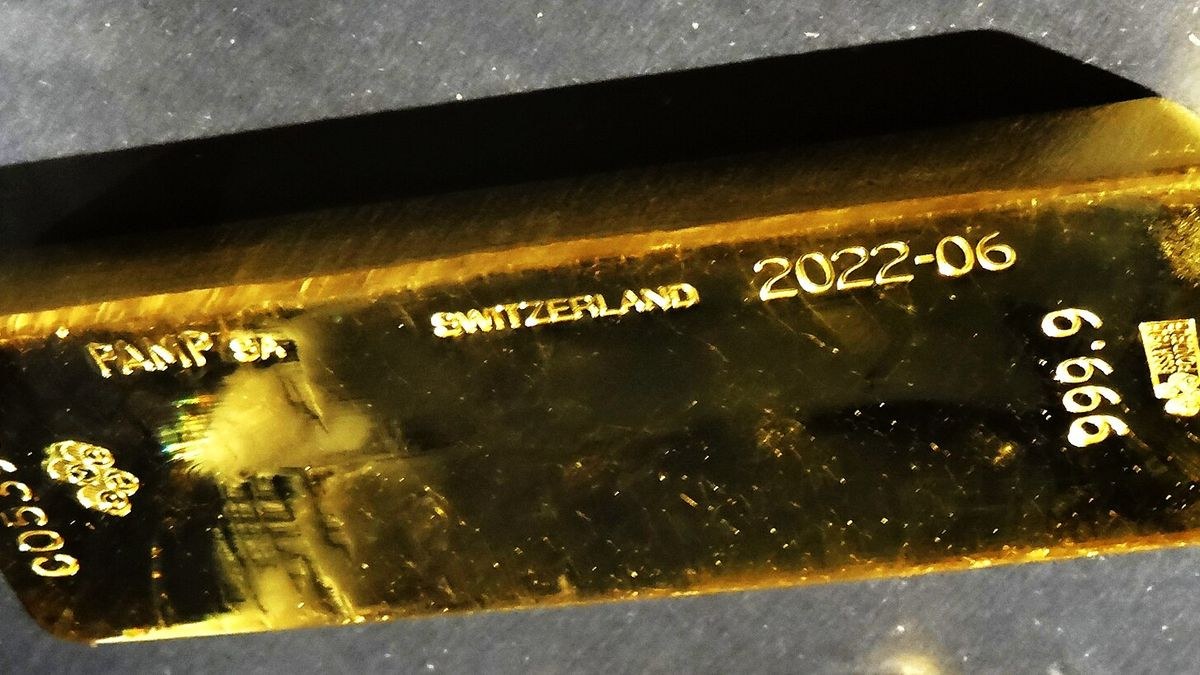
What to know
- China's official gold holdings rose by 830,000 ounces in October to 78.3 million ounces, the biggest monthly increase since September 2023.
- The dollar value of the gold fell 5.3% to about $306.4 billion as international prices dropped during the month.
- Foreign-exchange reserves rose $4.9 billion, or 0.14%, to $3.4052 trillion at the end of October, SAFE said.
BEIJING
China's central bank added 830,000 troy ounces of gold to its reserves in October, lifting its official holdings to 78.3 million ounces, according to data from the State Administration of Foreign Exchange (SAFE). It was the largest monthly addition since September 2023, China Daily reported, citing market tracker Wind Info.
The purchase matters for investors in Asia because the People's Bank of China is buying more as prices fall, not less. The dollar value of its gold stock dropped in October even as the number of ounces rose, a sign that the bank treats price dips as a chance to add rather than a reason to wait. For a bullion market that has lost ground this autumn, that is a steady source of demand from the world's largest official buyer in the region.
China's gold buying speeds up for an eighth month
The October addition, roughly 25.8 tonnes by Capital Times' calculation, was larger than the 740,000 ounces bought in September and the 650,000 ounces in August. China Daily said it was the eighth straight month in which the pace of buying picked up and the 24th consecutive month of purchases.
SAFE's monthly table shows how the pace has built through the year. Holdings stood at 74.19 million ounces at the end of January and rose by only 30,000 ounces in February. Monthly additions then climbed steadily, from 160,000 ounces in March to 260,000 in April and 320,000 in May, before reaching 480,000 in June. Since the end of January the bank has added about 4.1 million ounces, or close to 128 tonnes.
The bank bought a total of 63 tonnes in the third quarter, leading official buyers in Asia. October alone came to about 40% of that quarterly total.
Gold reserves lose value as prices fall
Prices moved against the bank. SAFE valued China's gold at $306.41 billion at the end of October, down 5.3% from $323.52 billion a month earlier. Dividing the value by the ounces gives an implied price of about $3,913 an ounce at the end of October, compared with about $4,176 at the end of September, by Capital Times' calculation.
The gold stock is well below its peak value for the year of $387.59 billion at the end of February, when holdings were smaller but prices were higher.
Wang Qing, chief macroeconomic analyst at Orient Golden Credit Rating International, told China Daily that gold's share of China's official reserves fell by about half a percentage point in October because of lower prices. He noted that gold accounted for 27% of central bank reserve assets worldwide at the end of 2025, and said China's much lower share leaves room to keep buying.
By SAFE's figures, gold made up about 8.1% of China's total official reserve assets of $3.7776 trillion at the end of October, by Capital Times' calculation. Total reserve assets fell by about $11.9 billion from September, as the drop in gold's value outweighed a small gain in foreign currency holdings.
Foreign-exchange reserves edge up to $3.405 trillion
China's foreign-exchange reserves rose by $4.9 billion, or 0.14%, to $3.4052 trillion at the end of October, SAFE said. The regulator attributed the increase to currency translation and changes in asset prices. It said the dollar index rose during the month while major global asset prices were mixed.
The small gain followed a $38.1 billion drop in September, when reserves fell 1.11% to $3.4003 trillion as the dollar strengthened and global asset prices fell broadly, according to SAFE. October's total was still below this year's high of $3.4422 trillion at the end of May, SAFE's table shows.
SAFE repeated its usual line that the economy is broadly stable and that its development gives support to the stability of reserves. It gave no breakdown of the currency or asset mix of the portfolio, which it does not publish monthly.
The reserve figures come as Beijing leans against a fast-rising yuan. On Nov. 3 the PBOC raised the reserve ratio on banks' foreign-currency deposits to 6% from 4%, effective Nov. 15, a step that drains dollars from the onshore market. A stronger yuan reduces pressure on the central bank to draw on its reserves, and the official figure has stayed in a narrow range around $3.4 trillion through 2026.
The next official snapshot of China's reserves and gold holdings is due in early December, with November figures. Bullion traders will watch whether the PBOC keeps raising its monthly purchases if prices stay below $4,000 an ounce.
Sources
- State Administration of Foreign Exchange: 国家外汇管理局公布2026年10月末外汇储备规模数据 (SAFE publishes end-October 2026 foreign exchange reserves data) (Nov. 7, 2026)
- State Administration of Foreign Exchange: Official Reserve Assets (2026) (Nov. 7, 2026)
- State Administration of Foreign Exchange: 国家外汇管理局公布2026年9月末外汇储备规模数据 (SAFE publishes end-September 2026 foreign exchange reserves data) (Oct. 7, 2026)
- China Daily Hong Kong: China ramps up gold purchases, posting the biggest increase in 3 years (Nov. 8, 2026)
Our standards: Capital Times reports under the principles set out in our Editorial Standards and Ethics Policy. Spotted an error? Report it to our editors.