Germany's Imports From China Jump 11% to 16.8 Billion Euros as Export Growth Stalls
Europe's largest economy grew 0.2% in the third quarter, but its trade gap with China widened and an energy shock lifted import prices at the fastest pace since 2022.
What to know
- Germany imported 16.8 billion euros of goods from China in August, up 11.0% from July, while exports to China were 5.9 billion euros, according to Destatis.
- German GDP grew 0.2% in the third quarter from the second as the strong export trend of the first half slowed noticeably, the statistics office said.
- Import prices rose 10.4% in September from a year earlier, the most since November 2022, with energy up 61.8% and electronic components up 17.8%.
WIESBADEN
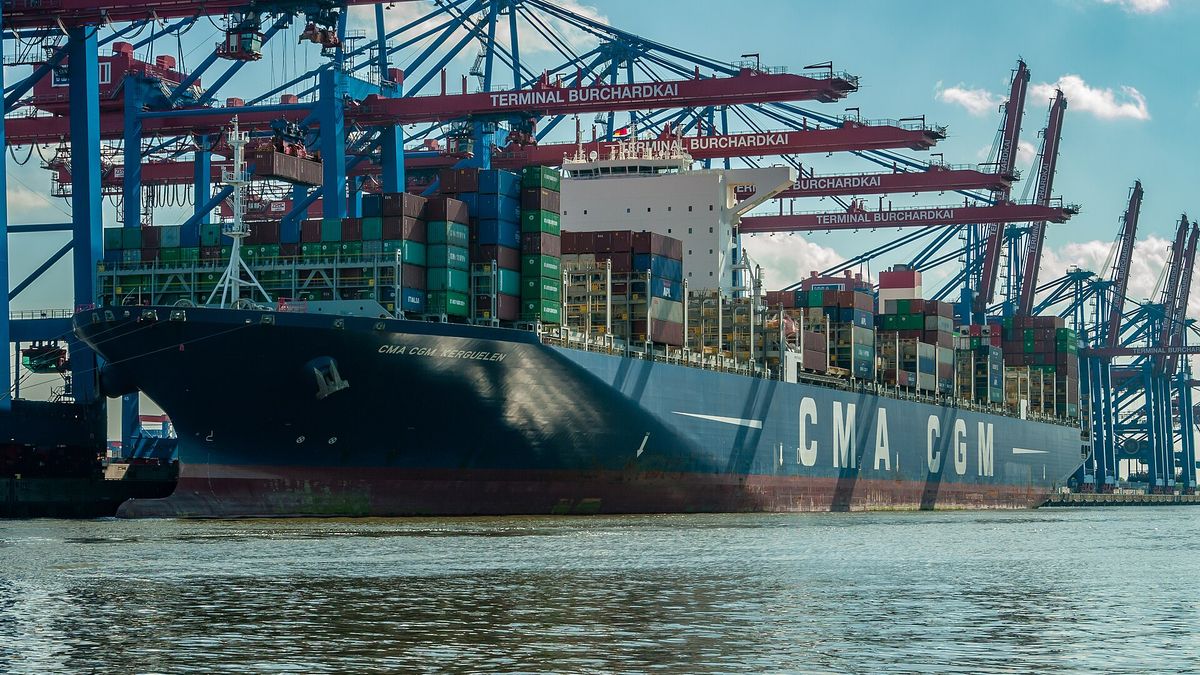
Germany bought 16.8 billion euros of goods from China in August, an 11.0% jump from July, while its exports to China came to just 5.9 billion euros, according to seasonally adjusted data from the Federal Statistical Office, Destatis. China was Germany's largest source of imports that month, and the monthly gap between the two flows reached nearly 11 billion euros.
For exporters in Asia, the figures cut two ways. Chinese manufacturers are still finding buyers in Europe's largest economy even as German industry struggles to sell into China. But Germany's broader export engine is losing speed, and the country is paying far more for the energy and components it imports, which squeezes the margins of the factories that buy from Asian suppliers.
Destatis said on Oct. 30 that gross domestic product rose 0.2% in the third quarter from the second, after price, seasonal and calendar adjustment. That followed growth of 0.4% in the first quarter and 0.3% in the second. From a year earlier, output was up 1.3% before calendar adjustment. The office said the "very dynamic trend" in exports during the first half had slowed noticeably in the third quarter, and that capital formation declined on provisional figures. Household and government consumption rose slightly.
Germany's 0.2% was weaker than the euro zone as a whole, which grew 0.4% in the third quarter according to Eurostat's flash estimate.
Germany's trade with China and the U.S.
The August trade release shows where the slowdown began. Total exports fell 0.8% from July to 137.6 billion euros, while imports rose 0.9% to 118.1 billion euros, narrowing the monthly surplus to 19.5 billion euros from 21.6 billion euros. Shipments to countries outside the European Union dropped 1.1%, and imports from those countries rose 2.2%.
The U.S. remained Germany's biggest customer at 13.5 billion euros, but that was 6.3% less than in July, though still 22.6% above August 2025. Exports to the U.K. jumped 16.7% to 7.9 billion euros. Sales to China rose 4.7% on the month, a modest gain from a low base: at 5.9 billion euros, China bought less than half of what the U.S. did.
Imports from the U.S. slipped 0.5% to 8.1 billion euros, so Germany bought about twice as much from China as from the U.S. in August, and 124.1 billion euros versus 67.0 billion euros over the first eight months of the year. That imbalance is the backdrop for German companies weighing how much to produce in China for the Chinese market rather than ship from home.
Import prices hit a four-year high
The bigger strain for German industry is cost. Import prices in September were 10.4% higher than a year earlier, Destatis said, the steepest rise since November 2022, after 8.3% in August and 6.8% in July. The statistics office tied the jump to the war involving Iran and its effect on energy markets.
Imported energy cost 61.8% more than a year earlier. Electricity was up 96.2%, crude oil 59.3% and natural gas 53.9%. Jet fuel and diesel roughly doubled in price. Excluding energy, import prices still rose 5.5%.
Industrial inputs also rose sharply. Imported electronic components were 17.8% more expensive than a year earlier, and plastics in primary forms 17.4%. Copper and semi-finished copper products climbed 37.9%. Export prices rose 5.3%, the fastest since February 2023, which suggests German producers are passing on only part of their higher input costs.
Energy-heavy industries are already cutting back. Production in energy-intensive branches fell 2.9% in the three months to August compared with the prior three months, according to Destatis, even as overall industrial output rose 2.0% in August on a rebound in construction and machinery. Car production fell 5.4% that month, which the German automotive industry association VDA partly attributed to factory holidays.
Orders swing on big-ticket contracts
Factory orders were volatile. New orders fell 10.6% in August from July, almost entirely because orders for ships, trains, aircraft and military vehicles dropped 61.5% after more than doubling in July. Excluding large-scale orders, demand was down only 0.1%. Foreign orders fell 5.4%, with orders from inside and outside the euro area declining by about the same amount.
Business surveys point to some resilience. The HCOB flash manufacturing purchasing managers' index for October came in at 54.2, above the 53.5 economists expected, according to investingLive, which reported the S&P Global figures. Phil Smith, an associate director at S&P Global Market Intelligence, said goods producers were helped by export growth and higher defense and infrastructure spending, but he called the recovery fragile and pointed to a renewed surge in cost pressures.
Investors will get a clearer read this week. Destatis publishes September factory orders on Nov. 5 and September industrial production on Nov. 6, according to its release calendar. Detailed third-quarter GDP figures, including the breakdown of exports, follow on Nov. 25.
Sources
- Federal Statistical Office (Destatis): Gross domestic product in the 3rd quarter of 2026 up 0.2% on the previous quarter (Oct. 30, 2026)
- Federal Statistical Office (Destatis): Exports in August 2026: -0.8% on July 2026 (Oct. 8, 2026)
- Federal Statistical Office (Destatis): Import prices in September 2026: +10.4% on September 2025 (Oct. 30, 2026)
- Federal Statistical Office (Destatis): New orders in manufacturing in August 2026: -10.6% on the previous month (Oct. 6, 2026)
- Federal Statistical Office (Destatis): Production in August 2026: +2.0% on the previous month (Oct. 7, 2026)
- investingLive: Germany October flash manufacturing PMI 54.2 vs 53.5 expected (Oct. 23, 2026)
- Federal Statistical Office (Destatis): Short-term release calendar (Oct. 30, 2026)
Our standards: Capital Times reports under the principles set out in our Editorial Standards and Ethics Policy. Spotted an error? Report it to our editors.