Blackbird, Hostplus Back Remedy Robotics' $62 Million Round After Q-CTRL's $290 Million
The stroke-surgery robot maker cofounded by a Perth-born doctor drew Australian venture and pension money a week after Sydney's Q-CTRL became the country's first quantum unicorn.
What to know
- Remedy Robotics raised $62 million in a Series B led by DCVC, with Hostplus joining as a new investor and Blackbird returning.
- The money will fund a planned pivotal trial across the University of California network and work toward FDA approval for the N1 stroke robot.
- Sydney's Q-CTRL raised $290 million in a Series C led by Salesforce Ventures that values it at more than $1 billion.
SYDNEY
Remedy Robotics, a San Francisco developer of robots for stroke and heart procedures cofounded by an Australian doctor, has raised $62 million in a Series B round that drew in Australian venture fund Blackbird and pension fund Hostplus, the company said on Monday, Nov. 16.
The round is the second large cheque in a week with Australian venture money behind it. On Nov. 12, Sydney quantum software company Q-CTRL said it had raised $290 million in a Series C, a deal Startup Daily described as making it the country's first quantum unicorn. Both are hardware-heavy businesses with long paths to approval or revenue, and both count Australian venture firms that raised record funds this year among their backers.
Remedy Robotics: a DCVC-led round with Australian backers
U.S. venture firm DCVC led the Remedy round, according to the company's announcement. New investors were UC Investments, the University of California's investment office, plus Skip Capital and Hostplus, which the company called one of Australia's largest pension funds. Existing backers Blackbird, Tony Fadell's Build Collective, Divergent Capital and KdT Ventures also put in more money.
Startup Daily, which put the round at A$92 million, reported that Remedy had previously raised $35 million across its seed and Series A rounds. The company did not disclose a valuation.
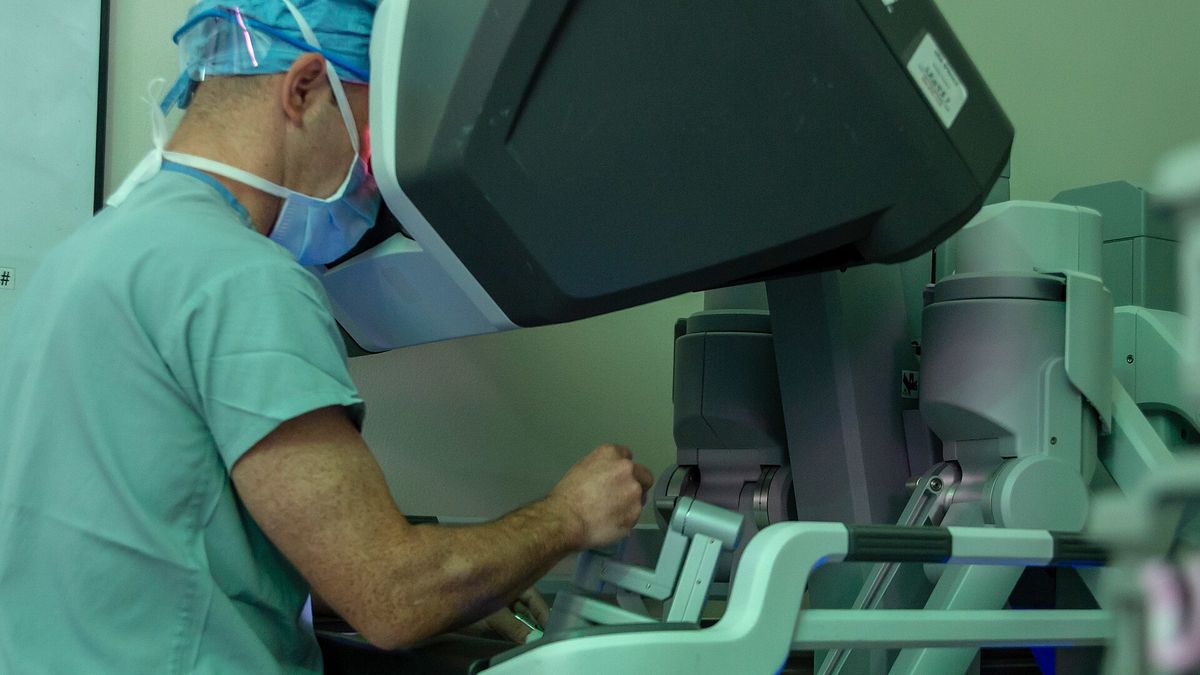
Chief Executive David Bell, a Perth-born doctor according to Startup Daily, founded Remedy with Chief Technology Officer Jake Sganga after the two met at Stanford. Their product, the N1 System, lets a specialist at a console steer a catheter through a patient's blood vessels, with software that analyzes scans before surgery, simulates the procedure and matches a 3D model of the vessels to live X-ray images. The aim is to let a neurointerventionist in a big city clear a clot in a patient lying in a regional hospital hundreds of kilometers away.
The new money will pay for a planned pivotal clinical trial across the University of California network and work toward U.S. Food and Drug Administration approval for neurovascular procedures, the company said. Remedy also plans to place prototype N1 robots with clinical partners, including the Australian Stroke Alliance. The system is still in development and is not approved for sale or clinical use anywhere, the company stated.
Bell said in the release that access to specialist intervention for stroke "remains limited to a small number of hospitals." Michael Tolo, a partner at Blackbird, said Remedy had the potential to create an entirely new category. In October 2025, the company said it had completed the world's first remote neurointerventional procedures using the N1.
Q-CTRL becomes a unicorn on a $290 million Series C
Q-CTRL's round was larger and closer to home. Salesforce Ventures, which first backed the company in 2023, led the Series C, which The Quantum Insider described as oversubscribed; Startup Daily said the company expanded the round twice to meet demand. New investors included AMD Ventures, Affinity Partners, EDGE Group, MPower Partners, SPARX Asset Management and Australia's National Reconstruction Fund Corporation. Startup Daily reported that the government-backed fund contributed A$70 million.
Returning investors included Square Peg, Main Sequence, DCVC, In-Q-Tel, Lockheed Martin Ventures and Bullhound Capital. Startup Daily and SmartCompany both said the deal values Q-CTRL at more than $1 billion.
Founded in 2017 by University of Sydney physicist Michael Biercuk, Q-CTRL sells software that uses AI to suppress errors in quantum computers. It also makes Ironstone Opal, a navigation system that reads small variations in the Earth's magnetic field so aircraft can fix their position when GPS signals are jammed. The company plans to use the money to sell its software to finance and energy customers and to put its navigation technology into more aircraft and autonomous vehicles, according to Startup Daily. Per Roman, a founding partner at Bullhound Capital, said Q-CTRL was one of the few quantum companies "with real customers and real revenue."
The Q-CTRL deal dominated a week in which six Australian and New Zealand startups raised about A$525 million, by SmartCompany's count. Another round on that list was a $47.5 million Series A for Alta, a blockchain settlement company cofounded by Airwallex Chief Executive Jack Zhang, led by Index Ventures with Blackbird and Square Peg also investing, SmartCompany reported.
Bigger funds, bigger cheques
Blackbird and Square Peg, which invested in these rounds, both raised record pools this year. Blackbird closed a A$1.05 billion sixth fund in August, the largest venture raise in Australia and New Zealand, IT Brief Australia reported; Forbes Australia also reported the A$1.05 billion figure. Hostplus was among the returning backers of that fund, alongside the Future Fund, Aware Super and HESTA, according to IT Brief.
Square Peg has raised more than A$1 billion across two funds, Forbes Australia reported in October, citing two people familiar with the matter. Its earlier bets include Canva and Airwallex.
Superannuation money is a recurring thread. Hostplus appears both as a limited partner in Blackbird's fund and now as a direct investor in Remedy. Readers can compare this with how Australian super funds have performed after the latest rate rise, and with the third-quarter picture for startup funding across Asia.
For Remedy, the next test is clinical rather than financial: the start of its pivotal trial in the University of California network, the step that comes before any FDA filing for the N1.
Sources
- Remedy Robotics via PR Newswire: Remedy Robotics Raises $62 Million Series B to Bring Life-Saving Cardiovascular Intervention to Patients Everywhere (Nov. 16, 2026)
- Startup Daily: Expat's remote surgery medtech scores $92 million Series B for stroke care (Nov. 17, 2026)
- Startup Daily: Quantum of unicorn: Q-CTRL hits $1.4 billion valuation from $425m Series C (Nov. 13, 2026)
- The Quantum Insider: Q-CTRL Secures US$290 Million Series C Funding Led by Salesforce Ventures (Nov. 12, 2026)
- SmartCompany: Six ANZ startups that raised $525 million this week (Nov. 13, 2026)
- IT Brief Australia: Blackbird raises AUD $1.05 billion for record venture fund (Aug. 25, 2026)
- Forbes Australia: Square Peg raises over $1 billion for new funds amid AI bonanza (Oct. 8, 2026)
Our standards: Capital Times reports under the principles set out in our Editorial Standards and Ethics Policy. Spotted an error? Report it to our editors.