Yuan Overtakes Dollar in Hong Kong Bond Listings as HKEX Launches First Dim Sum Index
Offshore yuan debt made up more than a third of bonds listed in the city this year, and a new benchmark of about 305 dim sum bonds is meant to pull in index funds.
What to know
- Offshore yuan bonds made up 38% of the value of bonds listed in Hong Kong in the first three quarters, passing U.S. dollar bonds for the first time, Financial Secretary Paul Chan said.
- HKEX launched the HKEX Offshore RMB Bond Index with Bloomberg on Nov. 16, its first branded fixed-income index, tracking more than 300 dim sum bonds.
- Twelve asset managers, including CSOP and Value Partners, plan investment products based on the new indices, HKEX said.
HONG KONG
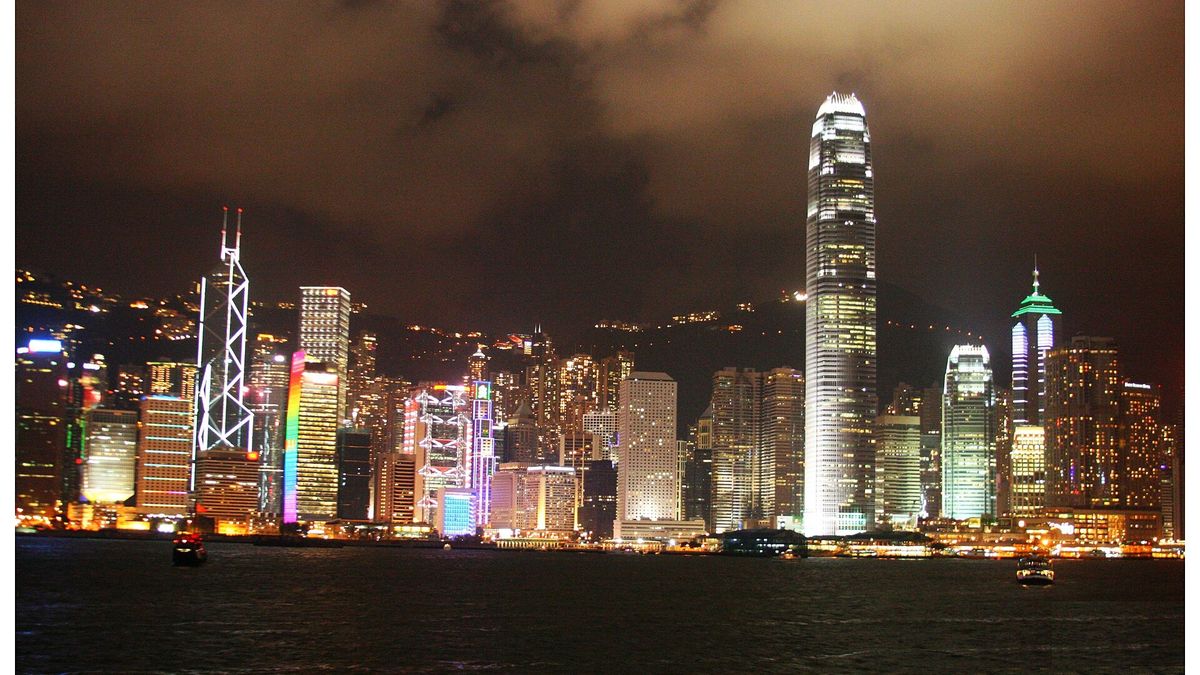
The yuan has passed the U.S. dollar as the biggest currency in Hong Kong's listed bond market, and on Monday the city's exchange operator launched its first benchmark for offshore yuan debt in a bid to turn heavy issuance into steady investor demand.
Offshore yuan bonds, known as dim sum bonds, made up 38% of the value of bonds listed in Hong Kong in the first three quarters of 2026, surpassing U.S. dollar bonds for the first time, Financial Secretary Paul Chan wrote in his weekly blog on Sunday, as reported by The Standard. Hong Kong Exchanges and Clearing then launched the HKEX Offshore RMB Bond Index on Nov. 16, developed with Bloomberg, the exchange said in a statement.
For Asian investors and borrowers, the shift matters because dollar bonds had led the city's listings until this year. Issuers are now choosing yuan for its low cost, and the exchange is betting that an index will bring in exchange-traded funds and index funds, which officials say should make the bonds easier to trade.
How big the yuan's lead is
The figures differ slightly depending on the data provider, but they point the same way. Data from Dagong Global Hong Kong cited by China Daily on Nov. 14 put yuan bonds at 37% of listed issuance by value in the first nine months, against 33% for the U.S. dollar, with 117 yuan deals making it the leader by count as well. Paul Chan's figure for the same period was 38%.
Offshore yuan bond issuance had passed 590 billion yuan this year as of Sept. 30, HKEX said in its statement. Total bond issuance on the exchange so far this year is already 18.6% above last year's full-year total, and Hong Kong has accounted for more than half of all exchange-listed offshore yuan bonds globally since 2024, according to the exchange.
The pull is cost. Gan Tian, chief executive of China Asset Management (Hong Kong), told China Daily that the yuan is among the world's cheapest funding currencies and said some global technology companies have paid more than 7% to borrow for 30 years in the U.S. market. He expects some of them to issue dim sum bonds within 12 months. China Daily also noted that the yuan has gained more than 4% against the dollar this year.
What the HKEX index covers
The index is HKEX's first branded fixed-income index. It includes offshore yuan Treasury, government-related and corporate bonds that are listed on the Stock Exchange of Hong Kong or lodged with the Central Moneymarkets Unit, the clearing system run by the Hong Kong Monetary Authority, and that meet the methodology's inclusion rules, according to the exchange. Bloomberg Index Services will act as administrator and calculation agent, and the two companies plan a co-branded family of offshore yuan bond indices.
Paul Chan said the benchmark tracks more than 300 yuan bonds listed in the city. The Standard reported that it initially covers about 305 bonds with total notional principal of 850 billion yuan.
Twelve asset managers are working with Bloomberg on products linked to the indices, according to the HKEX release. They include BOCI-Prudential Asset Management, China Asset Management (Hong Kong), CSOP Asset Management, E Fund Management (HK), Harvest Global Investments and Value Partners Group.
HKEX Chief Executive Bonnie Chan said in the statement that the index is about "supporting greater visibility and investability of offshore RMB assets." On Monday, Paul Chan urged fund houses to put the benchmark to use and argued that more index products would lift secondary trading, lower transaction costs and eventually cut funding costs for issuers, The Standard reported.
A wider push, and its limits
The index is the latest of several steps this year. HKEX listed offshore Chinese government bond futures in August and this month began accepting Chinese government bonds as non-cash collateral, while Southbound Bond Connect, the channel for mainland investors to buy offshore bonds, was expanded, Reuters reported via The Standard. Paul Chan said more than 98,000 contracts of the five-year Chinese government bond futures traded in their first three months, worth over 50 billion yuan in notional value, and that yuan loans outstanding in Hong Kong were close to 1.1 trillion yuan at the end of September, up more than 20% from a year earlier.
Paul Chan said in his blog that dim sum bonds have become a major funding channel for mainland technology firms, overseas governments and financial institutions. For a sense of how the exchange's own earnings have moved as trading slowed, see Capital Times' report on HKEX's third-quarter results.
Not everyone expects the funding advantage to last. Liu Yang, an associate professor of finance at the University of Hong Kong, told China Daily that the interest-rate gap may narrow and that the market needs better secondary liquidity, risk-management tools and larger, more frequent offshore yuan government bond sales across more maturities to build a benchmark yield curve. Capital Times has tracked the wider growth in yuan bond sales by foreign borrowers this year.
Gan's own targets show how far the market would have to grow. He told China Daily he expects offshore yuan liquidity to rise from about 1 trillion yuan to at least 5 trillion yuan by the end of 2030, and the dim sum bond market from 2.6 trillion yuan to at least 10 trillion yuan. The first test of the new index will be whether the dozen fund managers that signed up bring products to market, and how quickly.
Sources
- Hong Kong Exchanges and Clearing: HKEX Launches Offshore RMB Bond Index (Nov. 16, 2026)
- The Standard (Reuters): Hong Kong debuts offshore yuan bond index to promote yuan assets (Nov. 16, 2026)
- The Standard: HK finance, trade sectors move from volume to value: Paul Chan (Nov. 15, 2026)
- The Standard: Hong Kong seeks to be market of choice for global yuan funding: Paul Chan (Nov. 16, 2026)
- The Standard: HKEX chief serves up local flavor at offshore yuan bond index launch (Nov. 16, 2026)
- China Daily: Hong Kong's offshore RMB bond market gathers pace (Nov. 14, 2026)
Our standards: Capital Times reports under the principles set out in our Editorial Standards and Ethics Policy. Spotted an error? Report it to our editors.