China Railway Carries Record 3.71 Billion Passengers as Foreign Trips Jump 33.4%
Nine-month data show high-speed rail drawing more overseas travelers, with cross-border lines to Hong Kong and Laos growing faster than the network as a whole.
What to know
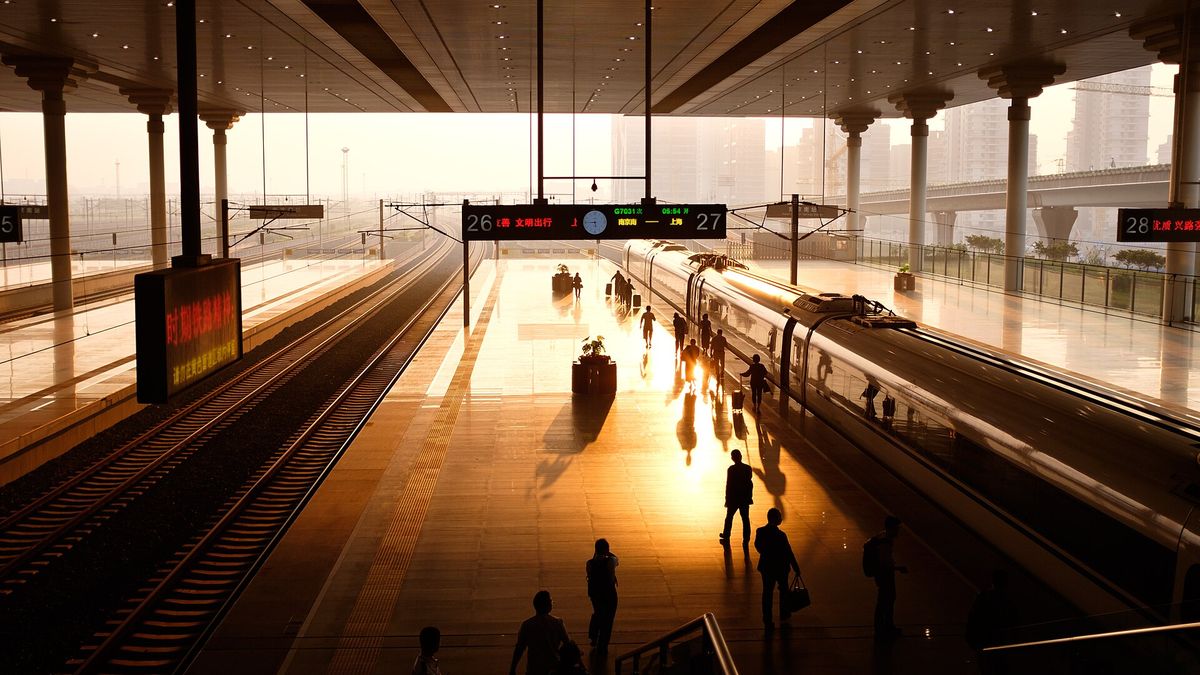
- China's railways carried 3.71 billion passenger trips in the first three quarters of 2026, up 4.8% from a year earlier and a record for the period, according to China State Railway Group.
- Foreign passenger trips rose 33.4% to more than 19 million, while cross-border trips on the China-Laos Railway climbed 37.8% to 265,000.
- Railway fixed-asset investment reached 511.8 billion yuan in the first eight months, up 1.5%, as four new high-speed sections opened on Sept. 28.
China's railways carried 3.71 billion passenger trips in the first three quarters of 2026, up 4.8% from a year earlier and the most ever for the period, according to China State Railway Group Co. The faster-growing number sat further down the release: foreign passenger trips rose 33.4% to more than 19 million.
For travel businesses in Asia, that gap matters. Domestic rail demand in China is large but maturing, growing at a mid-single-digit pace. Overseas travelers, by contrast, are using the network at a rate that is rising roughly seven times as fast, and the cross-border lines linking the mainland with Hong Kong and Southeast Asia are outpacing the system as a whole. Tour operators, hotel groups and booking platforms that sell China itineraries are effectively selling rail capacity, and the data suggest that capacity is getting fuller with foreign customers.
Cross-border lines to Hong Kong and Laos grow fastest
The Guangzhou-Shenzhen-Hong Kong high-speed railway handled more than 25.8 million cross-border trips in the nine months, up 11.8%, the rail operator said in figures carried by Xinhua. That is more than double the growth rate of the national network, and it feeds directly into Hong Kong's visitor economy, where mainland arrivals have been rising (see Capital Times' report on Hong Kong's September visitor arrivals).
The China-Laos Railway, the main rail route between China and mainland Southeast Asia, recorded 265,000 cross-border trips, up 37.8%. The base is small next to the Hong Kong link, but the growth rate was the highest of any category the operator disclosed.
China Railway also ran more trains. Average daily passenger services rose 5.3% to 11,511, slightly ahead of passenger growth. Tourist trains, which package rail travel with sightseeing, rose 25.5% to 2,860 in the nine months, and the operator ran 947 special trains for concertgoers and sports fans. The mix leans toward leisure and event travel, not only point-to-point capacity.
Holiday peak set a single-day record
The busiest day of the year so far came at the start of the National Day holiday. On Oct. 1 the network carried 25.204 million passenger trips, a single-day record, CGTN reported, citing China Railway. The operator had expected about 284 million trips over the combined Mid-Autumn Festival and National Day travel period from Sept. 23 to Oct. 8, and scheduled 1,462 additional trains for Oct. 2 alone, when it forecast 20.39 million trips. Demand on the second day of the holiday was expected to run below the record but still well above an ordinary day's level implied by the nine-month average of roughly 13.6 million trips a day. On the Baotou-Wuhai section of the Baotou-Yinchuan high-speed railway, the operator added 11 multiple-unit trains to handle holiday crowds.
Peaks of that size spill over to the businesses at the destination: hotels, attractions and retailers in cities newly brought within a short ride of large population centers.
New lines shorten trips and widen the map
Four high-speed sections opened on Sept. 28, just ahead of the holiday. The 318-kilometer Harbin-Yichun line, now China's northernmost high-speed railway, cut travel time between the two cities from about seven hours to roughly two, according to Xinhua. The Xi'an-Ankang line reduced a three-hour journey to as little as 45 minutes. The other two sections, Xiong'an-Shangqiu and Yichang-Xingshan, put Wuhan, Zhengzhou and Chongqing within two hours of Xingshan in Hubei.
Shorter journeys can turn outlying areas into weekend destinations for travelers from provincial capitals.
Spending on the network continues, though at a slower pace than ridership. Railway fixed-asset investment reached 511.8 billion yuan (about $76 billion) in the first eight months of the year, up 1.5%, China State Railway Group said. The country had 165,000 kilometers of operating railway at the end of 2025, including more than 50,000 kilometers of high-speed track, and plans call for a 70,000-kilometer high-speed network by 2035, built around eight north-south and eight east-west corridors.
A researcher at the China Railway Economic Planning and Research Institute, Ma Botao, described the design goal in time terms, as reported by Xinhua: about one hour for commuting within a metropolitan area, two hours across a city cluster and three hours for business trips between neighboring clusters and provincial capitals.
The next test is the Lunar New Year travel rush in early 2027. Full-year figures will show whether foreign ridership, up a third through September, held that pace in the fourth quarter.
Sources
- The Star (Xinhua): China-Laos train shuttle continues to thrive as China railway passenger trips hit a record high in the first three quarters (Oct. 19, 2026)
- The Star (Xinhua): New high-speed rail lines weave a denser network, boosting travel and regional growth (Oct. 3, 2026)
- CGTN: China's railway passenger trips hit record single-day high (Oct. 2, 2026)
Our standards: Capital Times reports under the principles set out in our Editorial Standards and Ethics Policy. Spotted an error? Report it to our editors.