Vietnam Needs 12.5% Fourth-Quarter Growth for 10% Goal as It Cuts Fuel Tax to Zero
Hanoi has scrapped the excise tax on petrol and trimmed electricity tariffs 2% to protect demand and contain prices as it chases a double-digit growth target.
What to know
- Deputy Prime Minister Nguyen Van Thang told the National Assembly on Oct. 31 that Vietnam needs about 12.5% growth in the fourth quarter to reach its 10% target for 2026.
- Vietnam cut the special consumption tax on petrol to zero from Nov. 1 through March 31, 2027, and EVN lowered its average retail power price 2% to 2,159.9 dong per kilowatt-hour.
- Registered foreign direct investment reached $50.36 billion in the first nine months, up 76.4%, while disbursed FDI rose 12.1% to $21.07 billion.
HANOI
Vietnam's economy will have to expand about 12.5% in the fourth quarter if the government is to hit its 10% growth target for 2026, Deputy Prime Minister Nguyen Van Thang told the National Assembly on Oct. 31. From the next day, Hanoi cut the excise tax on petrol to zero and lowered electricity prices to keep costs down for households and factories.
For investors in Vietnam, the two moves pull in slightly different directions. A double-digit growth push means more public spending and easy credit, while the energy measures are aimed at keeping inflation near the government's 4.5% target. Both matter for the dong, for local bond yields and for the consumer stocks on the Ho Chi Minh City exchange, where foreign investors kept selling through October.
Vietnam cuts petrol tax and power prices
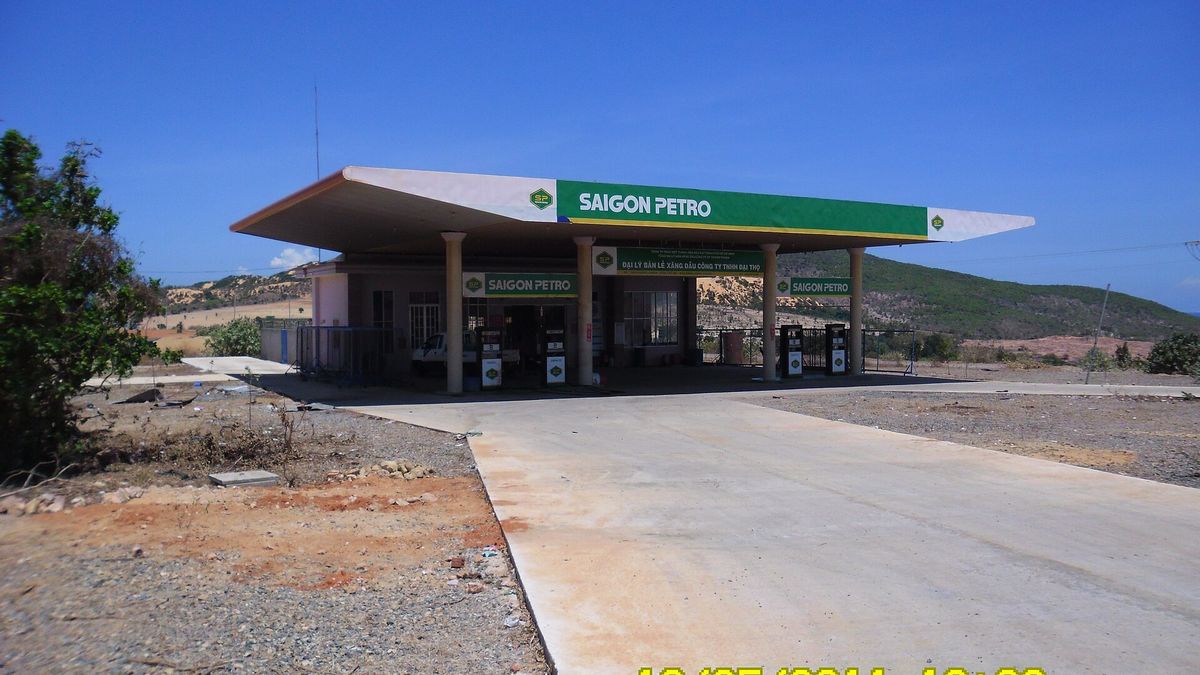
The special consumption tax on all types of petrol fell to zero on Nov. 1 under Government Resolution 45/2026/NQ-CP, which Thang signed on Oct. 31, and will stay there until March 31, 2027, VnExpress and the Vietnam News Agency reported. The same day, state utility Vietnam Electricity (EVN) cut its average retail power price by 2% to 2,159.9 dong per kilowatt-hour, excluding value-added tax, after the Ministry of Industry and Trade signed off in a decision dated Oct. 31.
The package was put together quickly. Thang chaired a meeting on petrol and power prices at government headquarters on Oct. 27, according to VietnamPlus, and told EVN to review its costs, find savings and draw up a plan to lower average retail tariffs from Nov. 1. He asked the Ministry of Finance, working with the trade and justice ministries, to assess a zero rate on petrol and report before Nov. 1. Viet Nam News reported that the power cut was framed as support for citizens and businesses. Neither report put a figure on the revenue the state or EVN would give up.
The 2% reduction in value-added tax on eligible goods and services also stays in force until the end of the year.
The direct effect on prices is modest. Thang estimated that the petrol tax cut and the electricity changes together create about 0.07 percentage point of extra room for inflation control, according to Viet Nam News. Consumer prices rose an average of 4.52% in the first nine months of 2026, the Vietnam News Agency said, slightly above the 4.5% inflation target Thang cited to lawmakers, according to VnExpress.
A steep climb in the final quarter
The 12.5% requirement shows how much the year's target leans on the last three months. Thang said public investment is the main lever: if the state fully disburses its allocated capital plan, that alone could add about 2.5 percentage points to fourth-quarter growth and 1.7 points to the full-year figure, he told lawmakers.
Exports are doing their part. Two-way goods trade passed $1.01 trillion in the first 10 months, up 32.3% from a year earlier, with exports up 27.4% to about $499 billion, the Ministry of Industry and Trade estimated. Capital Times has reported that October produced a trade surplus of $6.8 billion, the second monthly surplus in a row.
Nguyen Quoc Viet, who heads the macroeconomic research group at the University of Economics under Vietnam National University, Hanoi, said trade has grown roughly tenfold since Vietnam joined the World Trade Organization in 2007, when it was just over $100 billion, according to the news agency.
Foreign investment pledges run far ahead of cash
Foreign direct investment is the other engine Hanoi is counting on. Registered FDI reached $50.36 billion in the first nine months, up 76.4% from a year earlier, according to the Statistics Office under the Ministry of Finance, as reported by VietNamNet. Disbursed FDI, the money that actually arrived, rose a slower 12.1% to an estimated $21.07 billion, the highest for the period in five years, the Foreign Investment Agency said.
The gap between pledges and spending is large. New projects alone brought $29.24 billion in registered capital, 2.4 times the level a year earlier. Singapore was the biggest source of new pledges with $9.26 billion, followed by South Korea with $5.7 billion and Luxembourg with $4.99 billion. Hong Kong investors committed $3.01 billion, and mainland China $2.27 billion.
Manufacturing and processing took 45.8% of new registered capital and 82.6% of disbursed FDI. Transport and warehousing drew $5.14 billion of new commitments, a sign that logistics groups are building around the export factories. Ho Chi Minh City attracted more than $18.22 billion across 1,593 new projects, far ahead of Thai Nguyen in second place with more than $7.9 billion.
Bui Quang Tuan, vice chairman of the Vietnam Economic Science Association, pointed to the same FDI figures as evidence of investor confidence, the news agency reported.
How much of the registered capital turns into spending before December will help decide whether the fourth quarter gets close to 12.5%. The statistics office's monthly report, with October consumer prices, industrial output and the 10-month FDI tally, is the next test, and the petrol and power cuts will first show up in the November price index.
Sources
- VietnamPlus (Vietnam News Agency): Vietnam's economy posts strong results in 10 months (Nov. 2, 2026)
- Viet Nam News: Viet Nam's economy posts strong results in 10 months (Nov. 2, 2026)
- Viet Nam News: EVN directed to cut electricity prices from next month (Oct. 28, 2026)
- VietnamPlus (Vietnam News Agency): Vietnam considers electricity price cut from November 1, petrol excise tax cut to zero (Oct. 28, 2026)
- VietNamNet: Foreign investment in Vietnam tops $50 billion, Singapore leads inflows (Oct. 4, 2026)
- VnExpress: Thuế tiêu thụ đặc biệt với xăng về 0% (Oct. 31, 2026)
- VnExpress International: Vietnam lowers electricity price, first time in almost 20 years (Oct. 31, 2026)
Our standards: Capital Times reports under the principles set out in our Editorial Standards and Ethics Policy. Spotted an error? Report it to our editors.